“Walk-In Shower Installation Cost in USA (2026 Guide)”
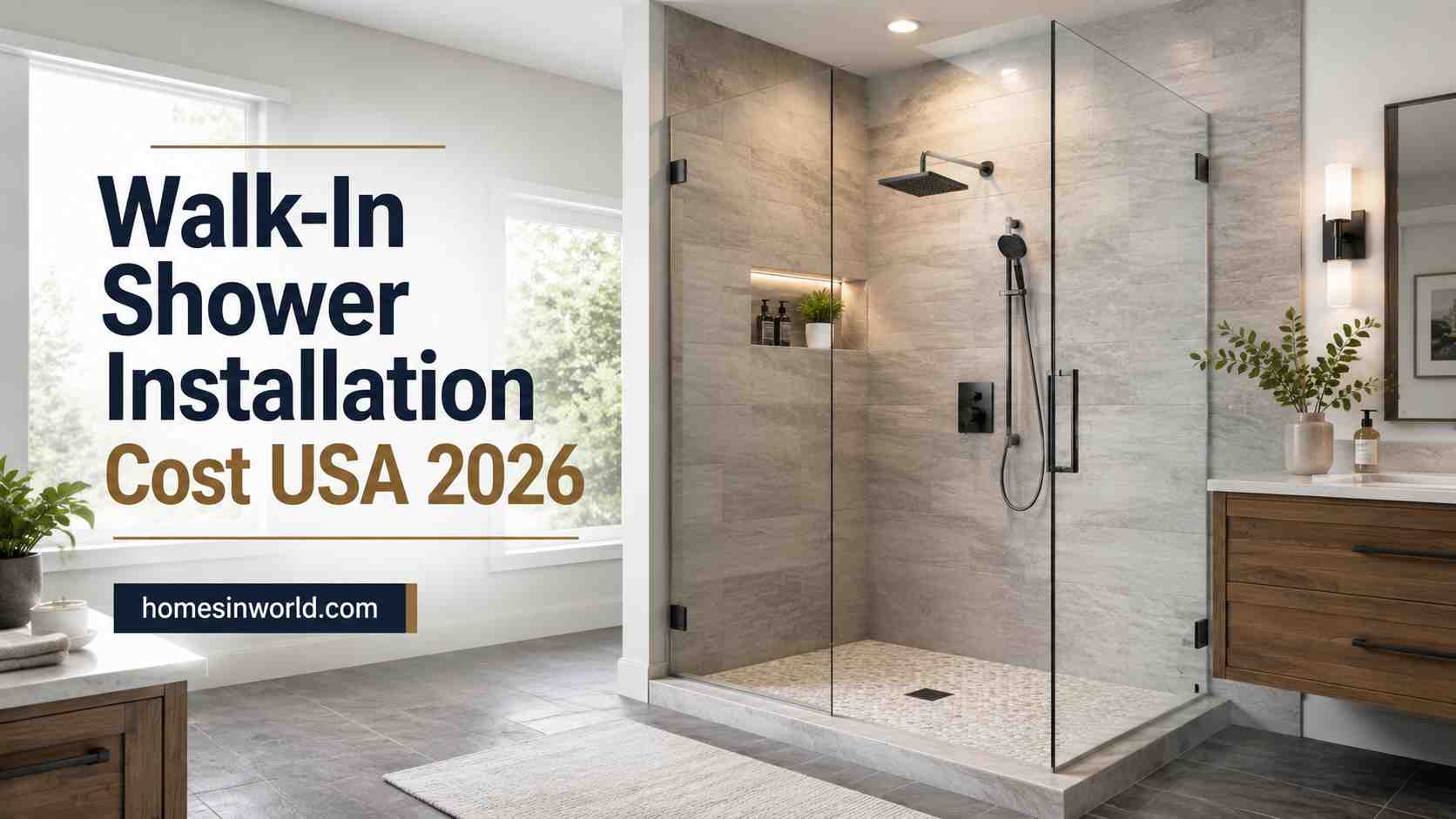
A walk-in shower can completely transform a bathroom.A walk-in shower can be one of the smartest bathroom remodeling investments for homeowners planning a modern upgrade.It adds a modern look, improves accessibility, increases comfort, and can even boost your home’s resale value. But before starting your remodel, one of the biggest questions homeowners ask is simple: how much does a walk-in shower installation cost in the USA in 2026?
The answer depends on several important factors, including shower size, materials, labor costs, plumbing work, and whether you choose a prefab unit or a custom tile design. In most cases, homeowners in the United States spend anywhere from $3,500 to over $15,000 for a complete walk-in shower installation.
That wide price range can feel overwhelming.
Some bathroom remodels stay within budget and dramatically improve a home. Others quickly become expensive because of hidden plumbing issues, poor contractor choices, or luxury upgrades that were never planned properly. Understanding real installation costs before hiring a contractor can save thousands of dollars.
In this complete 2026 guide, you’ll learn exactly what impacts walk-in shower installation costs across the USA. We’ll break down labor expenses, material pricing, tub-to-shower conversion costs, curbless shower pricing, and hidden remodeling fees many homeowners overlook.
You’ll also discover:
- the cheapest walk-in shower options
- prefab vs custom shower pricing
- senior-friendly and ADA shower costs
- ways to reduce installation expenses
- which upgrades increase home value most
Whether you’re planning a simple bathroom refresh or a luxury spa-style renovation, this guide will help you budget smarter and avoid costly remodeling mistakes.
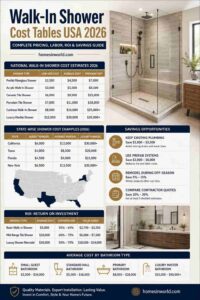
Walk-In Shower Installation Cost Tables (USA 2026)
National Walk-In Shower Cost Estimates (2026)
| Shower Type | Low-End Cost | Average Cost | Premium Cost | Typical Labor Cost | Typical Material Cost |
| Prefab Fiberglass Shower | $2,500 | $4,500 | $7,000 | $1,500–$2,500 | $1,000–$3,500 |
| Acrylic Walk-In Shower | $3,000 | $5,500 | $8,500 | $2,000–$3,500 | $1,500–$5,000 |
| Ceramic Tile Shower | $6,000 | $9,500 | $15,000 | $3,500–$7,000 | $2,500–$8,000 |
| Porcelain Tile Shower | $7,000 | $11,000 | $18,000 | $4,000–$8,000 | $3,000–$10,000 |
| Curbless Walk-In Shower | $8,000 | $14,000 | $25,000+ | $5,000–$10,000 | $3,000–$12,000 |
| Luxury Marble Shower | $12,000 | $20,000 | $35,000+ | $6,000–$15,000 | $6,000–$20,000 |
Walk-In Shower Labor Cost Breakdown
| Labor Category | Average Cost Range | Notes |
| Demolition & Tub Removal | $500–$2,000 | Depends on tub material and disposal |
| Plumbing Labor | $1,000–$4,000 | Higher with drain relocation |
| Waterproofing Installation | $500–$1,500 | Critical for leak prevention |
| Tile Installation Labor | $2,000–$8,000 | Based on tile size and complexity |
| Glass Door Installation | $800–$3,500 | Frameless systems cost more |
| Electrical Work | $300–$1,500 | Lighting and ventilation upgrades |
| Permit & Inspection Labor | $150–$1,000 | Varies by city and project scope |
Walk-In Shower Material Cost Estimates
| Material Type | Material Cost Range | Lifespan | Maintenance Level |
| Fiberglass | $500–$2,000 | 10–15 Years | Low |
| Acrylic | $1,000–$3,500 | 15–20 Years | Low |
| Ceramic Tile | $2,000–$6,000 | 20–30 Years | Medium |
| Porcelain Tile | $3,000–$8,000 | 25–30+ Years | Medium |
| Marble & Stone | $6,000–$20,000 | 30+ Years | High |
| Frameless Glass | $800–$4,000 | 20+ Years | Medium |
State-Wise Walk-In Shower Installation Costs (2026)
| State | Budget Remodel | Average Remodel | Luxury Remodel | Why Costs Vary |
| California | $6,000 | $12,000 | $30,000+ | High labor and permit costs |
| Texas | $4,000 | $8,500 | $20,000 | Moderate labor pricing |
| Florida | $4,500 | $9,000 | $22,000 | Waterproofing demand and humidity |
| New York | $6,500 | $13,500 | $35,000+ | Expensive contractor labor |
| Illinois | $5,000 | $9,500 | $24,000 | Older home plumbing updates |
| Arizona | $4,000 | $8,000 | $19,000 | Lower labor costs in many areas |
| Georgia | $3,800 | $7,500 | $18,000 | Affordable contractor market |
| Washington | $5,500 | $11,000 | $27,000 | Premium urban labor pricing |
Tub-to-Shower Conversion Cost Table
| Conversion Type | Low-End Cost | Average Cost | Premium Cost |
| Basic Acrylic Conversion | $4,000 | $6,000 | $8,500 |
| Tile Shower Conversion | $7,000 | $10,500 | $18,000 |
| Curbless Shower Conversion | $10,000 | $15,000 | $25,000+ |
| ADA Shower Conversion | $8,000 | $13,000 | $22,000 |
Curbless & ADA Shower Upgrade Costs
| Accessibility Feature | Low-End Cost | Average Cost | Premium Cost |
| Grab Bars | $200 | $500 | $1,000 |
| Built-In Shower Bench | $400 | $900 | $2,000 |
| Slip-Resistant Flooring | $500 | $1,200 | $3,000 |
| Curbless Entry | $2,000 | $4,500 | $8,000 |
| Wheelchair-Accessible Layout | $5,000 | $10,000 | $20,000+ |
Walk-In Shower Cost by Bathroom Size
| Bathroom Size | Low-End Cost | Average Cost | Premium Cost |
| Small Guest Bathroom | $3,500 | $6,000 | $10,000 |
| Standard Hall Bathroom | $5,000 | $9,000 | $16,000 |
| Primary Bathroom | $8,000 | $14,000 | $28,000 |
| Luxury Master Bathroom | $15,000 | $25,000 | $40,000+ |
2026 Shower Remodeling Savings Opportunities
| Cost-Saving Strategy | Estimated Savings | Practical Advice |
| Keep Existing Plumbing Layout | $1,000–$3,500 | Avoid moving drains and water lines |
| Use Prefab Shower Systems | $2,000–$8,000 | Reduces tile and labor costs |
| Remodel During Off-Season | 5%–15% | Winter projects often cost less |
| Choose Porcelain Over Marble | $3,000–$10,000 | Similar appearance with lower maintenance |
| Compare Multiple Contractor Quotes | 10%–20% | Get at least 3 detailed estimates |
| Use Standard Glass Sizes | $500–$2,000 | Custom glass increases fabrication costs |
| Bundle Bathroom Upgrades Together | 5%–10% | Contractors may reduce labor pricing |
Walk-In Shower ROI Estimates
| Remodel Type | Average Remodel Cost | Estimated ROI | Estimated Resale Value Added |
| Basic Walk-In Shower | $5,000 | 55%–65% | $2,750–$3,250 |
| Mid-Range Tile Shower | $10,000 | 60%–75% | $6,000–$7,500 |
| Luxury Shower Remodel | $20,000 | 50%–70% | $10,000–$14,000 |
| ADA Accessible Shower | $12,000 | 55%–70% | $6,600–$8,400 |
Typical Walk-In Shower Installation Timeline
| Installation Stage | Estimated Time | Cost Impact |
| Demolition | 1 Day | Lower |
| Plumbing Modifications | 1–3 Days | Medium–High |
| Waterproofing | 1 Day | Essential |
| Tile Installation | 2–5 Days | High labor cost |
| Glass Installation | 1 Day | Premium feature |
| Final Inspection | 1 Day | Permit dependent |
Most Expensive Walk-In Shower Features (2026)
| Premium Upgrade | Average Added Cost |
| Frameless Glass Enclosure | $2,000–$5,000 |
| Heated Flooring | $1,500–$4,000 |
| Rainfall Shower System | $500–$2,500 |
| Steam Shower System | $3,000–$10,000 |
| Marble Walls | $5,000–$20,000 |
| Smart Shower Controls | $1,000–$4,000 |
| Linear Drain System | $800–$3,000 |
Average Walk-In Shower Installation Cost in USA
The average walk-in shower installation cost in the United States ranges from $3,500 to $15,000+ in 2026, depending on the size of the shower, material quality, labor costs, plumbing complexity, and customization level.Remodeling labor costs in California are usually much higher than in Texas or Florida.
For most homeowners, the typical cost to install a walk-in shower falls between $5,500 and $9,500 for a professionally installed mid-range remodel. Smaller prefab shower replacements usually stay on the lower end of the price spectrum, while custom tile showers with frameless glass, premium fixtures, and plumbing relocation can quickly exceed $15,000.
National remodeling costs have continued rising due to:
- higher contractor labor rates
- increased tile and material pricing
- plumbing supply shortages
- waterproofing requirements
- growing demand for luxury bathroom renovations
Location also plays a major role in shower replacement pricing. Homeowners in states like California, New York, and Florida often pay significantly more for bathroom remodel labor costs than homeowners in smaller Midwest or Southern markets.
Several key factors affect the final walk-in shower installation price:
- Shower size and layout
- Prefab vs custom tile design
- Plumbing relocation requirements
- Shower waterproofing system
- Glass door installation
- Tile quality and labor intensity
- Demolition and old tub removal
- Permit and inspection fees
For example, replacing an old bathtub with a simple acrylic walk-in shower may cost around $4,500. However, a luxury spa-style shower with rainfall fixtures, natural stone tile, bench seating, and frameless glass can easily reach $20,000 or more.
Homeowners should also budget for hidden remodeling expenses that many contractors discover after demolition, including:
- water damage
- mold remediation
- subfloor repairs
- outdated plumbing lines
- drainage corrections
Understanding these cost variables early helps avoid budget surprises and allows homeowners to compare remodeling estimates more accurately.
National Average Cost Breakdown for 2026
A complete walk-in shower cost breakdown includes both labor and material costs. In most bathroom remodeling projects, labor accounts for nearly 40% to 60% of the total installation price because shower remodeling requires plumbing, waterproofing, tile installation, and finish work.
Here is a typical shower installation pricing breakdown for 2026:
| Cost Component | Average Cost |
| Demolition & Removal | $500–$2,000 |
| Plumbing Work | $1,000–$3,500 |
| Waterproofing System | $500–$1,500 |
| Shower Pan Installation | $700–$2,000 |
| Tile Installation | $2,000–$8,000 |
| Frameless Glass Door | $800–$3,000 |
| Labor Costs | $2,000–$6,000 |
| Permits & Inspections | $150–$800 |
Labor-intensive custom showers usually carry the highest remodeling estimates because tile work, waterproof membranes, and custom drainage systems require skilled craftsmanship.
Many homeowners underestimate waterproofing costs, but this is one of the most important investments in any shower remodel. Poor waterproofing can lead to mold growth, structural damage, and expensive repairs later.
Contractors also recommend setting aside an additional 10%–15% contingency budget for unexpected issues uncovered during demolition.
Budget vs Mid-Range vs Luxury Walk-In Shower Costs
Walk-in shower costs vary widely depending on the level of customization and material quality selected for the remodel.
Budget Walk-In Shower Remodel ($3,500–$6,000)
A budget shower remodel usually includes:
- prefabricated fiberglass or acrylic shower kits
- standard plumbing fixtures
- basic shower doors or curtains
- minimal layout changes
These affordable shower installation projects work well for guest bathrooms, rental properties, or homeowners looking for fast upgrades without major construction.
Example:
A homeowner replacing an old tub with a prefab acrylic shower in Texas may spend around $4,800 including labor.
Mid-Range Walk-In Shower Remodel ($6,000–$12,000)
Most American homeowners choose mid-range bathroom upgrades because they balance appearance, durability, and resale value.
These projects often include:
- ceramic or porcelain tile walls
- semi-frameless glass doors
- upgraded fixtures
- custom niches or shelving
- improved waterproofing systems
Example:
A professionally installed tiled walk-in shower with glass doors in Florida may cost approximately $8,500 to $10,000.
Luxury Walk-In Shower Cost ($12,000–$25,000+)
Luxury shower remodels focus on premium bathroom upgrades and spa-style features.
These high-end installations may include:
- frameless glass enclosures
- marble or natural stone tile
- rainfall shower systems
- body spray fixtures
- heated floors
- curbless entry designs
- built-in benches and lighting
Luxury bathroom remodeling projects require highly skilled contractors and significantly more labor hours.
Example:
A custom curbless luxury walk-in shower in California with premium tile and smart shower controls can easily exceed $20,000.
For homeowners focused on long-term value, mid-range remodels often deliver the best balance between affordability, durability, and resale appeal while avoiding the extreme costs associated with fully custom luxury installations.

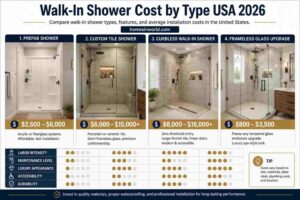
Walk-In Shower Cost by Type
The total cost of a walk-in shower depends heavily on the type of shower system you choose. Some homeowners prioritize affordability and fast installation, while others focus on luxury finishes, accessibility, or long-term durability.
In 2026, shower enclosure pricing varies significantly between prefabricated units, custom tile showers, curbless designs, and frameless glass systems. The final price is influenced by:
- material quality
- labor intensity
- waterproofing requirements
- plumbing modifications
- shower size
- customization level
Choosing the right shower style is one of the biggest decisions in any bathroom remodel because it affects both upfront installation costs and long-term maintenance expenses.
For example:
- prefab acrylic systems are affordable and easy to install
- custom tile showers offer maximum design flexibility
- curbless showers improve accessibility and modern aesthetics
- frameless glass systems create a luxury spa-style appearance
Homeowners should compare bathroom upgrade options carefully before selecting a shower design. A lower upfront price may save money initially, but premium materials often last longer and increase home resale value more effectively.Curbless shower installations create a more modern and accessible bathroom layout.
Prefabricated Walk-In Shower Installation Cost
The average prefab shower installation cost in the USA ranges from $2,500 to $6,000 depending on shower size, materials, and labor rates.
Prefabricated showers are among the most affordable bathroom remodeling solutions because the wall panels and shower bases arrive pre-manufactured. Installation is usually faster and requires less tile work, reducing labor costs significantly.
Most prefab systems use:
- acrylic shower systems
- fiberglass shower kits
- molded composite wall panels
These materials are lightweight, low-maintenance, and resistant to moisture damage.
Prefab showers work best for:
- budget bathroom remodels
- rental properties
- guest bathrooms
- quick shower replacements
Example:
A standard fiberglass walk-in shower replacement in Florida may cost around $4,200 including demolition and installation labor.
However, cheaper prefab systems may have shorter lifespans and fewer design customization options compared to custom tile showers.
Custom Tile Walk-In Shower Cost
The average custom tile shower cost ranges from $6,000 to $15,000+ depending on tile quality, shower size, and labor complexity.
Tile shower remodels are popular because they offer nearly unlimited design flexibility. Homeowners can choose:
- ceramic tile
- porcelain tile
- marble finishes
- mosaic accents
- built-in niches and benches
Custom showers also require advanced waterproof shower systems to protect walls and flooring from long-term water damage. Professional waterproof membranes, proper drainage slopes, and precision tile installation are essential for durability.
Labor costs are much higher for tile showers because installation is time-intensive and requires skilled craftsmanship.
Example:
A mid-range porcelain tile walk-in shower with frameless glass doors in Texas may cost approximately $9,500.
Custom tile showers are ideal for homeowners wanting:
- luxury aesthetics
- long-term durability
- higher resale value
- personalized bathroom design
However, ongoing grout maintenance and cleaning requirements should also be considered before choosing tile surfaces.
Curbless Walk-In Shower Cost
The average curbless shower installation cost in the USA ranges from $8,000 to $18,000+ in 2026.
A barrier-free shower, also called a zero-threshold shower, eliminates the raised curb between the bathroom floor and shower area. This creates a seamless modern appearance while improving accessibility for seniors and individuals with mobility limitations.
Curbless shower installations are more expensive because they often require:
- floor restructuring
- advanced waterproofing
- custom drainage systems
- precise floor sloping
Many homeowners choose curbless designs for:
- luxury bathroom remodels
- ADA accessibility upgrades
- aging-in-place renovations
- minimalist bathroom aesthetics
Example:
A curbless walk-in shower with large-format tile and linear drains in California may cost over $16,000 due to extensive labor and waterproofing requirements.
Although installation costs are higher, curbless showers are becoming one of the fastest-growing bathroom upgrade trends in the USA because of their modern appearance and long-term accessibility benefits.
Frameless Glass Walk-In Shower Cost
The average frameless shower door cost ranges from $800 to $3,500, while full frameless walk-in shower systems can push total project costs beyond $20,000.
Frameless glass systems are commonly used in luxury shower remodel projects because they create an open, spacious, and high-end appearance. Unlike framed enclosures, frameless glass uses thicker tempered glass panels with minimal visible hardware.
Glass enclosure pricing depends on:
- glass thickness
- custom sizing
- hardware finishes
- door style
- installation complexity
Popular options include:
- sliding frameless doors
- hinged glass doors
- fixed glass panels
- floor-to-ceiling enclosures
Example:
A frameless glass enclosure paired with a custom tile shower in New York may add $2,500 to $4,000 to the overall bathroom remodel budget.
Frameless glass showers are especially popular in:
- luxury master bathrooms
- spa-inspired remodels
- contemporary home designs
While they cost more upfront, many homeowners prefer frameless systems because they:
- improve visual space
- increase natural light flow
- enhance resale appeal
- create a premium bathroom appearance
Proper installation is critical because poorly aligned glass panels can lead to leaks, instability, and long-term maintenance problems.
Tub-to-Shower Conversion Cost in USA
Converting an old bathtub into a modern walk-in shower has become one of the most popular bathroom remodeling projects in the United States. Many homeowners now prefer walk-in showers because they improve accessibility, create a more open bathroom layout, and offer a cleaner modern appearance.
The average bathtub to walk-in shower conversion cost in the USA ranges from $4,500 to $15,000+ in 2026, depending on the complexity of the remodel and the materials selected.
Several major factors affect tub replacement cost, including:
- bathtub removal difficulty
- plumbing relocation requirements
- shower waterproofing systems
- tile and glass upgrades
- bathroom redesign complexity
- local labor rates
Simple shower conversions that reuse existing plumbing lines are usually far more affordable than full bathroom redesign projects requiring drain relocation or structural floor modifications.
Homeowners often choose tub-to-shower conversion for:
- aging-in-place upgrades
- small bathroom optimization
- luxury bathroom remodeling
- easier cleaning and maintenance
- improved resale appeal
For example, replacing a standard alcove bathtub with a prefabricated acrylic shower system may cost around $5,000 in many Southern states. However, converting a master bathroom tub into a luxury curbless shower with frameless glass and custom tile can easily exceed $18,000 in high-cost markets like California or New York.
Before starting a conversion project, homeowners should also understand that older homes often hide plumbing and structural issues behind walls and beneath flooring. These unexpected discoveries can significantly impact the final remodeling budget.
Average Cost to Replace a Bathtub With a Walk-In Shower
The average cost to replace a bathtub with a shower typically falls between $5,500 and $12,000 for a professionally installed remodel.
Most shower conversion pricing includes:
- bathtub demolition and disposal
- plumbing modifications
- shower base installation
- waterproofing systems
- wall panels or tile work
- new shower fixtures
- labor and cleanup
Demolition costs alone may range from $500 to $2,000, especially when contractors must remove cast-iron tubs or repair damaged flooring underneath the old bathtub.
A basic conversion project with minimal plumbing changes is usually the most affordable option. In many cases, contractors can reuse existing drain and water supply locations, reducing labor expenses significantly.
Typical conversion price ranges include:
| Conversion Type | Average Cost |
| Basic Prefab Shower Conversion | $4,500–$7,000 |
| Mid-Range Tile Shower Conversion | $7,000–$12,000 |
| Luxury Curbless Shower Conversion | $12,000–$20,000+ |
Example:
A homeowner in Texas replacing a fiberglass tub with a porcelain tile walk-in shower and semi-frameless glass door may spend around $8,500 including labor.
Projects become more expensive when homeowners request:
- custom tile layouts
- recessed shelving
- bench seating
- rainfall shower systems
- heated flooring
- curbless entries
Hidden Costs in Tub-to-Shower Conversions
One of the biggest mistakes homeowners make is underestimating hidden shower remodel costs. While online estimates often focus only on visible materials, experienced remodeling contractors know that bathroom renovations frequently uncover expensive underlying problems.
Common hidden expenses include:
- waterproofing upgrades
- subfloor repair
- mold remediation
- outdated plumbing replacement
- permit fees
- structural reinforcement
- drainage corrections
Waterproofing is especially critical in walk-in shower installation. Poor waterproofing can lead to leaks, wood rot, mold growth, and long-term structural damage. Professional waterproof membranes and proper drainage systems add upfront costs but help prevent major repair bills later.
Subfloor repair is another common issue, particularly in older homes where long-term bathtub leaks may have weakened the flooring underneath.
Example:
A simple shower conversion in Florida initially estimated at $6,000 may increase to over $9,000 after contractors discover water-damaged subflooring and outdated plumbing lines during demolition.
Permit fees also vary significantly by location. Some cities require:
- plumbing permits
- electrical permits
- waterproofing inspections
- final remodeling inspections
Homeowners should always request detailed contractor estimates that clearly separate:
- labor charges
- demolition costs
- material pricing
- permit expenses
- contingency allowances
Experienced contractors typically recommend reserving an extra 10%–20% of the project budget for unexpected remodeling issues.
Is Tub-to-Shower Conversion Worth It?
For many homeowners, tub to shower ROI is strong because walk-in showers align with modern bathroom design trends and buyer preferences in the USA housing market.
Walk-in showers offer several long-term benefits:
- easier accessibility
- modern bathroom upgrades
- improved space efficiency
- lower maintenance
- enhanced visual appeal
In smaller bathrooms, removing a bulky bathtub often makes the room feel significantly larger and more functional.
However, resale value considerations depend on the home layout and target buyer market. In family-oriented neighborhoods, completely removing the only bathtub in the house may negatively affect resale appeal for buyers with young children.
In most mid-range and luxury homes, professionally designed walk-in showers are considered desirable upgrades that improve overall bathroom aesthetics and marketability.
Labor Cost to Install Walk-In Shower
Labor is one of the biggest expenses in any bathroom remodeling project. In most cases, shower installation labor cost accounts for 40% to 60% of the total walk-in shower budget because the work involves plumbing, demolition, waterproofing, tile installation, and finishing.
In 2026, contractor shower pricing in the United States typically ranges from $2,000 to $8,000+ depending on:
- shower complexity
- material selection
- bathroom layout
- regional labor rates
- plumbing modifications
- permit requirements
Simple prefab shower replacements usually require less labor and can often be completed within a few days. However, custom tile showers, curbless installations, and luxury bathroom remodels require skilled tradespeople and significantly more labor hours.
Homeowners should also understand that remodeling labor rates vary widely across the country. Contractors in California, New York, and major metropolitan areas generally charge more than contractors in smaller cities or rural markets due to:
- higher insurance costs
- licensing requirements
- labor shortages
- local permit regulations
Professional installation is critical for walk-in showers because poor workmanship can cause:
- water leaks
- mold growth
- drainage problems
- cracked tile
- long-term structural damage
When comparing remodeling estimates, homeowners should request detailed labor breakdowns instead of accepting one flat project price. Transparent estimates help identify:
- plumbing labor charges
- tile installation pricing
- demolition expenses
- waterproofing costs
- contractor markup
Experienced licensed contractors also provide warranties, proper permitting, and code-compliant installation practices that protect long-term home value.
Plumbing Labor Costs
Shower plumbing cost is often one of the most expensive parts of a walk-in shower installation, especially when contractors must move existing plumbing lines.
Basic plumbing work may include:
- installing new shower valves
- replacing old supply lines
- upgrading drains
- connecting fixtures
More advanced projects requiring drain relocation or major bathroom redesign can dramatically increase labor expenses because plumbers may need to:
- open walls and flooring
- reroute pipes
- adjust drain slopes
- upgrade venting systems
Average plumbing labor costs in the USA include:
| Plumbing Work | Average Cost |
| Basic Fixture Installation | $500–$1,200 |
| Drain Relocation | $1,000–$3,500 |
| Pipe Replacement | $800–$2,500 |
| New Plumbing Lines | $1,500–$4,000 |
Plumbing permits are also commonly required for shower conversions and new installations. Permit inspections help ensure the work meets local building and safety codes.
Example:
A tub-to-shower conversion in an older Chicago home may cost an additional $2,500 if outdated galvanized plumbing must be replaced during the remodel.
Homeowners can reduce plumbing labor costs by keeping the new shower in the same location as the existing bathtub or shower unit.
Tile Installation Labor Costs
Shower tile labor cost varies based on tile size, material type, shower design complexity, and waterproofing requirements.
Tile installation pricing typically ranges from $8 to $30 per square foot for labor alone, with luxury tile patterns and custom layouts costing significantly more.
Labor-intensive tasks often include:
- tile cutting and layout planning
- waterproof membrane installation
- grout sealing
- niche and bench construction
- floor slope adjustments
Tile waterproofing is one of the most critical steps in shower remodeling because improperly sealed tile systems can eventually leak and damage surrounding walls and flooring.
Large-format porcelain tiles are often less expensive to install than small mosaic patterns because they require fewer grout joints and less cutting labor.
Example:
A custom marble tile walk-in shower in California may require over 40 labor hours, increasing installation costs by several thousand dollars compared to a prefab acrylic system.
Contractor Markup and Permit Fees
Many homeowners overlook remodeling permit cost and contractor overhead when budgeting for a walk-in shower remodel.
Most contractors include markup charges to cover:
- project management
- insurance
- business licensing
- employee wages
- transportation
- warranty coverage
Contractor overhead and profit margins typically add 10% to 25% to total project costs.
Permit pricing varies by city and project scope. Common permit fees may include:
- plumbing permits
- electrical permits
- structural permits
- waterproofing inspections
Example:
A luxury bathroom remodel in New York City may require multiple inspections and over $1,000 in combined permit fees.
Hiring licensed contractors who handle permitting properly helps avoid failed inspections, code violations, and expensive corrections later in the remodeling process.
Walk-In Shower Cost by Bathroom Size
Bathroom size plays a major role in determining total walk-in shower installation costs. A compact guest bathroom remodel typically requires fewer materials, less tile work, and reduced labor hours compared to a large luxury master bathroom renovation.
In 2026, the average small bathroom walk-in shower cost in the USA ranges from $3,500 to $9,000, while a master bathroom shower remodel cost can exceed $20,000 depending on layout complexity and upgrade selections.
Larger bathrooms often increase remodeling expenses because they involve:
- larger shower enclosures
- additional tile coverage
- premium fixtures
- multiple showerheads
- expanded plumbing systems
- luxury glass installations
Smaller bathrooms, on the other hand, require more strategic planning to maximize functionality and maintain comfortable movement inside the space. Compact bathroom remodel projects often focus on:
- efficient layouts
- corner shower systems
- sliding glass doors
- space-saving storage solutions
The overall shower size also impacts:
- waterproofing costs
- drainage requirements
- labor hours
- glass enclosure pricing
- tile installation expenses
For example:
- a standard 36×36-inch shower generally costs less than a large 60×72-inch luxury walk-in shower
- oversized showers require more framing, waterproof membranes, and tile labor
Bathroom dimensions also affect plumbing complexity. In tight spaces, contractors may spend additional time rerouting pipes or modifying wall framing to accommodate modern shower layouts.
Typical cost ranges by bathroom size include:
| Bathroom Type | Average Walk-In Shower Cost |
| Small Guest Bathroom | $3,500–$7,500 |
| Standard Hall Bathroom | $5,000–$10,000 |
| Mid-Size Primary Bathroom | $8,000–$15,000 |
| Luxury Master Bathroom | $15,000–$30,000+ |
Homeowners planning large bathroom renovations often choose premium upgrades such as:
- rainfall shower systems
- frameless glass walls
- built-in seating
- dual showerheads
- heated flooring
- curbless entries
While these features improve comfort and resale value, they also increase labor intensity and installation costs significantly.
In many cases, mid-size bathroom remodels provide the best balance between affordability, functionality, and long-term value.
Small Bathroom Walk-In Shower Pricing
The average small shower remodel cost in the USA ranges from $3,500 to $8,000 depending on material choices, plumbing modifications, and shower style.
Small bathrooms require careful design planning because every inch of space matters. Many homeowners choose space-saving showers that create a more open visual appearance while improving functionality.
Popular compact layouts include:
- corner walk-in showers
- sliding glass door systems
- neo-angle shower enclosures
- wall-to-wall shower installations
- curbless compact showers
Prefab acrylic systems are usually the most affordable option for small bathrooms because they require less demolition and installation labor. However, custom tile showers can make compact bathrooms feel larger when paired with:
- large-format tiles
- frameless glass
- recessed shelving
- light color palettes
Example:
A small bathroom shower replacement in Florida using a prefab acrylic enclosure may cost around $4,500, while a tiled frameless walk-in shower in New York could exceed $9,000 due to higher labor rates.
Homeowners remodeling smaller bathrooms should prioritize:
- efficient drainage
- adequate ventilation
- waterproof wall systems
- low-maintenance finishes
One common mistake in compact bathroom remodel projects is choosing oversized fixtures that make the room feel cramped. Experienced remodeling contractors often recommend simpler layouts with minimal visual barriers to improve both functionality and perceived space.
In many homes, converting an old bathtub into a compact walk-in shower can dramatically improve accessibility and make the bathroom feel more modern without requiring a complete structural redesign.
Walk-In Shower Cost by Material
The materials used in a walk-in shower have a major impact on both installation costs and long-term durability. In 2026, homeowners in the United States can choose from a wide range of shower materials, including fiberglass, acrylic, ceramic tile, porcelain, marble, and other premium stone finishes.
The average tile shower cost is significantly higher than the average fiberglass shower cost because tile installations require more labor, waterproofing, and maintenance. However, premium materials often provide better aesthetics, longer lifespan, and stronger resale value.
Material selection affects:
- labor intensity
- waterproofing requirements
- maintenance needs
- mold resistance
- durability
- visual appearance
- long-term repair costs
Budget-friendly acrylic shower systems are common in guest bathrooms and rental properties because they install quickly and require minimal maintenance. In contrast, marble shower walls and luxury tile finishes are frequently used in high-end bathroom remodels where homeowners prioritize design and resale appeal.
Typical material cost ranges include:
| Shower Material | Average Installed Cost |
| Fiberglass Shower | $2,500–$6,000 |
| Acrylic Shower | $3,000–$7,000 |
| Ceramic Tile Shower | $6,000–$12,000 |
| Porcelain Tile Shower | $7,000–$15,000 |
| Marble or Natural Stone Shower | $12,000–$30,000+ |
The right material depends on:
- remodeling budget
- bathroom usage
- maintenance preferences
- long-term homeownership plans
- overall bathroom design goals
For example, homeowners planning to sell within a few years may benefit more from durable mid-range porcelain tile, while luxury homeowners often invest in premium stone showers for upscale aesthetics.
Fiberglass and Acrylic Shower Costs
The average fiberglass shower installation cost ranges from $2,500 to $6,000, while higher-end acrylic shower systems typically cost between $3,000 and $7,000 installed.
Fiberglass and acrylic showers are considered low-maintenance shower materials because they resist moisture, clean easily, and require minimal grout maintenance. These systems are commonly sold as prefabricated wall and base units, reducing installation labor significantly.
Advantages include:
- faster installation
- affordable pricing
- easy cleaning
- lower waterproofing costs
- reduced labor hours
Example:
A standard acrylic walk-in shower replacement in Texas may cost approximately $4,500 including demolition and labor.
However, cheaper fiberglass systems may discolor, scratch, or crack over time, especially in heavily used bathrooms.
Ceramic and Porcelain Tile Shower Costs
Tile walk-in shower pricing typically ranges from $6,000 to $15,000+ depending on tile quality, layout complexity, and labor rates.
Ceramic tile shower systems remain popular because they offer excellent design flexibility at a moderate price point. Porcelain shower walls are generally more durable and water-resistant than ceramic options, making them ideal for high-moisture environments.
Tile shower costs increase due to:
- waterproof membrane installation
- tile cutting labor
- grout sealing
- custom niches and benches
- detailed layouts and patterns
Popular tile options include:
- subway tile
- large-format porcelain panels
- mosaic flooring
- textured slip-resistant tile
Example:
A mid-range porcelain tile walk-in shower with frameless glass doors in California may cost around $11,000 due to higher contractor labor rates.
While tile showers require more maintenance than acrylic systems, they usually provide:
- better durability
- stronger resale value
- more upscale appearance
- greater customization options
Homeowners should also choose high-quality grout and professional waterproofing systems to reduce long-term moisture issues.
Marble and Luxury Material Costs
Luxury shower materials such as marble, quartz, travertine, and natural stone are commonly used in premium stone showers and high-end bathroom remodel projects.
These luxury installations typically range from $12,000 to $30,000+ because natural stone requires specialized labor, sealing treatments, and advanced waterproofing systems.
Luxury shower upgrades often include:
- marble shower walls
- floor-to-ceiling stone panels
- custom stone benches
- frameless glass enclosures
- rainfall shower systems
- heated tile flooring
Natural stone materials create a high-end spa-like appearance that many luxury homeowners prefer. However, these surfaces also require regular maintenance and sealing to prevent staining and water damage.
Example:
A luxury marble walk-in shower with custom lighting, frameless glass, and dual rainfall fixtures in New York may exceed $25,000 after labor and premium material costs are included.
Homeowners considering luxury materials should understand that installation quality matters just as much as the stone itself. Poor waterproofing beneath natural stone can eventually lead to cracking, mold growth, and costly structural repairs.
Many remodeling experts recommend porcelain slabs that mimic marble appearance for homeowners wanting:
- lower maintenance
- reduced installation costs
- improved moisture resistance
- luxury aesthetics without natural stone upkeep
In many mid-range bathroom remodels, porcelain tile now delivers one of the best balances between durability, appearance, and long-term value.
ADA & Senior-Friendly Walk-In Shower Costs
ADA-compliant and senior-friendly walk-in showers are becoming one of the fastest-growing bathroom remodeling trends in the United States. Many homeowners are now investing in aging-in-place remodeling projects that improve safety, accessibility, and long-term comfort without sacrificing modern design.
The average ADA walk-in shower cost in the USA ranges from $8,000 to $20,000+ in 2026, depending on the bathroom layout, accessibility features, plumbing modifications, and custom upgrades.
A senior shower remodel cost is usually higher than a standard shower replacement because accessible bathrooms often require:
- wider shower entrances
- reinforced wall framing
- specialized drainage systems
- wheelchair clearance space
- slip-resistant flooring
- barrier-free entry designs
Wheelchair-accessible shower installations also require careful planning to meet ADA guidelines and ensure safe movement throughout the bathroom.
Several factors affect pricing, including:
- bathroom size
- plumbing relocation
- curbless floor construction
- grab bar installation
- waterproofing systems
- custom seating options
Typical ADA remodeling costs include:
| Accessibility Upgrade | Average Cost |
| Grab Bar Installation | $200–$800 |
| Curbless Shower Entry | $2,000–$6,000 |
| Built-In Shower Bench | $400–$1,500 |
| Slip-Resistant Flooring | $500–$2,000 |
| Widened Shower Opening | $1,000–$3,500 |
| Full ADA Shower Remodel | $8,000–$20,000+ |
Many homeowners also choose these upgrades proactively rather than waiting for mobility challenges later in life. Modern accessible shower designs now blend functionality with luxury aesthetics, making them appealing for both seniors and younger homeowners planning long-term renovations.
Example:
A barrier-free shower remodel with grab bars, bench seating, and non-slip tile in Florida may cost approximately $12,000 including labor and plumbing updates.
ADA-Compliant Shower Features
Professional ADA shower installation projects focus on safety, accessibility, and ease of use while meeting recommended accessibility standards.
One of the most important features in an ADA-compliant bathroom is a barrier-free shower design. These showers eliminate raised curbs or thresholds, allowing easier wheelchair access and reducing tripping hazards for seniors.
Common ADA shower features include:
- grab bars for stability
- barrier-free shower entry
- handheld showerheads
- built-in seating
- slip-resistant tile flooring
- widened shower openings
- low-mounted controls
- linear drainage systems
Proper waterproofing and floor slope design are especially important in accessible showers because water must drain effectively without creating slippery surfaces.
Example:
A wheelchair-accessible shower in California may require reinforced wall framing for grab bars and expanded floor space to meet accessibility recommendations, increasing both labor and material costs.
Experienced contractors often recommend installing blocking behind walls during remodeling so additional safety bars can be added easily in the future if mobility needs change.
Best Walk-In Showers for Seniors
The best senior-friendly shower remodel projects prioritize safety, low maintenance, and ease of access without making the bathroom feel institutional or outdated.
Most remodeling experts recommend low-threshold shower systems for seniors because they reduce fall risks while maintaining a modern appearance. Unlike traditional bathtubs, walk-in showers allow easier entry and exit for individuals with limited mobility or joint pain.
Popular bathroom safety upgrades for seniors include:
- curbless shower entries
- textured slip-resistant flooring
- fold-down shower seating
- anti-scald shower valves
- adjustable handheld showerheads
- brighter lighting systems
- frameless glass panels for easier access
Many homeowners also combine accessible shower remodeling with broader aging-in-place upgrades such as:
- wider doorways
- comfort-height toilets
- non-slip bathroom flooring
- improved ventilation systems
Example:
A senior homeowner in Texas replacing an old bathtub with a low-threshold acrylic walk-in shower and built-in bench may spend around $9,500 including demolition, plumbing work, and installation labor.
For smaller bathrooms, contractors often recommend:
- corner walk-in showers
- sliding glass doors
- compact built-in shelving
- open-entry shower layouts
These features maximize available floor space while improving accessibility.
Homeowners planning long-term renovations should also consider future mobility needs when selecting shower dimensions and bathroom layouts. A slightly larger walk-in shower may cost more upfront but can prevent expensive remodeling changes later.
In many cases, professionally installed accessible showers not only improve daily comfort and independence but also increase home appeal for aging buyers seeking modern, safer bathroom designs.Walk-In Shower Installation Timeline
Understanding the average shower installation timeline helps homeowners plan their bathroom remodel more realistically and avoid unnecessary stress during construction. While some walk-in shower projects can be completed in just a few days, larger custom remodels may take several weeks depending on labor availability, plumbing work, material delivery, and inspection requirements.
In most cases, the average bathroom remodeling schedule for a professionally installed walk-in shower ranges from 3 to 10 business days. However, luxury custom showers with tile work, curbless flooring, and plumbing relocation often require additional time.
The total installation process typically includes:
- demolition and debris removal
- plumbing adjustments
- waterproofing installation
- shower base setup
- tile installation
- glass enclosure fitting
- final inspections and cleanup
Simple prefab shower replacements usually move faster because they require less customization and reduced labor hours. Custom tile showers, on the other hand, often involve multiple drying and curing stages that cannot be rushed without risking long-term water damage.
Typical project timelines include:
| Remodeling Stage | Estimated Time |
| Demolition | 1 Day |
| Plumbing Work | 1–2 Days |
| Waterproofing | 1 Day |
| Tile Installation | 2–4 Days |
| Grout & Drying Time | 1–2 Days |
| Glass Installation | 1 Day |
| Final Cleanup & Inspection | 1 Day |
Homeowners should also understand that scheduling delays are common during busy remodeling seasons, especially in larger metropolitan areas where contractor demand is high.
For example:
A prefab acrylic shower replacement in Texas may be completed in 3–4 days, while a luxury curbless tile shower installation in California could take over two weeks due to waterproofing, custom glass fabrication, and permit inspections.
Proper planning and realistic scheduling expectations help prevent rushed installations that may compromise waterproofing quality or workmanship.
How Long Does Shower Installation Take?
The average shower remodel timeline depends on the complexity of the project and the type of shower being installed.
A standard prefab walk-in shower replacement often takes:
- 2 to 5 days for completion
A custom tile walk-in shower usually requires:
- 7 to 14 days due to waterproofing, tile curing, and custom finishing work
The demolition phase is typically completed within one day unless contractors encounter hidden issues such as:
- mold damage
- rotted subflooring
- outdated plumbing
- structural framing problems
After demolition, plumbing and waterproofing work begins. The waterproofing timeline is especially important because membranes and sealants must cure properly before tile or wall systems are installed.
Tile showers generally take the longest because installers must:
- level surfaces carefully
- cut tile precisely
- apply grout
- allow drying time between stages
Example:
A mid-range porcelain tile shower remodel in Florida may require:
- 1 day for demolition
- 2 days for plumbing and waterproofing
- 3 days for tile installation
- 1 day for grout curing
- 1 day for glass installation
Homeowners should avoid contractors promising unrealistically fast timelines for custom showers, as rushed waterproofing and tile work often lead to leaks and costly repairs later.
Factors That Delay Installation
Several common shower remodel delays can extend the bathroom remodeling schedule beyond the original estimate.
The most common causes include:
- plumbing issues hidden behind walls
- permit approval delays
- backordered materials
- custom glass manufacturing times
- water damage repairs
- failed inspections
- contractor scheduling conflicts
Older homes often experience the biggest delays because outdated plumbing systems or damaged subfloors may not become visible until demolition begins.
Example:
A walk-in shower conversion in New York may be delayed by over a week if city inspections require additional plumbing modifications before tile installation can continue.
Weather can also affect material deliveries and labor schedules in some regions.
Homeowners can reduce delays by:
- ordering materials early
- selecting readily available tile
- hiring licensed contractors
- approving designs before demolition begins
- setting contingency time into the remodeling schedule
Experienced remodeling professionals typically recommend adding a few extra days to any installation estimate to account for unexpected construction issues and inspection requirements.
Walk-In Shower ROI and Home Value
A professionally installed walk-in shower can significantly improve both bathroom functionality and overall property appeal. In many housing markets across the United States, modern bathroom renovations are considered one of the most valuable home improvement projects because buyers often prioritize updated kitchens and bathrooms when comparing homes.
The average bathroom remodel ROI for walk-in shower upgrades typically ranges from 55% to 75%, depending on:
- material quality
- local housing market
- bathroom layout
- remodeling craftsmanship
- overall home value
Walk-in shower resale value has increased steadily in recent years as more homeowners prefer:
- modern open-concept bathrooms
- low-maintenance fixtures
- accessible shower designs
- spa-style aesthetics
- frameless glass enclosures
Homes with outdated tubs, damaged tile, or small enclosed showers often appear less competitive in today’s real estate market. Upgrading to a modern walk-in shower can improve resale appeal by making the bathroom feel:
- larger
- brighter
- more luxurious
- easier to maintain
However, ROI depends heavily on choosing the right upgrades. Over-customizing a bathroom with extremely expensive luxury materials may not always produce proportional resale gains, especially in mid-range neighborhoods.
Typical shower upgrades that improve home improvement ROI include:
- frameless glass doors
- porcelain tile walls
- curbless entry designs
- rainfall shower systems
- built-in storage niches
- slip-resistant flooring
Example:
A homeowner in Florida spending $10,000 on a mid-range walk-in shower remodel may recover approximately $6,000–$7,500 in added resale value depending on the local housing market and overall property condition.
Real estate professionals often recommend balancing functionality, durability, and broad buyer appeal instead of focusing only on luxury finishes.
Does a Walk-In Shower Increase Home Value?
In many cases, a professionally designed walk-in shower does increase shower remodel home value because it aligns with modern bathroom trends and current buyer preferences.
Today’s homebuyers often look for bathrooms that feel:
- spacious
- modern
- accessible
- move-in ready
Walk-in showers help create this impression, especially when paired with:
- frameless glass panels
- neutral tile finishes
- upgraded lighting
- modern fixtures
Removing an outdated bathtub can also make smaller bathrooms feel significantly larger and more functional.
Walk-in showers are especially attractive to:
- older buyers
- luxury home buyers
- couples without young children
- homeowners interested in aging-in-place features
Example:
A mid-range home in Texas with an outdated fiberglass tub may become more marketable after upgrading to a tiled walk-in shower with glass doors and recessed shelving.
However, homeowners should be cautious about removing the only bathtub in the house. In family-oriented neighborhoods, buyers with children often still prefer at least one tub for bathing young kids.
Real estate agents frequently recommend:
- keeping one bathtub somewhere in the home
- using neutral materials with broad appeal
- avoiding overly trendy or highly personalized designs
Homes with professionally remodeled bathrooms also tend to:
- photograph better in listings
- attract more buyer attention
- sell faster in competitive markets
The quality of installation matters as much as the materials themselves. Poor tile work, cheap fixtures, or improper waterproofing can negatively affect resale value and inspection results.
Best Shower Upgrades for ROI
Not every bathroom upgrade produces the same return on investment. Some features improve resale appeal far more effectively because they combine practicality with modern design trends.
The best bathroom upgrades for ROI usually include:
- frameless glass shower enclosures
- porcelain or ceramic tile walls
- curbless shower entries
- modern rainfall fixtures
- built-in storage niches
- low-maintenance surfaces
- energy-efficient lighting
Frameless glass is especially popular because it makes bathrooms appear larger and brighter while creating a luxury appearance without requiring a complete bathroom expansion.
Luxury fixtures such as matte black hardware, rainfall showerheads, and handheld sprayers can also improve visual appeal without dramatically increasing remodeling costs.
Example:
A homeowner in California adding frameless glass doors and upgraded porcelain tile to a standard shower remodel may increase buyer appeal significantly while spending far less than a full luxury stone remodel.
Many remodeling experts recommend prioritizing:
- durable materials
- timeless designs
- easy-to-clean surfaces
- accessibility-friendly layouts
Overly customized luxury upgrades such as exotic stone patterns, complex lighting systems, or ultra-high-end smart shower controls may not always deliver strong resale returns in average housing markets.
Mid-range remodels often generate the best balance between affordability and ROI because they appeal to the widest range of buyers.
Homeowners looking to maximize value should also focus on:
- professional waterproofing
- quality drainage systems
- proper ventilation
- cohesive bathroom design
These practical improvements may not be visually dramatic, but they play a major role in inspection quality, long-term durability, and buyer confidence during resale.
Common Walk-In Shower Installation Mistakes to Avoid
A walk-in shower can dramatically improve bathroom functionality and home value, but poor planning or low-quality workmanship can lead to expensive repairs later. Many homeowners focus heavily on tile styles and fixtures while overlooking the technical details that determine long-term durability.
The most common walk-in shower mistakes involve:
- improper waterproofing
- poor drainage design
- cheap materials
- incorrect floor slope
- hiring inexperienced contractors
- ignoring permits and inspections
Unlike simple cosmetic upgrades, shower remodeling mistakes often affect hidden structural areas behind walls and beneath flooring. Water intrusion from poorly installed showers can eventually cause:
- mold growth
- wood rot
- tile failure
- subfloor damage
- ceiling leaks
In many bathroom remodels, correcting installation problems costs significantly more than doing the project correctly the first time.
Homeowners can reduce risks by:
- hiring licensed contractors
- requesting detailed estimates
- using quality waterproofing systems
- avoiding bargain materials
- verifying permit compliance
- asking for labor warranties
For example:
A homeowner in Florida who chooses low-cost waterproofing materials to save money may eventually face thousands of dollars in mold remediation and subfloor repairs after hidden leaks develop behind the shower walls.
Professional shower remodeling requires careful coordination between:
- plumbers
- tile installers
- waterproofing specialists
- glass installers
- inspectors
Even minor installation shortcuts can shorten the lifespan of the entire bathroom remodel.
Choosing Cheap Materials
One of the biggest shower remodeling mistakes is selecting cheap shower materials simply to reduce upfront costs.
Low-quality tile, thin acrylic panels, and bargain waterproofing products may appear attractive initially but often fail much faster under daily moisture exposure. Common problems include:
- acrylic cracking
- tile chipping
- grout deterioration
- discoloration
- water penetration
Cheap prefabricated shower systems may also flex over time, increasing the risk of leaks around seams and drainage areas.
Example:
A low-cost fiberglass shower installed in a heavily used family bathroom may begin showing cracks and staining within a few years, requiring premature replacement.
Many remodeling experts recommend investing in:
- porcelain tile
- reinforced acrylic systems
- high-quality waterproof membranes
- durable grout sealers
Mid-range materials often provide the best balance between affordability, durability, and long-term maintenance costs.
Ignoring Waterproofing and Drainage
Shower waterproofing problems are among the most serious and expensive bathroom remodeling failures.
A walk-in shower is constantly exposed to water, and even small installation mistakes can allow moisture to seep behind walls or beneath flooring. Over time, this may lead to:
- shower leaks
- mold growth
- wood rot
- damaged drywall
- structural deterioration
Proper mold prevention requires more than surface tile installation. Professional contractors use:
- waterproof membranes
- sealed shower pans
- vapor barriers
- correctly sloped floors
- high-quality drainage systems
Poor drainage is another common issue in custom showers and curbless installations. If the floor slope is incorrect, water may pool instead of flowing toward the drain.
Example:
A curbless shower in California with improper floor pitch may allow water to spread across the bathroom floor, damaging nearby cabinets and flooring.
Homeowners should always verify that contractors use:
- code-compliant waterproofing systems
- flood-tested shower pans
- slip-resistant flooring
- proper drain placement
Experienced tile installers also understand that grout alone is not waterproof. The real moisture protection exists underneath the tile surface.
Hiring Unlicensed Contractors
Hiring inexperienced or unlicensed contractors is one of the most dangerous bathroom contractor mistakes homeowners can make.
Some remodeling scams involve:
- low upfront bids
- skipped permits
- poor waterproofing shortcuts
- unqualified subcontractors
- incomplete projects
Unlicensed installers may ignore local building codes, increasing the risk of permit violations, failed inspections, and insurance problems later.
Example:
A homeowner in New York hiring a low-cost contractor without permits may later face expensive corrections after a home inspection discovers non-compliant plumbing and unsafe waterproofing work.
Licensed contractors typically provide:
- insurance coverage
- labor warranties
- code-compliant installations
- permit management
- inspection scheduling
Before hiring any remodeler, homeowners should:
- verify contractor licenses
- check insurance coverage
- review references
- request written contracts
- confirm permit responsibilities
Paying slightly more for qualified professionals often prevents major structural repairs and legal issues in the future.
Expert Tips to Save Money on Walk-In Shower Installation
A walk-in shower remodel does not always require a luxury-level budget. With smart planning, careful material selection, and the right contractor strategy, homeowners can significantly reduce installation expenses while still achieving a modern and durable bathroom upgrade.
In 2026, affordable walk-in shower installation projects in the USA typically range from $3,500 to $8,000, depending on labor rates, material choices, and plumbing complexity.
One of the most effective cost-saving strategies is avoiding unnecessary layout changes. Keeping the shower in the same location as the existing bathtub or shower helps minimize:
- plumbing relocation
- drain modifications
- permit costs
- demolition expenses
Homeowners can also reduce remodeling costs by:
- choosing standard-size shower enclosures
- using prefabricated shower systems
- selecting mid-range tile instead of luxury stone
- comparing multiple contractor estimates
- remodeling during slower contractor seasons
Many experienced remodeling professionals recommend focusing spending on critical areas such as:
- waterproofing systems
- quality plumbing fixtures
- proper drainage
- durable wall materials
At the same time, cosmetic upgrades like imported marble or high-end smart shower controls can often be scaled back without affecting long-term functionality.
Typical ways homeowners reduce shower remodeling expenses include:
| Cost-Saving Strategy | Potential Savings |
| Keeping Existing Plumbing Layout | $1,000–$3,500 |
| Using Prefab Shower Systems | $2,000–$8,000 |
| Remodeling During Off-Season | 5%–15% |
| Comparing Multiple Contractor Quotes | 10%–20% |
| Choosing Porcelain Instead of Marble | $3,000–$10,000 |
For example:
A homeowner in Texas choosing a prefabricated acrylic walk-in shower instead of a custom marble tile system may save over $8,000 in combined labor and material costs.
The goal is not simply finding the cheapest walk-in shower options, but balancing affordability with durability and proper installation quality.
Prefab vs Custom Showers
One of the biggest decisions affecting prefab vs custom shower cost is labor intensity.
Prefab shower systems are usually the most budget-friendly option because they:
- install faster
- require less waterproofing labor
- use pre-manufactured wall panels
- reduce tile installation costs
A budget shower remodel using fiberglass or acrylic systems may cost between $3,500 and $6,000, while custom tile showers frequently exceed $10,000 due to:
- waterproof membrane installation
- tile cutting labor
- custom drainage work
- glass enclosure fitting
Example:
A prefab acrylic shower replacement in Florida may be completed in 3–4 days, while a fully tiled curbless shower could require two weeks of labor.
For many homeowners, mid-range prefab systems offer the best balance between affordability, durability, and modern appearance.
Best Time of Year to Remodel Bathrooms
Bathroom remodel timing can affect overall project costs more than many homeowners realize.
Contractors are often busiest during spring and summer, when remodeling demand is highest. During slower seasons such as late fall and winter, some contractors offer:
- contractor discounts
- reduced labor pricing
- faster scheduling availability
Off-season remodeling may also improve access to:
- quicker permit approvals
- faster material deliveries
- more flexible project timelines
Example:
A homeowner in New York scheduling a bathroom remodel in January may receive lower labor bids compared to peak summer remodeling season.
Planning projects several months ahead can also help homeowners avoid rushed decisions and emergency contractor pricing.
Comparing Contractor Quotes
Carefully reviewing shower installation estimates is one of the most important ways to control remodeling costs while avoiding poor workmanship.
Homeowners should always request at least:
- three detailed remodeling bids
- itemized labor pricing
- written material allowances
- permit cost breakdowns
- warranty information
The cheapest estimate is not always the best value. Extremely low bids may indicate:
- low-quality waterproofing systems
- inexperienced subcontractors
- hidden fees
- skipped permits
- inadequate insurance coverage
A professional estimate should clearly separate:
- demolition charges
- plumbing labor
- tile installation pricing
- glass enclosure costs
- waterproofing materials
- contractor overhead
Example:
A California homeowner receiving one unusually low shower installation estimate may later discover that the contractor excluded waterproof membrane installation and permit fees from the original quote.
Homeowners should also verify:
- contractor licensing
- insurance coverage
- online reviews
- project references
- experience with walk-in shower remodeling
Many experienced remodeling professionals recommend choosing contractors based on:
- installation quality
- transparency
- communication
- warranty protection
- long-term reliability
Spending slightly more upfront for skilled installation often prevents expensive repairs caused by leaks, drainage problems, or improper waterproofing later.
Frequently Asked Questions About Walk-In Shower Costs
Homeowners planning a bathroom remodel often have very specific shower installation questions before starting construction. Understanding pricing, materials, lifespan, and accessibility options helps prevent costly remodeling mistakes and makes budgeting easier.
These walk-in shower FAQs cover some of the most common remodeling advice and shower pricing answers homeowners search for in 2026.
How much does a walk-in shower cost in 2026?
The average walk-in shower cost in the USA ranges from $3,500 to $15,000+ in 2026 depending on:
- shower size
- material selection
- labor rates
- plumbing modifications
- glass enclosure upgrades
Prefab acrylic systems are usually the most affordable option, while custom tile showers with frameless glass and luxury fixtures cost significantly more.
Example:
A mid-range tiled walk-in shower in Texas may cost approximately $8,500 including labor and waterproofing.
Is a walk-in shower cheaper than a bathtub?
A walk-in shower vs bathtub cost comparison depends on the type of remodel and material choices.
Basic prefab walk-in showers can sometimes cost less than installing a new bathtub, especially when plumbing remains in the same location. However, luxury tile showers with frameless glass often cost more due to:
- tile labor
- waterproofing systems
- custom drainage work
Many homeowners still choose walk-in showers because they:
- improve accessibility
- increase resale appeal
- reduce maintenance
- create a more modern bathroom appearance
Are curbless showers more expensive?
Yes, curbless shower pricing is generally higher than standard walk-in shower installation costs.
Barrier-free showers require:
- recessed flooring
- advanced waterproofing
- precise floor sloping
- custom drainage systems
These additional construction requirements increase both labor and material expenses.
Example:
A standard tiled walk-in shower in Florida may cost around $9,000, while a curbless version of the same shower could exceed $14,000 due to floor restructuring and waterproofing upgrades.
Despite higher costs, curbless showers remain popular because they:
- improve accessibility
- create luxury aesthetics
- increase aging-in-place functionality
Does Medicare pay for walk-in showers?
Medicare walk-in shower coverage is limited in most situations.
Original Medicare usually does not pay for bathroom remodeling projects because walk-in showers are considered home improvements rather than medically necessary equipment. However, some Medicare Advantage plans or state assistance programs may help cover accessibility modifications for qualifying individuals.
Homeowners seeking financial assistance should explore:
- Medicaid waiver programs
- VA accessibility grants
- local aging-in-place assistance programs
- state disability remodeling grants
Example:
A senior homeowner in California may qualify for partial financial assistance through a state home accessibility improvement program, especially if the remodel improves wheelchair accessibility and reduces fall risks.
Before beginning a remodel, homeowners should contact:
- insurance providers
- local housing agencies
- veterans assistance programs
- state accessibility services
to verify eligibility requirements.
What is the cheapest walk-in shower material?
Fiberglass and acrylic systems are usually considered the most affordable shower materials for walk-in shower remodeling projects.
These materials are commonly used in prefabricated shower kits because they:
- install quickly
- require less labor
- reduce waterproofing costs
- are easy to maintain
Acrylic systems are generally more durable than basic fiberglass and often provide a better long-term appearance.
Example:
A prefab acrylic shower replacement in Georgia may cost around $4,500, while a custom marble shower remodel could exceed $20,000.
Homeowners focused on affordability often choose mid-range acrylic systems because they balance:
- cost
- durability
- maintenance
- installation speed
How long do walk-in showers last?
The average walk-in shower lifespan depends on the materials used, waterproofing quality, and maintenance habits.
Typical lifespan estimates include:
| Shower Type | Average Lifespan |
| Fiberglass Shower | 10–15 Years |
| Acrylic Shower | 15–20 Years |
| Porcelain Tile Shower | 20–30+ Years |
| Natural Stone Shower | 30+ Years |
Professionally installed tile showers with proper waterproofing systems can last for decades with regular maintenance.
Factors affecting longevity include:
- grout maintenance
- waterproof membrane quality
- drainage performance
- ventilation
- cleaning habits
Example:
A poorly waterproofed shower may develop leaks and mold within a few years, while a properly installed porcelain tile shower can remain durable for over 25 years.
Homeowners can extend shower lifespan by:
- resealing grout regularly
- fixing leaks quickly
- improving bathroom ventilation
- using non-abrasive cleaning products
Final Thoughts on Walk-In Shower Installation Costs in USA
A walk-in shower remodel is more than just a cosmetic bathroom upgrade. For many homeowners, it is a long-term bathroom remodeling investment that improves comfort, accessibility, functionality, and overall property value.
In 2026, walk-in shower installation costs in the USA can vary widely depending on:
- shower size
- material quality
- labor rates
- plumbing complexity
- accessibility upgrades
- luxury customization
Most homeowners spend between $5,000 and $12,000 for a professionally installed mid-range walk-in shower, while high-end custom remodels can exceed $20,000.
Careful shower renovation planning is one of the most important factors in controlling remodeling expenses and avoiding hidden repair costs later. Homeowners who invest in:
- professional waterproofing
- durable materials
- licensed contractors
- proper drainage systems
typically experience better long-term performance and fewer maintenance issues.
Throughout this walk-in shower installation cost guide, one pattern becomes clear: balancing affordability with quality usually delivers the best long-term value.
For example:
- prefabricated acrylic showers offer fast and affordable installation
- porcelain tile systems provide strong durability and resale appeal
- curbless showers improve accessibility and modern aesthetics
- frameless glass enclosures create a luxury spa-like appearance
The right shower design depends on both current needs and future goals.
Homeowners planning to age in place may prioritize:
- low-threshold entries
- ADA-compliant layouts
- built-in seating
- slip-resistant flooring
Meanwhile, homeowners focused on resale value often benefit most from:
- timeless tile finishes
- neutral color palettes
- quality glass enclosures
- practical storage solutions
One of the biggest mistakes homeowners make is focusing only on upfront pricing. Lower-cost remodels using cheap waterproofing systems or inexperienced contractors often lead to:
- water damage
- mold growth
- cracked tile
- drainage problems
- expensive structural repairs
In many cases, spending slightly more on experienced installation professionals saves thousands of dollars in future maintenance and repair costs.
Homeowners should also remember that bathroom remodeling costs vary significantly by region. Labor pricing in states such as California, New York, and Florida is often much higher than in smaller Southern or Midwest markets.
Before starting a project, remodeling experts typically recommend:
- collecting multiple contractor estimates
- reviewing licenses and insurance
- requesting itemized pricing
- confirming permit requirements
- reserving a contingency budget for hidden issues
A well-designed walk-in shower can completely transform a bathroom while improving daily comfort and long-term usability. Whether the goal is affordability, accessibility, luxury design, or resale appeal, choosing quality materials and professional installation remains the best strategy for maximizing long-term value.