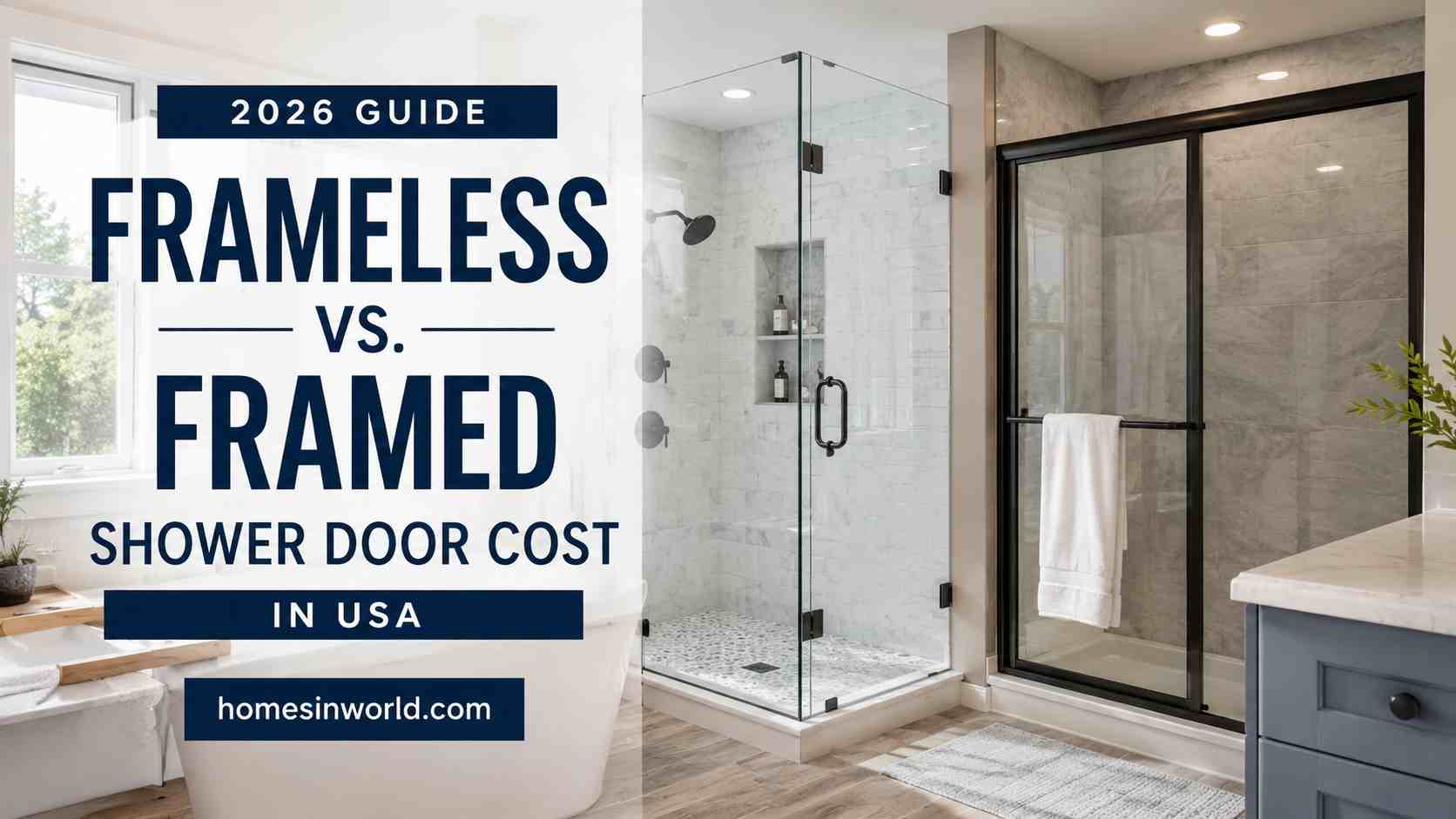
Frameless vs Framed Shower Door Cost in USA (2026 Guide)
Choosing between a frameless and framed shower door may seem like a small bathroom remodeling decision at first — until you start comparing installation costs, glass quality, maintenance, and long-term value. For many homeowners in the USA, this single upgrade can completely change the appearance, functionality, and resale appeal of a bathroom remodel.
Frameless shower doors are known for their sleek modern look, open design, and luxury feel. Framed shower doors, on the other hand, remain one of the most affordable and practical options for everyday bathroom renovations. The challenge is deciding which option actually makes sense for your budget, bathroom layout, and remodeling goals in 2026.
In most cases, framed shower door installation costs range from $700 to $2,000 in the USA, while frameless shower doors typically cost between $1,800 and $4,500 or more depending on glass thickness, custom sizing, hardware finishes, and labor rates. That price difference alone causes many homeowners to ask an important question:
Are frameless shower doors really worth the extra cost?
This guide breaks down everything you need to know before hiring a contractor or starting your bathroom remodel. You’ll learn the real cost differences between framed and frameless shower doors, what affects installation pricing, hidden expenses homeowners often overlook, maintenance considerations, resale value impact, and which shower door style works best for different bathroom sizes and remodeling budgets.
Whether you’re planning a luxury master bathroom renovation, updating a small guest bath, or trying to stay within a strict remodeling budget, this 2026 USA cost guide will help you confidently choose the right shower enclosure for your home.
Frameless vs Framed Shower Door Cost: Quick Comparison for 2026
The biggest difference between frameless vs framed shower door cost in the USA comes down to materials, glass thickness, hardware quality, and installation complexity. In 2026, most homeowners spend between $700 and $2,000 for a framed shower door installation, while a frameless shower door typically costs $1,800 to $4,500 or more for professional installation.
Frameless shower enclosures are considered a premium bathroom remodeling upgrade because they use thick tempered safety glass, heavy-duty hinges, custom measurements, and minimal metal framing. Framed shower doors are usually more budget-friendly and easier to install, making them a popular choice for guest bathrooms, rental properties, and cost-conscious remodels.
For homeowners comparing bathroom remodeling prices, the right option often depends on:
- remodeling budget
- bathroom size
- long-term maintenance expectations
- desired home resale value
- overall bathroom design style
Average Frameless vs Framed Shower Door Cost in USA (2026)
| Shower Door Type | Average Installed Cost | Best For |
| Framed Shower Door | $700–$2,000 | Budget bathroom remodels |
| Frameless Shower Door | $1,800–$4,500+ | Luxury bathroom renovations |
| Semi-Frameless Shower Door | $1,200–$3,000 | Mid-range bathroom upgrades |
In most cases, framed shower doors use thinner glass panels surrounded by aluminum framing, which lowers both material and labor costs. Frameless shower doors rely on thicker tempered glass — usually 3/8-inch or 1/2-inch glass — to maintain structural strength without heavy framing. That premium glass alone can significantly increase shower glass installation pricing.
Labor costs also vary considerably between framed vs frameless shower doors.
A contractor can usually install a standard framed sliding shower door relatively quickly because the frame provides flexibility for alignment adjustments. Frameless shower enclosures require far more precision during measurement and installation. Even small leveling problems in bathroom walls or tile surfaces can complicate installation and increase labor time.
Several factors affect the average shower enclosure cost in 2026:
- custom glass sizing
- bathroom layout complexity
- sliding vs pivot door style
- glass thickness
- hardware finish upgrades
- waterproofing modifications
- local contractor labor rates
- demolition or shower replacement work
For example, a basic framed bypass shower door in a small secondary bathroom may cost under $1,000 installed in many parts of the USA. However, a custom frameless walk-in shower enclosure with matte black hardware and thick low-iron glass can easily exceed $5,000 in upscale remodeling projects.
Homeowners should also consider long-term maintenance and appearance when comparing shower door cost comparison estimates.
Framed shower doors are generally:
- more affordable upfront
- easier to install
- better at containing water
- practical for family bathrooms
Frameless shower doors are often preferred because they:
- create a modern open look
- make small bathrooms feel larger
- improve luxury appeal
- reduce visible metal hardware
- simplify glass cleaning in some designs
Another important consideration is bathroom resale appeal. In competitive housing markets across the USA, frameless shower doors are increasingly associated with upscale bathroom remodeling and modern interior design trends. Many homeowners upgrading master bathrooms choose frameless systems specifically for aesthetics and perceived home value improvements.
Before choosing between framed vs frameless shower doors, it’s smart to compare:
- total installation pricing
- future maintenance costs
- bathroom remodeling goals
- durability expectations
- visual style preferences
A lower upfront cost does not always mean better long-term value, especially in higher-end bathroom renovation projects where design and resale appeal play a major role.
Average Frameless Shower Door Cost in USA
The average frameless shower door cost in the USA ranges from $1,800 to $4,500 installed in 2026, although luxury custom shower enclosure projects can exceed $6,000 depending on glass size, hardware upgrades, and bathroom layout complexity. Frameless shower doors remain one of the most popular bathroom remodeling upgrades because they create a clean, modern appearance while making bathrooms feel larger and brighter.
Unlike traditional framed systems, frameless shower enclosures rely on thick tempered safety glass and premium mounting hardware instead of bulky aluminum frames. This minimalist design increases both material and installation costs, especially in custom bathroom remodels where precise measurements are required.
Several factors affect frameless shower installation cost across the USA:
- shower size and configuration
- custom glass fabrication
- glass thickness
- sliding vs pivot door systems
- premium hardware finishes
- wall reinforcement requirements
- waterproofing upgrades
- local contractor labor rates
A basic frameless glass shower with a single fixed panel and hinged door is usually far less expensive than a large walk-in shower enclosure with multiple frameless glass panels and custom finishes.
For example:
- A small frameless shower enclosure in a guest bathroom may cost around $2,000 installed.
- A luxury master bathroom with low-iron glass, matte black hardware, and custom glass panels can easily reach $5,000 to $7,000.
Many bathroom contractors also charge more for frameless systems because installation requires greater precision. Unlike framed shower doors, frameless enclosures leave little room for uneven tile lines or wall imperfections. Even minor leveling issues can increase labor time and material adjustments.
Homeowners comparing bathroom remodeling prices should also understand that frameless shower doors are often considered a premium upgrade in modern American homes. In many upscale remodeling projects, frameless glass panels are used to create:
- open-concept shower layouts
- spa-style bathroom designs
- minimalist interiors
- luxury walk-in shower systems
Another important pricing factor is hardware quality. Premium shower hardware such as brushed nickel hinges, matte black brackets, heavy-duty pivot systems, and concealed mounting clips can significantly raise the total frameless shower enclosure cost.
In higher-end remodeling projects, contractors often recommend frameless shower systems because they:
- improve visual openness
- showcase decorative tile work
- increase modern resale appeal
- reduce bulky framing around glass panels
However, homeowners working with tight remodeling budgets should carefully compare total installation pricing before choosing custom frameless systems. While the visual impact is impressive, upgrades like thicker glass, oversized panels, and custom fabrication can quickly increase costs beyond the original renovation budget.
Frameless Shower Door Material Costs
Material pricing is one of the biggest reasons frameless shower glass prices are significantly higher than framed alternatives. Most frameless shower enclosures use thick tempered safety glass designed to support itself without full metal framing.
The most common shower glass thickness options include:
- 3/8 inch glass
- 1/2 inch shower glass
genui{“math_block_widget_always_prefetch_v2”:{“content”:”y=1800+1200x”}}
In general, 3/8-inch tempered glass is more affordable and commonly used in standard frameless shower installations, while 1/2-inch glass creates a heavier, more luxurious appearance but increases tempered glass cost substantially.
Average frameless shower glass prices in 2026:
| Material Type | Average Cost |
| Standard 3/8-inch tempered glass | $600–$1,200 |
| Premium 1/2-inch tempered glass | $1,000–$2,000+ |
| Low-iron ultra-clear glass | Additional 15%–30% |
| Custom-cut glass panels | Additional $500–$1,500 |
Low-iron glass has become increasingly popular in luxury bathroom remodeling because it removes the green tint commonly seen in standard tempered glass. While visually impressive, it adds noticeable cost to custom shower enclosure projects.
Additional material upgrades may include:
- matte black hardware
- brushed gold finishes
- sliding frameless systems
- oversized glass panels
- anti-spot protective coatings
These premium features improve appearance and durability but also increase total frameless shower enclosure cost.
Frameless Shower Door Labor Costs
Frameless shower installation labor is typically more expensive than framed shower door installation because the process requires exact measurements, specialized hardware alignment, and experienced bathroom contractors.
In most USA markets, contractor shower installation pricing for frameless systems ranges between $400 and $1,500+ depending on project complexity.
Labor costs are influenced by:
- tile leveling conditions
- shower size
- wall reinforcement needs
- custom glass fitting
- door style
- demolition requirements
- waterproofing corrections
For example, installing a simple frameless hinged shower door in a newly remodeled bathroom may only require one day of labor. However, custom enclosure installation involving multiple glass panels, floating benches, or uneven tile surfaces may take several days and require advanced adjustments.
Professional installers often recommend additional structural support behind tile walls because frameless glass doors are substantially heavier than framed systems. Heavy-duty pivot hinges and frameless mounting brackets must be securely anchored to avoid long-term alignment issues.
When reviewing bathroom contractor estimates, homeowners should ask whether pricing includes:
- demolition and disposal
- waterproofing repairs
- custom measurements
- hardware installation
- glass delivery
- wall reinforcement
- warranty coverage
Lower installation quotes sometimes exclude these important services, which can lead to unexpected remodeling expenses later in the project.
Average Framed Shower Door Cost in USA
The average framed shower door cost in the USA ranges from $700 to $2,000 installed in 2026, making framed systems one of the most affordable options for bathroom remodeling projects. Homeowners looking for a practical and budget-friendly shower enclosure often choose framed shower doors because they provide reliable water containment, lower installation costs, and easier maintenance compared to premium frameless designs.
Framed shower enclosure pricing is typically lower because the aluminum shower frame supports thinner glass panels, reducing both material and labor expenses. These systems are commonly installed in:
- guest bathrooms
- family bathrooms
- rental properties
- entry-level bathroom remodels
- smaller shower spaces
Most framed shower installations use sliding or bypass shower doors mounted within a full aluminum frame. The frame provides structural support and helps compensate for minor wall or tile irregularities, which simplifies installation and reduces contractor labor time.
In many bathroom remodeling projects across the USA, framed sliding enclosures remain popular because they:
- cost less than frameless systems
- reduce water leakage risks
- work well in compact bathrooms
- require less structural reinforcement
- are easier to replace or repair
Average framed shower enclosure pricing in 2026:
| Framed Shower Door Type | Average Installed Cost |
| Basic framed sliding door | $700–$1,200 |
| Semi-upgraded framed enclosure | $1,200–$1,800 |
| Custom framed shower system | $1,800–$2,500+ |
Several factors affect framed shower installation cost:
- shower size
- glass thickness
- aluminum frame quality
- sliding vs pivot door style
- hardware finish upgrades
- demolition requirements
- contractor labor rates
- bathroom layout complexity
For example, a simple framed bypass shower door installed in a standard alcove shower is usually far less expensive than a custom corner shower enclosure with upgraded glass panels and premium brushed nickel hardware.
Framed systems also tend to be more forgiving during installation. Unlike frameless shower doors that require perfectly level surfaces, framed enclosures can better accommodate uneven tile walls or minor construction imperfections. This flexibility often reduces installation difficulty and overall remodeling costs.
Homeowners comparing bathroom remodeling prices should also consider long-term practicality. Framed shower doors are often recommended for high-use bathrooms because the metal framing and rubber seals improve water resistance and durability in busy households.
However, framed systems may require more cleaning around tracks and metal edges where soap scum and moisture can accumulate over time.
Framed Shower Door Material Costs
Framed shower door prices are largely determined by the type of aluminum shower frame, glass quality, hardware finishes, and enclosure size. Because framed systems use thinner framed glass panels supported by metal framing, material costs are usually significantly lower than frameless alternatives.
Most framed enclosure materials include:
- aluminum framing
- tempered glass panels
- sliding door rollers
- shower door tracks
- rubber seals
- metal handles and hardware
Average material pricing in 2026:
| Material Component | Average Cost |
| Basic aluminum shower frame | $150–$400 |
| Standard framed glass panels | $200–$600 |
| Premium hardware finishes | $100–$400 |
| Sliding shower door tracks | $75–$250 |
The most affordable framed shower systems typically use thinner tempered glass combined with lightweight aluminum framing. Higher-end framed shower doors may include:
- brushed nickel finishes
- matte black frames
- thicker glass panels
- corrosion-resistant hardware
- upgraded sliding rollers
Homeowners choosing framed sliding enclosures should also compare hardware durability. Lower-cost shower door tracks and rollers may wear out faster in busy family bathrooms, especially in humid environments where moisture exposure is constant.
While framed shower door prices are generally lower upfront, investing in better hardware quality can reduce long-term repair and maintenance issues.
Framed Shower Door Installation Labor Costs
Framed shower door installation labor is usually more affordable than frameless installation because framed systems are easier to align and install. In most USA markets, shower door installation cost for framed systems ranges from $250 to $800 depending on enclosure complexity and local contractor labor rates.
Several factors affect bathroom remodeling labor costs:
- shower dimensions
- demolition work
- old shower door removal
- tile condition
- sliding vs hinged door setup
- plumbing accessibility
- waterproofing repairs
For example, replacing an existing framed bypass shower door in a standard alcove shower is often a quick one-day project. However, installing a larger custom framed enclosure with upgraded hardware may require additional labor time and adjustments.
Professional contractors often prefer framed systems for straightforward remodeling projects because:
- installation is faster
- alignment adjustments are easier
- framing hides minor wall imperfections
- waterproof sealing is simpler
When reviewing contractor estimates, homeowners should ask whether labor pricing includes:
- removal of old shower doors
- disposal fees
- hardware installation
- waterproofing adjustments
- track alignment
- warranty coverage
Lower-cost installation quotes may not include these services, which can increase total framed shower installation cost later during the remodel.
Frameless vs Framed Shower Doors: Key Cost Differences
When comparing frameless vs framed shower doors, the biggest differences usually come down to installation complexity, glass thickness, hardware quality, long-term maintenance, and overall bathroom remodeling goals. While both options serve the same purpose, the total cost difference between these shower enclosure systems can be significant in modern USA bathroom remodels.
In 2026, most homeowners pay:
- $700 to $2,000 for framed shower doors
- $1,800 to $4,500+ for frameless shower doors
The reason for this pricing gap is not just appearance. Frameless shower systems require heavier tempered safety glass, custom fabrication, premium mounting hardware, and more precise installation techniques. Framed shower enclosures use aluminum framing to support thinner glass panels, reducing both material and labor expenses.
A simple shower enclosure comparison quickly shows how these systems fit different remodeling budgets:
| Feature | Frameless Shower Doors | Framed Shower Doors |
| Average Cost | Higher | Lower |
| Glass Thickness | 3/8″ to 1/2″ | Thin tempered glass |
| Installation Difficulty | High | Moderate |
| Bathroom Style | Modern luxury | Traditional practical |
| Water Resistance | Moderate | Better sealing |
| Maintenance | Easier glass cleaning | More track cleaning |
| Resale Appeal | Higher | Standard |
Homeowners planning luxury vs budget remodeling projects often choose frameless shower doors for upscale master bathrooms where visual impact matters most. Framed systems are commonly selected for secondary bathrooms, rental properties, and affordable remodels where functionality and cost savings are the priority.
Another major factor affecting bathroom upgrade costs is customization. Frameless shower enclosures are frequently custom-built to fit unique layouts, oversized walk-in showers, or designer tile installations. Framed systems are easier to standardize, which helps reduce fabrication and labor expenses.
Which Shower Door Is Cheaper?
For homeowners focused on affordability, framed shower doors are almost always the cheapest shower door option. In most affordable shower remodel projects, a standard framed sliding enclosure costs far less than a custom frameless system because the aluminum frame provides structural support and simplifies installation.
Framed shower systems are especially popular for:
- budget bathroom renovation projects
- guest bathrooms
- rental property upgrades
- starter home remodels
- quick shower replacements
Entry-level shower enclosure pricing typically starts around:
- $700–$1,200 for framed sliding doors
- $1,800+ for frameless installations
A framed bypass shower door installed in a standard alcove shower is one of the most cost-effective bathroom remodeling upgrades available in the USA. Because framed systems are easier to align and waterproof, contractor labor costs are usually lower as well.
Homeowners trying to stay within a strict remodeling budget often choose framed shower doors because they:
- reduce upfront remodeling costs
- install faster
- require less custom fabrication
- minimize expensive structural modifications
However, lower upfront pricing does not always mean better long-term value, especially in upscale bathroom renovations where design and resale appeal matter more.
Why Frameless Shower Doors Cost More
Many homeowners ask why frameless shower doors are expensive compared to traditional framed systems. The answer mainly comes down to materials, customization, and installation precision.
Frameless shower glass pricing is higher because these systems rely on:
- heavy tempered glass
- thicker glass panels
- custom fabrication
- premium hardware
- precision measurements
Most frameless shower enclosures use 3/8-inch or 1/2-inch tempered safety glass that is strong enough to function without full aluminum framing.
y=700+350x
The heavier the glass, the more expensive the shower enclosure becomes. Larger walk-in shower designs with oversized frameless glass panels can dramatically increase both material and labor costs.
Additional premium upgrades often include:
- matte black hardware
- brushed gold finishes
- low-iron ultra-clear glass
- custom pivot hinges
- frameless sliding systems
- anti-spot coatings
Unlike framed systems, frameless shower doors also require exact measurements because there is little room for installation error. Uneven tile lines, wall imperfections, or poor waterproofing can complicate installation and increase contractor labor charges.
In many modern luxury bathroom remodels, homeowners are willing to pay more for frameless systems because they:
- create a cleaner minimalist appearance
- make bathrooms feel larger
- highlight decorative tile work
- improve upscale resale appeal
Long-Term Maintenance Cost Comparison
Long-term shower door maintenance cost is another important factor when comparing framed vs frameless maintenance requirements.
Framed shower doors usually require:
- regular track cleaning
- seal replacement
- frame corrosion monitoring
- roller adjustments
- mold removal around metal edges
Soap scum and moisture often collect inside framed shower door tracks, especially in busy family bathrooms with hard water exposure.
Frameless shower doors eliminate many bulky tracks and metal edges, which simplifies glass cleaning in some layouts. However, frameless systems may still require:
- periodic hardware tightening
- hinge adjustments
- protective coating maintenance
- water spot cleaning on exposed glass
Corrosion resistance also varies depending on hardware quality. Lower-grade hinges and brackets may wear faster in humid bathroom environments.
Homeowners comparing framed vs frameless maintenance should consider:
- cleaning frequency
- replacement part costs
- water leakage prevention
- hardware durability
- long-term appearance
In many cases, premium shower hardware and proper installation quality have a bigger impact on maintenance costs than the shower door style itself.
Frameless vs Framed Shower Door Pros and Cons
When comparing framed vs frameless shower doors pros and cons, homeowners often discover that the “best shower door type” depends on remodeling goals, budget, bathroom layout, and long-term maintenance expectations. Both options offer advantages, but they create very different experiences in terms of appearance, durability, cleaning, and installation complexity.
Frameless shower doors are widely associated with modern shower design because they create an open, minimalist appearance using thick tempered glass and limited metal hardware. Framed shower doors focus more on affordability, water containment, and practical everyday performance.
A quick comparison shows how these systems differ:
| Feature | Frameless Shower Doors | Framed Shower Doors |
| Appearance | Modern and open | Traditional and practical |
| Installation Cost | Higher | Lower |
| Cleaning | Easier glass access | More track cleaning |
| Water Resistance | Moderate | Better sealing |
| Bathroom Style | Luxury remodels | Budget remodels |
| Shower Enclosure Durability | Thick glass durability | Strong frame support |
Homeowners planning upscale bathroom remodeling decisions often choose frameless systems because they visually expand smaller bathrooms and highlight decorative tile work. Framed shower enclosures remain extremely popular in family bathrooms and rental properties because they are durable, affordable, and easier to maintain over time.
Frameless Shower Door Advantages
One of the biggest frameless shower door benefits is visual appeal. Frameless systems create a luxury shower enclosure appearance that works especially well in modern bathroom remodel projects focused on clean lines and open-concept layouts.
Because these shower enclosures use thick tempered safety glass without bulky aluminum framing, they can make bathrooms feel:
- larger
- brighter
- more modern
- less visually crowded
Homeowners often choose frameless shower doors for:
- luxury master bathrooms
- spa-style bathroom renovations
- minimalist bathroom style designs
- high-end walk-in showers
- custom tile showcases
Additional frameless shower advantages include:
- fewer metal edges for soap scum buildup
- easier glass cleaning access
- improved modern resale appeal
- cleaner visual aesthetics
- customizable glass configurations
Many contractors also recommend frameless systems for contemporary remodeling projects because they pair well with:
- floating vanities
- oversized tile
- matte black fixtures
- curbless showers
- minimalist interiors
Another important benefit is design flexibility. Frameless glass panels can be customized for unique shower layouts, oversized enclosures, and luxury bathroom remodels where standard framed systems may look bulky or outdated.
However, homeowners should understand that premium appearance usually comes with higher installation costs and more precise construction requirements.
Framed Shower Door Advantages
Framed shower door benefits mainly focus on practicality, affordability, and long-term functionality. For many homeowners, framed systems provide the best balance between performance and cost.
An affordable shower enclosure with aluminum framing is usually:
- easier to install
- less expensive
- more water-resistant
- simpler to repair
- better for tight remodeling budgets
Framed shower doors are especially common in:
- secondary bathrooms
- family bathrooms
- apartment renovations
- rental property upgrades
- entry-level bathroom remodels
The aluminum frame helps strengthen the enclosure while improving water leak prevention around door edges and corners. This added sealing protection is one reason framed systems are often recommended for busy households where daily shower use is high.
Easy installation is another major advantage. Because framed shower systems can better accommodate slight wall imperfections and uneven tile surfaces, contractors usually complete installation faster than frameless systems.
Additional framed shower advantages include:
- lower material costs
- lower labor costs
- easier replacement part availability
- improved shower splash containment
- reduced risk of glass movement issues
For homeowners prioritizing affordability and practicality over luxury aesthetics, framed shower enclosures remain one of the most reliable bathroom remodeling solutions available in the USA.
Common Problems Homeowners Experience
Both frameless and framed shower systems have potential drawbacks that homeowners should understand before making a remodeling decision.
Common frameless shower door problems include:
- minor water leakage
- expensive hardware replacement
- visible water spots on exposed glass
- alignment issues if installed incorrectly
- higher repair costs for damaged glass
Because frameless systems use limited metal framing, leaking shower doors can sometimes occur near door gaps or bottom edges if waterproofing and installation are not done properly.
Large frameless glass panels also require:
- strong wall anchoring
- precise leveling
- professional installation expertise
Even small measurement errors can create long-term door alignment issues.
Common framed shower door issues typically involve:
- mold buildup inside tracks
- soap scum accumulation
- corrosion around metal framing
- worn rollers or sliding hardware
- difficult track maintenance
Framed sliding shower doors often collect moisture inside bottom tracks, especially in humid bathrooms with poor ventilation. Over time, this can increase mold growth and cleaning requirements.
Homeowners should also consider maintenance expectations:
- frameless systems require more visible glass cleaning
- framed systems require more detailed track cleaning
- lower-quality hardware may wear faster in humid environments
In many remodeling projects, installation quality has a bigger impact on long-term performance than whether the shower door is framed or frameless. A professionally installed shower enclosure with quality hardware and proper waterproofing usually performs far better than a poorly installed premium system.
Hidden Costs Homeowners Forget
One of the biggest mistakes homeowners make during a bathroom remodel is focusing only on the visible price of the shower door itself while overlooking the hidden shower remodel costs that can significantly increase the final project budget. In many USA remodeling projects, shower installation extra costs add hundreds or even thousands of dollars beyond the original contractor estimate.
A frameless or framed shower enclosure may appear straightforward at first, but several behind-the-scenes expenses often emerge once demolition begins or custom installation requirements become clear.
Common hidden costs include:
- demolition costs
- waterproof membrane upgrades
- permit fees
- wall reinforcement
- plumbing adjustments
- tile repairs
- custom glass fabrication
- upgraded hardware
- structural modifications
For example, homeowners replacing an older framed shower with a heavy frameless glass enclosure may discover that existing walls cannot safely support thick tempered glass panels without additional framing reinforcement behind the tile.
In older homes, contractors frequently uncover:
- water damage
- mold behind walls
- deteriorated tile substrate
- outdated plumbing
- uneven framing
These issues can dramatically increase remodeling expenses once the shower area is opened.
Average hidden shower installation costs in 2026:
| Hidden Upgrade | Average Cost |
| Demolition and disposal | $300–$1,200 |
| Waterproof membrane installation | $500–$1,500 |
| Wall reinforcement | $300–$1,000 |
| Permit fees | $100–$500 |
| Plumbing relocation | $500–$2,500 |
| Tile repair or replacement | $400–$2,000 |
Many bathroom remodeling quotes also exclude finish upgrades that homeowners later decide to add after seeing design samples or showroom displays.
Contractors often recommend setting aside:
- 10%–20% contingency budget
for unexpected remodeling costs, especially in older homes where hidden moisture damage is more common.
Homeowners planning custom shower remodels should also ask contractors whether pricing includes:
- waterproofing materials
- debris removal
- permit applications
- structural modifications
- custom measurements
- hardware installation
- tile patching
Lower estimates sometimes exclude these services, creating surprise expenses later in the renovation.
Another overlooked factor is installation timing. Frameless shower glass often requires several weeks for fabrication after measurements are finalized, which can extend project timelines and increase labor coordination costs.
Custom Glass and Hardware Upgrades
Custom shower glass cost is one of the most common reasons bathroom remodel budgets increase during installation. While standard shower enclosures are relatively predictable in price, custom enclosure fabrication quickly becomes more expensive when homeowners choose oversized glass panels, luxury finishes, or non-standard layouts.
Premium shower hardware can also add substantial costs to both framed and frameless shower systems.
Popular upgrades include:
- matte black hardware
- brushed gold finishes
- nickel hinges
- oversized pull handles
- frameless pivot systems
- anti-spot protective coatings
Many homeowners underestimate how expensive premium hardware can become in luxury bathroom remodels.
Average custom upgrade pricing:
| Upgrade Feature | Average Additional Cost |
| Low-iron ultra-clear glass | +15%–30% |
| Matte black hardware | $200–$600 |
| Brushed nickel hinges | $150–$500 |
| Oversized custom glass panels | $500–$2,000 |
| Protective glass coating | $150–$400 |
Custom enclosure fabrication may also require:
- specialized glass cutting
- reinforced mounting systems
- custom wall brackets
- upgraded hinges for heavier glass
For example, a standard frameless shower enclosure may fit within a moderate remodeling budget, but adding floor-to-ceiling glass panels, designer hardware, and ultra-clear low-iron glass can increase total pricing by several thousand dollars.
Homeowners should carefully review all upgrade selections before approving fabrication because custom glass panels are usually non-refundable once production begins.
Waterproofing and Structural Costs
Shower waterproofing costs are another major expense homeowners often overlook during bathroom remodeling projects. Proper waterproofing is critical because even small leaks behind tile or glass panels can eventually cause mold growth, structural damage, and costly repairs.
Professional contractors typically install:
- waterproof membrane systems
- shower pans
- moisture barriers
- reinforced tile substrate materials
These hidden structural components are essential for long-term durability, especially in custom frameless shower installations where water exposure is more direct.
genui{“math_block_widget_always_prefetch_v2”:{“content”:”y=500+250x”}}
Wall reinforcement is particularly important for frameless shower systems because thick tempered glass panels are significantly heavier than framed enclosures. Without proper structural support behind tile walls, hinges and mounting brackets may loosen over time.
Common structural upgrade costs include:
- cement backer board installation
- waterproof membrane application
- reinforced wall studs
- custom shower pan replacement
- floor leveling corrections
In many older homes, demolition reveals outdated drywall or water-damaged tile substrate that must be replaced before installation can continue safely.
Permit fees may also apply if the project involves:
- plumbing relocation
- structural framing changes
- electrical modifications
- major bathroom reconstruction
Homeowners trying to reduce remodeling costs should never skip waterproofing or structural upgrades to save money. Poor waterproofing is one of the most expensive bathroom remodeling mistakes because hidden moisture damage can remain unnoticed for years before major repairs become necessary.
Best Shower Door Option by Budget
Choosing the best shower door by budget depends on more than just the initial installation price. Homeowners should also consider long-term durability, maintenance costs, bathroom size, remodeling goals, and resale appeal before deciding between affordable vs luxury shower doors.
In many USA bathroom remodels, shower enclosures are grouped into three general budget categories:
- entry-level remodel options
- mid-range shower enclosure systems
- premium bathroom renovation upgrades
Each category serves different homeowner needs and renovation priorities.
| Budget Level | Recommended Shower Door Type | Average Installed Cost |
| Entry-Level Remodel | Framed sliding shower door | $700–$1,200 |
| Mid-Range Remodel | Semi-frameless enclosure | $1,200–$3,000 |
| Luxury Remodel | Frameless custom glass enclosure | $3,000–$6,000+ |
For homeowners focused primarily on functionality and affordability, framed shower doors remain the most practical solution. These systems offer reliable water containment and lower installation costs without requiring expensive structural modifications.
Mid-range shower enclosure options usually combine some frameless design elements with partial framing to balance:
- appearance
- durability
- cost control
- easier maintenance
Luxury bathroom renovation projects typically prioritize aesthetics, custom layouts, and premium finishes. Frameless glass systems are especially popular in modern spa-style remodels where homeowners want a more open and upscale bathroom appearance.
Several factors influence which shower enclosure provides the best value:
- overall bathroom remodeling budget
- home resale goals
- frequency of bathroom use
- shower size and layout
- maintenance expectations
- contractor labor costs
For example, spending heavily on luxury frameless glass may not make sense in a small guest bathroom where resale impact is minimal. However, in a high-end master bathroom renovation, a premium shower enclosure can dramatically improve visual appeal and buyer perception.
Homeowners should also think beyond upfront pricing. A cheaper shower enclosure may require:
- more maintenance
- earlier hardware replacement
- additional cleaning
- future upgrades
Meanwhile, premium systems often provide:
- stronger visual impact
- better integration with modern designs
- increased luxury appeal
- more customization flexibility
Another smart budgeting strategy is balancing spending across the entire bathroom remodel. Overspending on a custom shower enclosure while neglecting waterproofing, tile quality, lighting, or ventilation can create an uneven renovation where certain areas feel outdated despite the expensive shower upgrade.
Best Option for Budget Bathroom Remodels
For homeowners working within a tight remodeling budget, the cheapest shower door option is usually a framed shower enclosure with standard tempered glass and aluminum framing.
These systems remain popular because they:
- cost less upfront
- install faster
- reduce labor expenses
- provide solid water resistance
- are easier to maintain
Affordable bathroom upgrades often focus on maximizing functionality without unnecessary luxury add-ons. In many entry-level remodels, contractors recommend framed sliding or bypass shower doors because they work well in:
- guest bathrooms
- rental properties
- starter homes
- small bathroom remodels
Basic framed shower systems usually include:
- aluminum framing
- tempered glass panels
- sliding tracks
- standard hardware finishes
Many homeowners can still achieve a modern appearance by choosing:
- matte black frames
- clear glass panels
- slim-profile hardware
- updated tile surrounds
These upgrades improve style without the high cost of fully custom frameless systems.
Budget-conscious remodelers should also prioritize:
- proper waterproofing
- durable hardware
- quality installation
- easy-to-clean track systems
In many cases, a professionally installed framed shower enclosure delivers excellent long-term value for homeowners who want practical performance and lower maintenance costs.
Best Option for Luxury Bathroom Remodels
Luxury frameless shower doors are often considered the top choice for homeowners investing in premium bathroom renovation projects. These systems create a high-end spa-style bathroom design that emphasizes openness, natural light, and minimalist aesthetics.
A custom glass shower enclosure can dramatically transform the appearance of a master bathroom by removing bulky framing and showcasing decorative tile work.
Luxury frameless systems commonly include:
- oversized tempered glass panels
- low-iron ultra-clear glass
- matte black or brushed gold hardware
- floating glass partitions
- curbless shower entries
- custom pivot doors
High-end homeowners often choose frameless enclosures because they:
- make bathrooms feel larger
- increase upscale visual appeal
- complement modern architecture
- improve luxury resale perception
Many premium bathroom renovations now combine frameless glass with:
- large-format tile
- rainfall shower systems
- floating vanities
- heated flooring
- recessed lighting
These features create a cohesive spa-inspired design that feels significantly more upscale than traditional framed shower systems.
However, luxury frameless shower doors also require:
- higher installation budgets
- professional custom fabrication
- reinforced wall support
- precision waterproofing
Homeowners planning luxury remodels should work with experienced contractors familiar with custom glass shower enclosure installation because poor alignment or improper waterproofing can undermine the long-term performance of premium frameless systems.
Expert Remodeling Tips Before Choosing a Shower Door
Choosing the right shower door is one of the most important decisions in a bathroom remodel because the enclosure affects appearance, functionality, cleaning requirements, waterproofing performance, and long-term maintenance costs. Many homeowners focus only on style or price, but experienced contractors recommend evaluating the entire bathroom layout before selecting a framed or frameless system.
The best shower remodeling tips usually start with proper bathroom planning. Before ordering any shower enclosure, homeowners should consider:
- bathroom size
- shower layout
- door swing clearance
- ventilation quality
- tile design
- waterproofing condition
- household usage patterns
For example, a frameless pivot door may look beautiful in a showroom, but it may not function well in a compact bathroom where limited clearance blocks the door from opening fully.
Professional contractor advice often includes matching the shower enclosure design to the overall renovation budget and bathroom style. In many remodels:
- framed sliding doors work best for budget-friendly family bathrooms
- frameless glass systems fit luxury master bathroom upgrades
- corner enclosures maximize space in small bathrooms
- bypass doors improve functionality in narrow layouts
Another overlooked factor is maintenance expectations. Some homeowners prefer frameless shower systems because they create a cleaner minimalist appearance, while others choose framed systems because they provide better water containment and lower replacement costs.
Experienced bathroom remodelers also recommend:
- using clear glass to make smaller bathrooms feel larger
- avoiding oversized hardware in compact layouts
- investing in proper waterproofing before cosmetic upgrades
- prioritizing quality installation over trendy finishes
A professionally installed shower enclosure with durable materials and proper alignment usually performs better long-term than an expensive system installed incorrectly.
Homeowners planning a full bathroom remodel should also coordinate shower door selection early in the renovation process because:
- tile layouts affect glass measurements
- waterproofing impacts installation requirements
- custom glass fabrication requires lead time
- structural reinforcement may be necessary for frameless systems
In many luxury bathroom projects, frameless shower doors are measured only after tile installation is complete to ensure accurate glass fabrication and alignment.
Mistakes to Avoid During Shower Door Installation
Many costly shower remodeling mistakes happen because homeowners underestimate how important waterproofing, measurements, and installation precision are during a bathroom renovation.
One of the most common shower installation mistakes is improper waterproofing behind tile walls and shower pans. Even premium frameless glass systems can develop leaks and hidden water damage if the waterproof membrane is poorly installed or incomplete.
Common installation mistakes include:
- incorrect measurements
- uneven glass alignment
- poor ventilation planning
- weak wall reinforcement
- low-quality hardware selection
- improper slope around shower pans
For example, frameless shower doors require exact measurements because thick tempered glass panels cannot easily be adjusted after fabrication. Even small tile inconsistencies can create alignment problems that affect:
- door closure
- waterproof sealing
- hinge durability
- long-term glass stability
Poor ventilation is another issue homeowners often ignore during bathroom remodeling. Without proper airflow, moisture buildup can increase:
- mold growth
- hardware corrosion
- track deterioration
- seal damage
Contractors also warn against choosing shower doors based only on appearance. Oversized custom glass may look impressive, but it can overwhelm smaller bathrooms and increase maintenance needs if the layout is not designed properly.
Additional remodeling mistakes to avoid:
- skipping wall reinforcement for frameless glass
- choosing low-grade hinges or rollers
- failing to level shower floors correctly
- rushing waterproof membrane curing times
- ignoring manufacturer installation requirements
In many cases, spending more on professional installation and waterproofing provides better long-term value than upgrading cosmetic finishes alone.
Questions to Ask Contractors Before Installation
Hiring shower installation contractors without asking detailed questions can lead to unexpected costs, poor workmanship, and future maintenance problems. Before signing a remodeling agreement, homeowners should carefully review contractor experience, installation methods, and warranty coverage.
Important questions to ask include:
- Are you licensed and insured for bathroom remodeling work?
- Do your remodeling estimates include demolition and disposal?
- Will waterproofing upgrades be required?
- Is wall reinforcement included for frameless systems?
- What type of tempered glass do you recommend?
- How long is the installation warranty?
Homeowners should also ask about contractor warranties and shower enclosure guarantees before approving custom glass fabrication. Many frameless shower systems use expensive custom-cut glass panels that cannot be returned once production begins.
Professional contractors should clearly explain:
- installation timelines
- waterproofing procedures
- hardware quality options
- maintenance recommendations
- cleaning requirements
It is also smart to request written remodeling estimates that break down:
- labor costs
- material pricing
- hardware upgrades
- permit fees
- custom fabrication charges
Experienced shower installation contractors typically provide more accurate pricing because they understand common hidden remodeling issues such as:
- uneven tile walls
- outdated plumbing
- moisture damage
- floor leveling problems
Homeowners should avoid choosing contractors based solely on the lowest estimate. In many bathroom remodeling projects, unusually cheap installation quotes may exclude important services like waterproofing, structural reinforcement, or warranty protection.
When hiring shower installation contractors, homeowners should carefully compare remodeling estimates instead of choosing based only on the lowest price. A professional estimate should clearly outline:
- labor costs
- demolition fees
- waterproofing work
- hardware pricing
- custom glass fabrication
- installation timelines
It is also important to ask about contractor warranties and shower enclosure guarantees before approving the project. Experienced bathroom remodeling contractors typically provide workmanship warranties covering:
- glass alignment
- hardware installation
- waterproof sealing
- door operation
Homeowners should confirm whether the estimate includes:
- permit fees
- wall reinforcement
- debris removal
- waterproof membrane installation
Many low-cost quotes exclude these items, which can increase the final remodeling cost later.
For frameless systems, contractors should also explain:
- custom measurement procedures
- tempered glass lead times
- hinge support requirements
- maintenance recommendations
Choosing a contractor experienced with shower enclosure installation is especially important for frameless glass systems because improper measurements or weak wall anchoring can lead to expensive long-term problems.
Frameless vs Framed Shower Door FAQs
Homeowners comparing framed and frameless shower systems often have similar concerns about maintenance, durability, leaks, cleaning, and overall remodeling value. These frameless shower door FAQs address the most common framed shower door questions homeowners ask before starting a bathroom renovation.
Understanding the long-term differences between these shower enclosure styles can help homeowners make smarter shower remodel decisions based on budget, bathroom layout, and maintenance expectations.
Do Frameless Shower Doors Leak?
Many homeowners ask: do frameless shower doors leak more than framed systems?
Frameless shower doors can allow slightly more water escape because they do not use full aluminum framing or thick rubber seals around every edge. Small gaps are often necessary for door movement and proper hinge operation.
However, professional installation greatly reduces leak risks. Proper waterproofing, accurate glass alignment, and correct shower floor slope are more important than the enclosure style itself.
Modern frameless systems often include:
- clear bottom seals
- side sweeps
- precision hinge spacing
- splash guards
Poor installation is usually the main cause of leaking shower doors rather than the frameless design alone.
Are Framed Shower Doors Outdated?
Framed shower doors are not outdated, although frameless systems are currently more popular in luxury bathroom remodeling trends.
Many homeowners still choose framed shower enclosures because they:
- cost less
- contain water better
- install faster
- work well in compact bathrooms
- require fewer structural upgrades
Modern framed systems now come in:
- matte black finishes
- slim-profile aluminum frames
- upgraded sliding hardware
- contemporary glass styles
In budget-friendly remodels and family bathrooms, framed shower doors remain one of the most practical and durable choices available.
Which Shower Door Lasts Longer?
The most durable shower doors depend heavily on installation quality, hardware strength, and maintenance habits.
Frameless shower doors use thick tempered safety glass and heavy-duty hinges, making the glass itself extremely durable. However, frameless hardware may require occasional adjustments over time.
Framed systems use aluminum framing for extra support, which can improve long-term stability in busy family bathrooms.
In general:
- frameless systems offer stronger glass durability
- framed systems offer better structural support and easier part replacement
High-quality installation and corrosion-resistant hardware often matter more than whether the enclosure is framed or frameless.
Which Shower Door Is Easier to Clean?
Frameless shower doors are usually considered the easiest shower doors to clean because they have fewer metal tracks and corners where soap scum and mold can collect.
The smooth glass surface allows easier wiping and better visibility during cleaning.
Framed shower doors often require more maintenance around:
- sliding tracks
- metal edges
- rubber seals
- roller systems
However, frameless glass may show water spots more visibly, especially in homes with hard water.
Protective coatings and regular maintenance can help reduce cleaning time for both enclosure styles.
Can You Replace Framed Shower Doors With Frameless?
Yes, homeowners can replace framed shower doors with frameless systems during a bathroom remodel or shower upgrade.
However, frameless installations may require:
- custom glass measurements
- reinforced wall support
- upgraded waterproofing
- tile modifications
- stronger mounting hardware
Older bathrooms sometimes need additional wall reinforcement because frameless tempered glass panels are significantly heavier than framed systems.
Professional contractors usually recommend inspecting:
- tile condition
- waterproofing quality
- wall framing strength
before replacing framed enclosures with custom frameless glass systems.
What Thickness Glass Is Best for Frameless Shower Doors?
The best shower glass thickness for frameless shower doors is usually either 3/8-inch or 1/2-inch tempered safety glass.
3/8 vs 1/2 inch glass mainly affects:
- durability
- appearance
- weight
- installation cost
genui{“math_block_widget_always_prefetch_v2”:{“content”:”y=0.375x+0.125″}}
3/8-inch glass is the most common option because it balances strength, appearance, and affordability. It works well for most residential shower enclosures.
1/2-inch glass creates a heavier, more luxurious appearance and is often used in:
- oversized walk-in showers
- luxury spa-style bathrooms
- high-end custom remodels
Thicker glass increases both material pricing and installation complexity, so homeowners should balance aesthetics with budget considerations.
Final Verdict: Which Shower Door Is Best in 2026?
The best shower door type in 2026 ultimately depends on your remodeling priorities, bathroom size, budget, and long-term goals. Both framed and frameless systems offer advantages, but they serve different types of homeowners and renovation projects.
Frameless shower doors are ideal for:
- luxury bathroom remodels
- modern minimalist designs
- upscale master bathrooms
- open-concept shower layouts
- homeowners focused on resale appeal
Framed shower doors are often better for:
- affordable bathroom remodels
- rental property renovations
- family bathrooms
- compact layouts
- practical long-term maintenance
Current bathroom remodeling trends continue to favor frameless glass because it creates a cleaner and more modern appearance. However, framed systems remain one of the most cost-effective and durable shower enclosure recommendations for homeowners focused on value and functionality.
For many remodels, the smartest approach is matching the shower enclosure to the overall renovation budget and home style rather than automatically choosing the most expensive option.
A professionally installed shower enclosure with:
- proper waterproofing
- durable hardware
- quality tempered glass
- accurate measurements
will usually provide better long-term performance than a premium system installed poorly.
Homeowners comparing frameless vs framed final comparison factors should focus on:
- total remodeling budget
- maintenance expectations
- bathroom layout
- long-term durability
- visual style goals
- installation quality
The right shower door should improve both the appearance and functionality of the bathroom while fitting naturally within the overall remodeling plan.