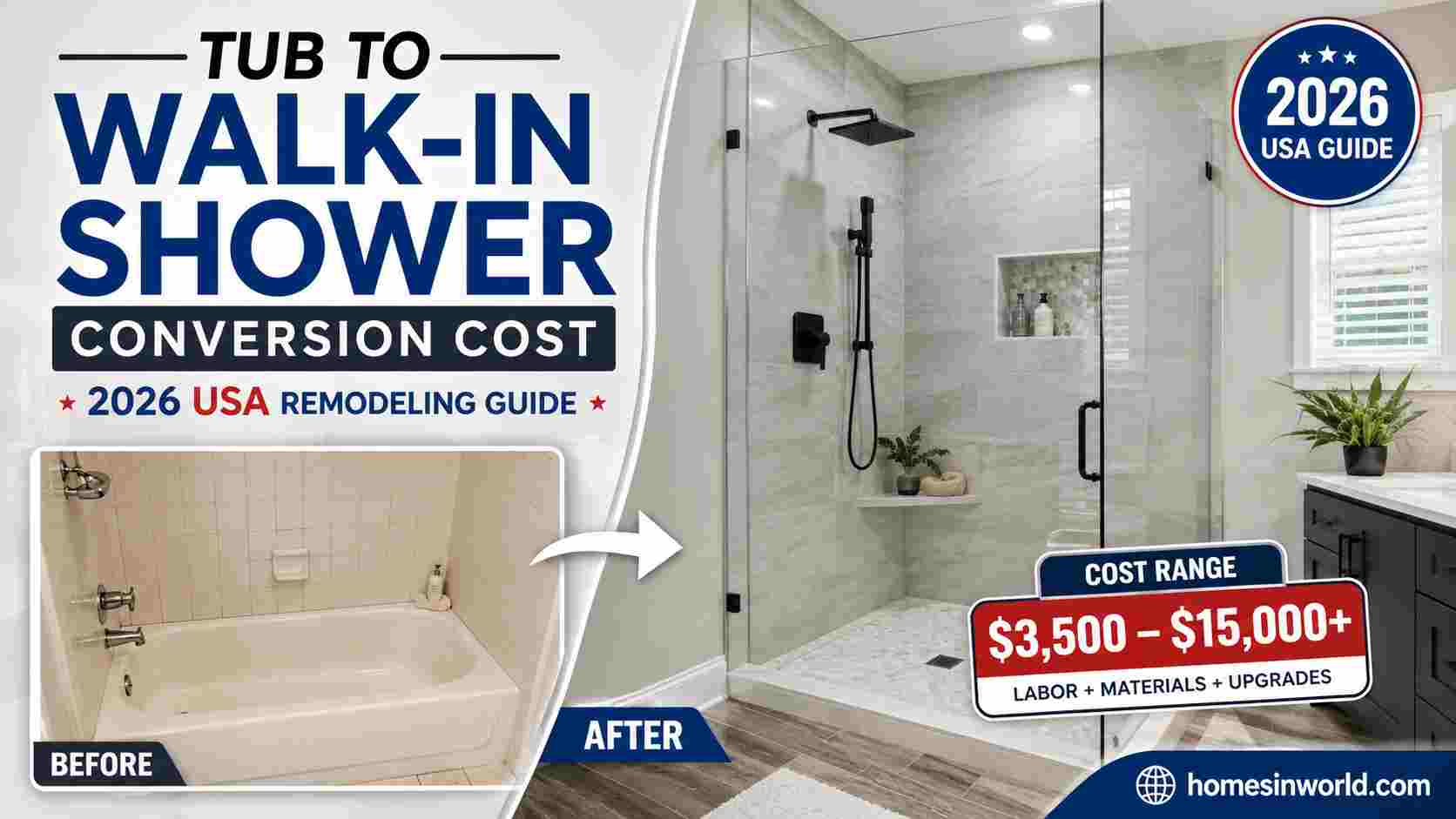
Tub to Walk-In Shower Conversion Cost in USA (2026 Guide)”
A bathtub that barely gets used can take up valuable space, make your bathroom feel outdated, and even become a safety concern over time. That’s why more homeowners across the USA are replacing traditional tubs with sleek, modern walk-in showers in 2026.But before starting your remodel, one big question comes first: how much does a tub to walk-in shower conversion cost?
The answer depends on several factors, including bathroom size, plumbing changes, shower materials, labor costs, and whether you choose a prefab shower kit or a fully custom tile design. In most cases, homeowners spend anywhere from a few thousand dollars for a simple upgrade to well over five figures for a luxury walk-in shower remodel.
A walk-in shower is more than just a visual upgrade. It can improve accessibility, make small bathrooms feel larger, reduce maintenance, and even increase home value in many real estate markets. For seniors and homeowners planning to age in place, barrier-free and ADA-friendly shower designs are becoming one of the most popular bathroom remodeling trends in the United States.
In this complete 2026 guide, you’ll learn the average tub to walk-in shower conversion cost, detailed labor and material pricing, hidden expenses most contractors never mention, and the cheapest ways to save money on your bathroom renovation.
We’ll also compare prefab vs custom showers, explain curbless and ADA shower pricing, cover state-by-state remodeling costs, and help you decide whether replacing your bathtub with a walk-in shower is truly worth the investment.
Whether you’re planning a budget-friendly bathroom update or a luxury spa-style remodel, this guide will help you make smarter remodeling decisions before spending a single dollar.
Average Tub to Walk-In Shower Conversion Cost in 2026
The average tub to walk-in shower conversion cost in the United States ranges from $3,500 to $12,000 in 2026, with most homeowners spending around $6,000 to $9,000 for a professionally installed walk-in shower. Final pricing depends on several factors, including bathroom size, plumbing modifications, waterproofing requirements, material selection, labor rates, and whether the remodel involves a prefab shower kit or a fully custom tile installation.
As bathroom remodeling costs continue rising across the USA, walk-in showers remain one of the most requested upgrades for homeowners seeking modern design, improved accessibility, and lower maintenance bathrooms. Many homeowners are replacing outdated bathtubs with barrier-free showers to create a cleaner layout and increase long-term home value.
Several remodeling elements directly affect walk-in shower conversion cost USA pricing:
- Bathtub demolition and debris removal
- Plumbing relocation and drain installation
- Waterproofing membrane installation
- Tile or acrylic wall systems
- Shower pan and drainage systems
- Frameless glass shower doors
- Accessibility upgrades
- Contractor labor costs
In high-cost remodeling markets such as California, New York, and Washington, labor and permit fees can significantly increase renovation costs. Meanwhile, homeowners in Texas, Florida, and Midwest states often pay lower contractor rates for similar bathroom remodel projects.
National Average Cost Range
The national average shower conversion cost varies depending on the complexity of the remodel and the materials selected. A simple bathtub replacement with a prefab acrylic walk-in shower generally costs less than a luxury custom-tiled shower with upgraded plumbing fixtures and frameless glass enclosures.
Here’s a realistic 2026 bathtub replacement pricing overview:
| Shower Conversion Type | Average Cost |
| Basic Prefab Shower | $3,500–$5,500 |
| Mid-Range Acrylic Shower | $5,000–$8,000 |
| Custom Tile Walk-In Shower | $8,000–$15,000 |
| Luxury Curbless Shower | $15,000–$25,000+ |
For example, a homeowner converting a standard bathtub into a walk-in shower without changing plumbing locations may spend around $5,000. However, if the project includes custom tile work, recessed shower niches, rainfall showerheads, heated flooring, and waterproofing upgrades, costs rise quickly.
Most remodeling contractors recommend setting aside an additional 10% to 20% contingency budget to cover hidden issues such as mold damage, rotting subfloors, or outdated plumbing discovered during demolition.
Low-End vs Luxury Conversion Costs
An affordable shower remodel usually focuses on keeping the existing bathroom layout intact while using cost-effective materials. Prefab shower systems, fiberglass surrounds, and acrylic wall panels are popular choices because they reduce both labor time and installation costs.
A low-end walk-in shower conversion typically includes:
- Prefabricated shower base
- Acrylic wall panels
- Standard plumbing fixtures
- Minimal plumbing changes
- Sliding shower doors or curtain setup
These projects generally cost between $3,500 and $6,000.
On the other hand, a luxury walk-in shower cost can exceed $20,000 when homeowners choose premium materials and spa-style features. High-end bathroom renovations often include:
- Custom porcelain or natural stone tile
- Frameless glass enclosures
- Curbless shower entry
- Linear drainage systems
- Built-in shower benches
- Rainfall showerheads
- Smart shower controls
- Heated bathroom flooring
Luxury remodels also require advanced waterproofing systems and highly skilled tile installers, which significantly increase labor costs.
Cost Per Square Foot
Bathroom remodel cost per square foot is another useful way to estimate shower renovation pricing in 2026. On average, homeowners spend between $150 and $400 per square foot for tub to walk-in shower conversions, depending on labor rates and material quality.
Small guest bathroom remodels usually stay on the lower end of the range because they require fewer materials and less demolition work. Larger master bathrooms with luxury finishes, custom tile patterns, and accessibility upgrades often reach the higher end of the pricing scale.
To reduce overall renovation costs without sacrificing quality, remodeling experts often recommend:
- Keeping plumbing fixtures in the same location
- Choosing large-format tiles to reduce labor time
- Using acrylic wall systems for easier maintenance
- Comparing multiple licensed contractor estimates
- Prioritizing waterproofing over cosmetic upgrades
Understanding national remodeling averages and shower renovation pricing helps homeowners create a realistic remodeling budget before starting demolition or hiring contractors.
Cost Breakdown for Tub to Walk-In Shower Conversion
Understanding the full tub to shower conversion cost breakdown is essential before starting any bathroom remodeling project. Many homeowners focus only on the price of the new walk-in shower, but the real renovation cost includes demolition pricing, plumbing relocation, waterproofing expenses, tile labor, drainage systems, permits, and contractor fees.
In most USA bathroom remodels, labor accounts for nearly half of the total project budget. The more complex the conversion becomes, the higher the shower remodel labor cost rises. For example, converting a standard alcove bathtub into a basic prefab shower is far less expensive than building a custom curbless walk-in shower with frameless glass and luxury tile finishes.
Here’s a typical cost allocation for a mid-range walk-in shower conversion:
| Remodeling Element | Average Cost |
| Bathtub Removal | $300–$1,200 |
| Plumbing Changes | $500–$3,000 |
| Waterproofing | $800–$2,500 |
| Tile Installation | $1,500–$6,000 |
| Shower Doors | $700–$3,500 |
| Labor Costs | 40%–60% of total budget |
Several hidden issues can also increase costs unexpectedly, including water damage, mold remediation, outdated plumbing pipes, and subfloor repairs. That’s why experienced remodeling contractors usually recommend setting aside a contingency budget before demolition begins.
Bathtub Removal Cost
Bathtub demolition cost is usually the first expense homeowners encounter during a shower conversion remodel. In 2026, average tub removal pricing ranges from $300 to $1,200, depending on bathtub size, material, accessibility, and disposal requirements.
Removing an old fiberglass tub is relatively simple and inexpensive. However, cast iron bathtubs are much heavier and often require additional labor, specialized tools, and debris hauling services.
Several factors affect bathtub demolition pricing:
- Bathtub material
- Bathroom accessibility
- Wall demolition requirements
- Debris disposal fees
- Plumbing disconnection complexity
- Structural framing repairs
For example, removing a second-floor cast iron bathtub in an older home usually costs more because contractors must protect flooring, stairways, and surrounding walls during demolition.
Once the bathtub is removed, contractors often discover hidden issues behind walls or beneath flooring, including:
- Water damage
- Mold growth
- Rusted plumbing pipes
- Rotting subfloors
- Damaged cement backer board
These repairs can quickly increase overall renovation costs if not addressed properly.
Plumbing Relocation Cost
Shower plumbing cost is one of the biggest variables in a walk-in shower remodel. If the new shower uses the same plumbing layout as the old bathtub, costs remain relatively manageable. However, moving drains, water supply lines, or shower valves significantly increases drain relocation pricing.
Most plumbing modifications cost between $500 and $3,000 in 2026.
Common plumbing upgrades include:
- Installing a new shower valve
- Moving hot and cold water lines
- Replacing outdated pipes
- Adding dual showerheads
- Upgrading drainage systems
- Installing linear drains for curbless showers
Curbless walk-in showers often require more extensive plumbing work because the floor must be re-sloped to support proper water drainage. This usually involves cutting into the subfloor and repositioning drain assemblies.
Homes with older galvanized plumbing systems may also require full pipe replacement during renovation, especially if contractors discover corrosion or low water pressure problems.
To reduce plumbing expenses, many remodeling professionals recommend keeping the new walk-in shower in the same location as the original bathtub whenever possible.
Waterproofing and Drainage Costs
Waterproof shower installation is one of the most critical parts of any bathroom remodel. Poor waterproofing can lead to mold growth, leaking walls, subfloor damage, and expensive structural repairs later.
In 2026, waterproofing expenses and shower drainage system installation typically cost between $800 and $2,500.
Professional waterproofing usually includes:
- Waterproof membrane installation
- Cement backer board
- Shower pan waterproofing
- Drain sealing
- Moisture-resistant materials
- Floor slope adjustments
Modern walk-in showers often use advanced waterproofing systems designed to protect walls, flooring, and framing from moisture penetration.
Drainage design also affects pricing. Traditional center drains are more affordable, while linear drain systems used in curbless showers cost more due to additional labor and floor modifications.
Experienced contractors never recommend skipping waterproofing upgrades to save money. Improper moisture control is one of the most common causes of bathroom remodeling failures in the United States.
Tile and Wall Installation Cost
Shower tile installation cost varies dramatically depending on tile size, material quality, shower complexity, and bathroom tile labor rates in your region.
Most homeowners spend between $1,500 and $6,000 for professional tile installation during a walk-in shower conversion.
Popular shower wall materials include:
- Porcelain tile
- Ceramic tile
- Natural stone
- Acrylic wall panels
- Fiberglass surrounds
Custom tile showers cost more because installation requires precision cutting, waterproof grout systems, backer board preparation, and experienced labor. Intricate tile patterns, mosaic accents, recessed shower niches, and floor-to-ceiling tile designs also increase labor time.
Large-format tiles are becoming increasingly popular in 2026 because they:
- Create a modern appearance
- Reduce grout lines
- Lower maintenance needs
- Speed up installation time
Homeowners looking to reduce bathroom tile labor costs often choose prefabricated acrylic wall systems instead of custom tile work. Acrylic panels install faster, resist mold growth, and require less maintenance over time.
Before selecting materials, remodeling experts recommend balancing durability, maintenance, waterproofing performance, and long-term resale value rather than focusing only on upfront costs.
Walk-In Shower Conversion Cost by Shower Type
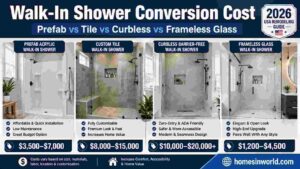
One of the biggest factors affecting walk-in shower types cost in 2026 is the type of shower system homeowners choose during the remodel. Some shower conversions focus on affordability and fast installation, while others prioritize luxury design, accessibility, and long-term durability.
Shower conversion pricing can vary by several thousand dollars depending on materials, waterproofing complexity, labor requirements, and customization level. A simple prefab shower replacement may cost under $5,000, while a fully customized spa-style shower with frameless glass and floor-to-ceiling tile can exceed $20,000.
The most common walk-in shower styles in the USA include:
- Prefab acrylic shower systems
- Custom tile showers
- Curbless barrier-free showers
- Frameless glass walk-in showers
Each option offers different advantages in terms of maintenance, installation speed, resale value, and remodeling costs.
Prefab Walk-In Shower Cost
Prefab shower conversion cost is usually the most budget-friendly option for homeowners replacing an outdated bathtub. In 2026, most prefab shower installations range from $3,500 to $7,000, depending on shower size, plumbing work, and fixture upgrades.
Prefab systems use factory-made shower bases and wall panels that are designed for quick installation. Acrylic shower installation is especially popular because acrylic panels are lightweight, water-resistant, easy to clean, and resistant to mold growth.
Most prefab shower conversions include:
- Pre-manufactured shower base
- Acrylic or fiberglass wall panels
- Standard plumbing fixtures
- Basic waterproofing system
- Sliding or hinged shower door
Homeowners often choose prefab showers because they:
- Reduce labor costs
- Install faster than tile showers
- Require less maintenance
- Lower overall bathroom remodel pricing
For example, a standard alcove bathtub replacement with acrylic wall panels and a prefabricated shower pan can often be completed in two to three days.
However, prefab systems offer fewer customization options than custom tile showers. Design flexibility, premium finishes, and resale appeal may be more limited compared to luxury bathroom remodels.
Custom Tile Walk-In Shower Cost
Custom tile shower cost is significantly higher because these showers require skilled craftsmanship, advanced waterproofing systems, and longer installation timelines. In 2026, a professionally built tiled shower remodel typically costs between $8,000 and $15,000, although luxury designs can exceed $20,000.
Tile showers allow homeowners to fully customize:
- Tile patterns and layouts
- Shower niches and shelving
- Bench seating
- Accent walls
- Drain styles
- Shower fixtures
- Flooring materials
Porcelain tile remains one of the most popular choices because it offers durability, water resistance, and modern aesthetics. Natural stone showers provide a luxury appearance but require more maintenance and sealing over time.
Custom tile installations also increase labor costs because contractors must:
- Install waterproof membranes
- Prepare cement backer boards
- Cut and align tile precisely
- Waterproof corners and joints
- Apply grout and sealing systems
Large-format tiles are trending in 2026 because they create a cleaner appearance with fewer grout lines and lower long-term maintenance needs.
While tiled shower remodels cost more upfront, they often improve resale value and provide greater design flexibility for homeowners seeking a luxury bathroom upgrade.
Curbless Walk-In Shower Cost
Curbless shower cost is generally higher than standard shower remodels because barrier-free designs require extensive waterproofing, floor leveling, and drainage modifications. Most homeowners spend between $10,000 and $20,000+ for a professionally built barrier-free shower pricing project in 2026.
Curbless showers remove the traditional raised threshold between the bathroom floor and shower area, creating a seamless entry design. These showers are increasingly popular for:
- Aging-in-place remodeling
- ADA accessibility
- Modern spa-style bathrooms
- Small bathroom visual expansion
A true curbless shower often requires:
- Subfloor modification
- Floor slope adjustments
- Linear drain installation
- Advanced waterproofing systems
- Slip-resistant flooring
Labor costs rise because contractors must ensure proper water drainage without allowing moisture to escape into the bathroom floor.
Although barrier-free shower systems cost more initially, they offer major advantages:
- Easier accessibility
- Safer entry for seniors
- Luxury appearance
- Improved bathroom flow
- Higher buyer appeal
Many homeowners planning long-term accessibility upgrades consider curbless showers a worthwhile investment despite the higher remodeling costs.
Frameless Glass Shower Conversion Cost
Frameless shower door cost can dramatically affect overall shower conversion pricing because custom glass enclosures are considered a premium bathroom upgrade. In 2026, most glass shower enclosure pricing ranges from $1,200 to $4,500, depending on glass thickness, enclosure size, and hardware quality.
Frameless glass showers create a clean, open appearance that makes bathrooms feel larger and more modern. Unlike framed shower doors, frameless systems use thick tempered safety glass with minimal visible hardware.
Popular frameless shower features include:
- Clear tempered glass panels
- Matte black or brushed nickel hardware
- Pivot or sliding door systems
- Floor-to-ceiling glass enclosures
- Water-resistant coatings
Glass installation costs increase when homeowners choose:
- Custom sizing
- Curved glass panels
- Extra-thick safety glass
- Luxury hardware finishes
- Steam shower enclosures
Frameless glass pairs especially well with custom tile showers and curbless shower systems because it highlights tile work while maintaining an open-concept bathroom design.
To reduce costs, some homeowners choose semi-frameless shower doors instead of fully frameless enclosures while still achieving a modern bathroom appearance.
Tub to Shower Conversion Cost by Bathroom Size
Bathroom size plays a major role in determining overall remodeling expenses during a tub-to-walk-in shower conversion. A compact guest bathroom usually requires fewer materials, less demolition work, and shorter labor hours, while a large master bathroom renovation often involves custom layouts, luxury finishes, and more extensive plumbing modifications.
In 2026, the average small bathroom shower remodel cost ranges from $3,500 to $8,000, while a high-end master bathroom conversion cost can easily exceed $15,000 to $30,000+ depending on design complexity and premium upgrades.
Several size-related factors influence shower conversion pricing:
- Amount of tile and flooring materials
- Plumbing line length
- Waterproofing coverage
- Shower enclosure size
- Labor hours
- Glass installation complexity
- Storage and fixture upgrades
- Accessibility modifications
Larger bathrooms also provide more design flexibility, which often encourages homeowners to add luxury features like double showerheads, frameless glass walls, built-in benches, and oversized rainfall shower systems.
By comparison, compact bathroom remodeling projects typically focus on maximizing usable space while maintaining affordability and functionality.
Small Bathroom Conversion Cost
A small bathroom walk-in shower conversion is often more affordable because the remodel involves less square footage and fewer materials. Most compact shower remodel projects in the USA cost between $3,500 and $8,000 in 2026.
Smaller bathrooms are common in:
- Guest bathrooms
- Older homes
- Condominiums
- Apartments
- Starter homes
One of the biggest advantages of a compact bathroom remodeling project is efficiency. Contractors usually spend less time on demolition, waterproofing, tile installation, and plumbing work because the shower footprint is smaller.
Popular upgrades for small bathrooms include:
- Corner walk-in showers
- Sliding glass doors
- Prefab acrylic shower systems
- Large-format wall tiles
- Recessed shower niches
- Wall-mounted fixtures
For example, replacing a standard 60-inch bathtub with a prefab walk-in shower in a small guest bathroom may cost around $4,500 if plumbing remains in the same location.
Homeowners often choose frameless glass doors in smaller bathrooms because transparent enclosures create the illusion of more space and improve natural light flow.
Large-format porcelain tiles are another popular trend in compact shower remodels because they reduce grout lines and make small bathrooms appear cleaner and more modern.
To reduce bathroom remodeling costs in smaller bathrooms, contractors frequently recommend:
- Keeping the original layout unchanged
- Using prefabricated shower pans
- Choosing acrylic wall panels
- Avoiding plumbing relocation
- Limiting custom tile work
Even modest small bathroom upgrades can significantly improve functionality, accessibility, and resale appeal in competitive housing markets.
Master Bathroom Shower Remodel Cost
A luxury master bathroom remodel typically costs much more because homeowners often prioritize premium materials, larger shower dimensions, and spa-style features. In 2026, large walk-in shower pricing for master bathrooms generally ranges from $10,000 to $30,000+ depending on customization level.
Master bathroom conversions often include:
- Oversized walk-in showers
- Dual showerheads
- Rainfall shower systems
- Steam shower upgrades
- Frameless glass enclosures
- Floor-to-ceiling tile
- Heated flooring
- Built-in seating and storage
Larger bathrooms require more waterproofing materials, tile labor, drainage work, and structural preparation. As shower size increases, so does the cost of glass enclosures, flooring, and wall finishes.
For example, a luxury master bathroom remodel with a curbless tiled shower, natural stone walls, linear drain system, and custom frameless glass may exceed $25,000 once labor and premium fixtures are included.
Many homeowners investing in master bathroom renovations focus heavily on long-term comfort and resale value. Spa-inspired walk-in showers continue to rank among the most desirable bathroom upgrades in upscale real estate markets across the United States.
Master bathroom conversions also commonly include accessibility improvements such as:
- Barrier-free shower entry
- Slip-resistant flooring
- Wider shower openings
- Grab bar reinforcement
- Handheld showerheads
Because large bathroom renovation projects are more complex, hiring experienced licensed contractors becomes especially important. Poor waterproofing or incorrect drainage installation in oversized showers can lead to costly water damage repairs later.
Homeowners planning a large walk-in shower remodel should compare multiple contractor estimates, review material warranties carefully, and prioritize waterproofing systems over cosmetic upgrades alone.
Labor Cost for Tub to Walk-In Shower Conversion
Labor is one of the largest expenses in any bathroom remodeling project. In most cases, shower remodel labor cost accounts for 40% to 60% of the total tub-to-walk-in shower conversion budget. While material prices matter, professional installation quality often determines whether a bathroom renovation lasts for decades or develops expensive moisture and drainage problems later.
In 2026, labor costs for a walk-in shower conversion in the USA typically range from $2,000 to $8,000+, depending on project complexity, bathroom size, plumbing modifications, tile work, and local contractor rates.
A complete shower conversion often requires multiple skilled trades, including:
- Licensed plumber
- Tile installer
- Waterproofing specialist
- Electrician
- Glass installer
- General remodeling contractor
Labor pricing increases significantly when homeowners choose custom tile showers, curbless shower systems, luxury fixtures, or structural layout changes.
For example, replacing a bathtub with a prefab acrylic shower in the same plumbing location may only require two or three days of labor. However, a custom tiled curbless shower with waterproof membrane installation, floor leveling, and frameless glass can require more than a week of skilled labor.
Several remodeling factors directly affect contractor installation pricing:
- Plumbing relocation
- Tile complexity
- Waterproofing requirements
- Shower size
- Drainage modifications
- Glass enclosure installation
- Permit requirements
- Accessibility upgrades
Homeowners should understand that lower labor bids are not always a better value. Poor workmanship is one of the leading causes of bathroom remodeling failures, especially in areas involving waterproofing and drainage systems.
Contractor Labor Charges
Remodeling contractor cost varies widely depending on contractor experience, project difficulty, and local demand for skilled labor. In 2026, most homeowners spend between $50 and $150 per hour for professional shower installer pricing in the United States.
Highly experienced contractors specializing in bathroom remodeling often charge more because they provide:
- Licensed and insured services
- Waterproofing expertise
- Code-compliant plumbing work
- High-end tile installation
- Warranty coverage
- Permit management
Labor charges commonly include:
- Demolition and debris removal
- Bathtub removal
- Plumbing adjustments
- Waterproof membrane installation
- Cement backer board preparation
- Tile installation
- Grouting and sealing
- Fixture installation
- Final finishing work
Tile installers often charge separately from general contractors, especially for custom showers with intricate tile layouts, mosaic accents, or floor-to-ceiling porcelain installations.
For example, custom tile labor alone may cost between $10 and $35 per square foot depending on tile size and installation difficulty.
Homeowners should also ask contractors whether estimates include:
- Material delivery
- Permit fees
- Debris hauling
- Waterproofing systems
- Glass enclosure installation
- Cleanup services
Choosing a licensed contractor is especially important for walk-in shower remodels because improper waterproofing or poor drainage slope installation can lead to mold growth, leaks, and structural water damage.
Before hiring a contractor, remodeling experts recommend:
- Requesting multiple written estimates
- Reviewing contractor licensing
- Checking insurance coverage
- Reading customer reviews
- Asking for bathroom remodel references
- Verifying warranty details
Regional Labor Cost Differences
Bathroom remodel cost by state can vary dramatically due to differences in regional labor rates, permit fees, contractor demand, and local building codes. Homeowners in high-cost metropolitan areas generally pay far more for labor than those in smaller cities or rural markets.
States with some of the highest bathroom remodeling labor costs in 2026 include:
- California
- New York
- Massachusetts
- Washington
- New Jersey
In these areas, skilled contractors may charge premium hourly rates due to higher operating expenses and increased demand for remodeling services.
For example, a walk-in shower conversion in Los Angeles or New York City may cost several thousand dollars more than a similar project in Texas or the Midwest.
Lower regional labor rates are commonly found in:
- Texas
- Florida
- Ohio
- Indiana
- Missouri
However, pricing can still fluctuate depending on city size and contractor availability.
Several regional factors affect labor pricing:
- Local permit requirements
- Union labor markets
- Cost of living
- Material transportation costs
- Housing demand
- Remodeling labor shortages
Coastal states often experience higher labor pricing due to stricter building codes and greater demand for luxury bathroom renovations.
In 2026, many contractors are also charging higher rates because of ongoing skilled labor shortages in the construction and remodeling industries. Tile installers, plumbers, and waterproofing specialists remain in especially high demand across the United States.
To reduce labor costs without sacrificing quality, homeowners often save money by:
- Keeping the existing shower layout
- Choosing prefab shower systems
- Avoiding major plumbing relocation
- Scheduling remodels during slower seasons
- Comparing multiple licensed contractor estimates
Investing in skilled labor upfront usually prevents expensive repair costs later, especially in moisture-prone bathroom environments where waterproofing and drainage precision are critical.
ADA and Senior-Friendly Walk-In Shower Costs
ADA shower conversion cost has become a major consideration for homeowners planning safer and more accessible bathroom renovations in 2026. As aging-in-place remodeling continues growing across the United States, more families are replacing traditional bathtubs with wheelchair accessible shower systems designed for long-term comfort, mobility, and safety.
In most cases, senior bathroom remodel cost ranges from $6,000 to $20,000+, depending on shower size, accessibility upgrades, plumbing modifications, waterproofing complexity, and structural changes required to meet ADA bathroom standards.
Unlike standard shower remodels, accessibility-focused renovations prioritize ease of entry, slip resistance, and safe movement throughout the bathroom. Many senior-friendly walk-in showers feature barrier-free entry systems, wider openings, reinforced walls for grab bars, handheld showerheads, and built-in seating.
Several factors increase ADA shower conversion pricing:
- Curbless shower construction
- Wider door openings
- Reinforced wall framing
- Slip-resistant flooring
- Linear drain installation
- Custom plumbing adjustments
- Wheelchair turning space
- Additional waterproofing systems
For example, converting a bathtub into a barrier-free shower with wheelchair accessibility may require lowering the subfloor to create a flush entry design. This increases labor costs because contractors must modify framing, drainage systems, and floor slopes while maintaining proper waterproofing.
Homeowners planning accessibility upgrades often choose walk-in showers because they:
- Reduce fall risks
- Improve mobility
- Simplify cleaning and maintenance
- Support long-term independent living
- Increase resale appeal for aging buyers
In many homes, accessibility renovations are completed before mobility issues become severe. This proactive remodeling approach helps homeowners avoid emergency renovations later.
ADA-Compliant Shower Features
ADA bathroom requirements are designed to improve safety, accessibility, and usability for individuals with limited mobility. A handicap-accessible shower typically includes several specialized features that increase both comfort and functionality.
The most common ADA-compliant shower features include:
- Curbless or low-threshold shower entry
- Minimum shower opening widths
- Reinforced walls for grab bar installation
- Handheld showerheads
- Slip-resistant flooring
- Accessible controls and fixtures
- Built-in bench seating
- Wider bathroom clearance space
A fully compliant wheelchair accessible shower usually requires at least a 36-inch entry opening and enough maneuvering space for mobility devices. These modifications often increase labor and waterproofing costs compared to traditional shower remodels.
Curbless entry systems remain one of the most requested accessibility upgrades because they eliminate tripping hazards while allowing smoother wheelchair access. However, creating a zero-threshold shower often involves:
- Floor reframing
- Drain relocation
- Advanced waterproof membrane installation
- Precise drainage slope adjustments
Many homeowners also install thermostatic shower valves to prevent sudden temperature changes, which improves safety for seniors and individuals with limited mobility.
Although ADA-focused remodeling costs are higher initially, these upgrades can dramatically improve quality of life while allowing homeowners to remain safely in their homes longer.
Safety Upgrades for Seniors
Safety upgrades play a major role in senior bathroom remodel cost because preventing slips and falls is often the primary goal of aging-in-place renovations. Bathrooms remain one of the highest-risk areas for household injuries, especially for older adults.
Popular senior safety upgrades include:
- Grab bars
- Anti-slip flooring
- Shower seating
- Handheld showerheads
- Raised toilet installations
- Improved bathroom lighting
- Easy-turn faucet controls
Professionally installed grab bars provide critical stability during shower entry and movement. Modern grab bar designs are now available in decorative finishes that blend naturally into luxury bathroom remodels instead of appearing institutional.
Anti-slip flooring is another essential safety investment. Textured porcelain tile, slip-resistant vinyl, and mosaic tile flooring improve traction in wet environments while reducing fall risks.
Built-in shower seating has also become increasingly popular in 2026. Permanent benches allow seniors to sit comfortably while bathing and reduce physical strain during long showers. Fold-down wall-mounted seats are another space-saving option commonly used in compact bathrooms.
For example, a senior-friendly walk-in shower remodel with grab bars, bench seating, anti-slip tile, and handheld fixtures may cost between $8,000 and $15,000 depending on bathroom layout and plumbing work.
Homeowners should also understand that improper installation of accessibility features can create serious safety hazards. Grab bars must be anchored into reinforced wall framing, and shower floors must maintain proper drainage slopes to prevent standing water.
Experienced remodeling contractors specializing in aging-in-place remodeling often recommend prioritizing safety-focused upgrades over decorative luxury features, especially for homeowners planning to remain in their homes long term.
Tub vs Walk-In Shower Resale Value
One of the most common concerns homeowners have before removing a bathtub is how the remodel will affect resale value. The debate around shower vs bathtub resale value has become even more important in 2026 as buyer preferences continue shifting toward modern, low-maintenance bathrooms and accessibility-focused home designs.
In many real estate markets across the United States, walk-in showers are now considered a premium bathroom upgrade. However, the impact on bathroom remodel ROI depends heavily on the type of home, bathroom location, target buyers, and local real estate trends.
For example, replacing a bathtub with a luxury walk-in shower in a master bathroom often improves buyer appeal and increases perceived home value. On the other hand, removing the only bathtub in a family-oriented home may negatively affect resale potential for buyers with young children.
Several factors influence whether a walk-in shower improves resale value:
- Number of bathrooms in the home
- Presence of at least one bathtub
- Neighborhood buyer demographics
- Bathroom size and layout
- Quality of renovation
- Accessibility upgrades
- Luxury finishes and design trends
Modern buyers increasingly prioritize:
- Spacious walk-in showers
- Frameless glass enclosures
- Curbless entry systems
- Spa-style bathroom aesthetics
- Low-maintenance materials
- Accessibility-friendly layouts
At the same time, family buyers often still prefer at least one bathtub somewhere in the house for children, pets, or future resale flexibility.
Because of this, real estate professionals frequently recommend balancing modern shower upgrades with practical buyer expectations rather than removing every bathtub in the home.
Does a Walk-In Shower Increase Home Value?
In many cases, yes — a professionally designed walk-in shower can improve home value and provide a strong bathroom remodel return on investment. In 2026, updated bathrooms remain one of the most valuable home improvement projects for resale appeal.
Most homeowners recover approximately 50% to 70% of their remodeling costs depending on renovation quality, local housing demand, and overall bathroom design.
A high-quality shower remodel ROI is more likely when the renovation includes:
- Frameless glass shower doors
- Custom tile work
- Curbless shower entry
- Modern plumbing fixtures
- Waterproofing upgrades
- Accessibility features
- Energy-efficient fixtures
Luxury walk-in showers are especially attractive in:
- Master bathrooms
- Upscale homes
- Retirement communities
- Modern open-concept homes
- Urban real estate markets
For example, converting an outdated fiberglass tub into a spacious tiled walk-in shower with matte black fixtures and frameless glass can dramatically modernize an older bathroom and improve buyer perception during home showings.
Accessibility upgrades also increasingly influence home value. Aging-in-place remodeling has become a major real estate trend, and many buyers now actively seek homes with safer, easier-to-use bathrooms.
Real estate agents often report that modern walk-in showers help homes photograph better in online listings, making properties feel larger, brighter, and more updated.
However, homeowners should understand that poorly executed bathroom remodels rarely provide strong returns. Low-quality tile work, improper waterproofing, cheap fixtures, or trendy designs with limited long-term appeal can reduce buyer confidence instead of increasing value.
When Keeping a Bathtub Is Better
Although walk-in showers are extremely popular, there are situations where maintaining bathtub resale value makes more financial sense. This is especially true in family-oriented neighborhoods where buyers often expect at least one bathtub in the home.
Family home bathroom trends still strongly favor homes with a functional tub for:
- Bathing young children
- Pet washing
- Family convenience
- Broader buyer flexibility
Removing the only bathtub in a home can limit appeal for certain buyers and potentially narrow the resale market.
For example, in suburban neighborhoods dominated by young families, buyers may prioritize homes that include at least one full bathtub. In these markets, converting every bathtub into a shower could negatively impact resale competitiveness.
Keeping a bathtub is often recommended when:
- The home only has one bathroom
- Families are the primary buyer demographic
- The bathtub is located in a secondary bathroom
- The home is entry-level or mid-range
- Resale is expected within a few years
Many remodeling experts recommend a balanced approach:
- Keep one bathtub in the home
- Upgrade the master bathroom with a walk-in shower
- Preserve flexibility for future buyers
This strategy allows homeowners to modernize key bathrooms while maintaining broad market appeal.
Freestanding soaking tubs also remain desirable in luxury homes, particularly when paired with oversized walk-in showers in spa-style master bathroom layouts.
Ultimately, the best remodeling decision depends on local buyer preferences, home layout, long-term living plans, and neighborhood real estate expectations rather than following a one-size-fits-all trend.
Cheapest Ways to Convert a Tub Into a Walk-In Shower
A cheap tub to shower conversion is possible without sacrificing functionality or long-term durability if homeowners focus on smart material choices and efficient remodeling strategies. In 2026, most affordable walk-in shower projects in the USA range from $2,500 to $7,000, depending on labor costs, plumbing changes, and shower materials.
The key to a successful budget bathroom remodel is minimizing expensive structural modifications while choosing low-cost shower systems that are durable, water-resistant, and easy to maintain.
Several factors dramatically affect shower conversion pricing:
- Plumbing relocation
- Custom tile work
- Glass enclosure upgrades
- Waterproofing complexity
- Bathroom size
- Labor rates
- Fixture selection
Homeowners looking to reduce renovation costs often achieve the biggest savings by keeping the existing bathroom layout unchanged. Moving drains, altering plumbing lines, or expanding the shower footprint can quickly increase labor and demolition expenses.
Affordable walk-in shower remodels usually focus on practical upgrades such as:
- Prefab shower systems
- Acrylic wall panels
- Standard shower fixtures
- Basic waterproofing systems
- Sliding shower doors
- Fiberglass shower bases
For example, replacing a traditional bathtub with a prefab acrylic shower kit while keeping the original plumbing location may cost thousands less than building a fully customized tile shower with frameless glass and luxury fixtures.
Many homeowners are also prioritizing low-maintenance materials in 2026 to reduce long-term cleaning and repair costs.
Prefab Shower Kits
Shower conversion kits are one of the most cost-effective solutions for homeowners planning a low-budget bathroom upgrade. Most prefab shower systems cost between $2,500 and $6,000 installed, making them significantly cheaper than custom tile walk-in showers.
Prefab systems are factory-manufactured shower units designed for faster installation and reduced labor costs. These kits typically include:
- Prefabricated shower base
- Acrylic or fiberglass wall panels
- Waterproof wall system
- Standard drain assembly
- Basic shower fixtures
Acrylic prefab shower systems are especially popular because they are:
- Lightweight
- Mold-resistant
- Easy to clean
- Quick to install
- Lower maintenance than tile
Unlike custom tiled showers, prefab systems do not require extensive grout work, advanced tile cutting, or labor-intensive waterproofing procedures. This greatly reduces contractor installation time.
For example, a standard alcove bathtub can often be converted into a walk-in shower using a prefab acrylic system in just two or three days.
Prefab shower kits are ideal for:
- Guest bathrooms
- Rental properties
- Budget-conscious homeowners
- Senior accessibility upgrades
- Quick bathroom renovations
However, homeowners should understand that low-cost shower systems offer fewer customization options than luxury tile showers. Design flexibility, premium finishes, and resale appeal may be more limited.
Even so, many modern prefab shower designs now feature:
- Stone-look wall textures
- Matte black fixtures
- Built-in shelving
- Sliding glass doors
- Contemporary finishes
These upgrades help budget-friendly remodels achieve a more modern appearance without dramatically increasing renovation costs.
Ways to Save Money on Installation
One of the most effective budget remodeling tips is reducing labor complexity during installation. Labor remains one of the largest expenses in any bathroom remodel, so minimizing demolition and plumbing work can significantly lower total project costs.
Homeowners focused on reducing renovation costs should consider these practical strategies:
- Keep existing plumbing lines in place
- Choose prefab acrylic wall systems
- Avoid curbless shower designs
- Use standard-size shower enclosures
- Limit custom tile installation
- Compare multiple contractor estimates
- Reuse existing plumbing fixtures when possible
Large-format wall panels and acrylic surrounds can also lower labor costs because they install faster than traditional tile and require less grout work.
Another common money-saving strategy is avoiding unnecessary luxury upgrades during the initial remodel phase. Features such as:
- Frameless glass enclosures
- Rainfall shower systems
- Heated flooring
- Natural stone tile
- Custom benches and niches
can dramatically increase contractor installation pricing.
For example, choosing a semi-frameless shower door instead of a custom frameless glass enclosure may save several thousand dollars while still maintaining a clean, modern look.
Scheduling renovations during slower remodeling seasons may also help homeowners negotiate better contractor pricing. In many parts of the USA, bathroom remodeling demand peaks during spring and summer months.
Homeowners should still avoid cutting corners on critical components such as waterproofing, drainage systems, and licensed plumbing work. Poor installation quality often leads to leaks, mold growth, and expensive repairs later.
A well-planned affordable walk-in shower remodel focuses on balancing cost savings, durability, accessibility, and long-term maintenance rather than simply choosing the cheapest materials available.
Best Materials for Walk-In Shower Conversions
Choosing the best shower materials is one of the most important decisions in any bathroom remodel. The materials used for shower walls, flooring, and waterproofing directly affect durability, maintenance requirements, appearance, and long-term remodeling costs.
In 2026, homeowners across the USA are prioritizing durable walk-in shower materials that combine moisture resistance, easy maintenance, and modern design. The most popular options include acrylic panels, porcelain tile, fiberglass shower systems, and natural stone finishes.
Each material offers different advantages depending on budget, bathroom size, and remodeling goals.
Several factors should be considered before selecting shower materials:
- Water resistance
- Mold and mildew protection
- Slip resistance
- Cleaning and maintenance needs
- Installation costs
- Longevity
- Resale appeal
- Waterproofing performance
For example, homeowners planning a budget-friendly shower remodel often choose acrylic wall systems because they install quickly and require minimal maintenance. Meanwhile, luxury bathroom renovations frequently use porcelain tile or natural stone for a high-end spa-like appearance.
Moisture protection is especially critical in walk-in showers because improper materials can lead to:
- Mold growth
- Cracked grout lines
- Water leaks
- Subfloor damage
- Structural moisture issues
Professional remodeling contractors generally recommend balancing appearance with long-term durability instead of choosing materials based only on upfront price.
Popular walk-in shower material options include:
- Acrylic wall panels
- Fiberglass surrounds
- Porcelain tile
- Ceramic tile
- Natural stone
- Textured anti-slip flooring
- Waterproof backer boards
- Tempered glass enclosures
The right combination of materials can dramatically improve bathroom functionality while increasing home value and reducing future maintenance costs.
Acrylic vs Tile Shower Walls
The debate between acrylic vs tile shower systems is one of the most common decisions homeowners face during a walk-in shower conversion. Both materials offer advantages, but the best option depends on budget, maintenance expectations, and design preferences.
Acrylic wall panels are among the most affordable and low-maintenance shower wall options available in 2026. These prefabricated wall systems are lightweight, waterproof, and resistant to mold growth because they contain very few grout lines.
Benefits of acrylic shower walls include:
- Lower installation costs
- Faster remodeling timelines
- Easy cleaning and maintenance
- Minimal grout maintenance
- Mold and mildew resistance
- Smooth waterproof surfaces
Acrylic systems are especially popular in:
- Budget bathroom remodels
- Rental properties
- Senior-friendly bathrooms
- Guest bathrooms
By comparison, porcelain or ceramic tile offers a more premium appearance and greater customization flexibility. A shower wall comparison between tile and acrylic usually comes down to aesthetics versus maintenance simplicity.
Tile shower walls allow homeowners to customize:
- Colors and textures
- Accent walls
- Mosaic patterns
- Shower niches
- Luxury spa-style designs
Porcelain tile remains one of the most durable walk-in shower materials because it is highly water-resistant, scratch-resistant, and long-lasting when installed properly.
However, tiled showers typically require:
- More labor-intensive installation
- Advanced waterproofing systems
- Periodic grout maintenance
- Higher upfront remodeling costs
Large-format porcelain tile has become increasingly popular because it reduces grout lines while creating a cleaner and more modern bathroom appearance.
Homeowners seeking the lowest maintenance option usually prefer acrylic panels, while those prioritizing resale value and luxury aesthetics often choose custom tile showers.
Best Flooring for Walk-In Showers
Selecting the right anti-slip bathroom flooring is essential for both safety and long-term durability. Walk-in shower floors experience constant water exposure, making waterproof shower flooring one of the most important elements of the entire remodel.
In 2026, the most recommended shower flooring materials include:
- Textured porcelain tile
- Mosaic tile flooring
- Slip-resistant ceramic tile
- Natural stone with textured finish
- Luxury vinyl bathroom flooring
Textured porcelain tile is widely considered one of the best flooring choices for walk-in showers because it combines:
- Excellent water resistance
- Slip protection
- Long-term durability
- Modern design flexibility
- Low maintenance requirements
Mosaic tile flooring is also commonly used in shower pans because the additional grout lines improve traction and reduce slipping risks.
For senior-friendly and ADA-compliant bathrooms, slip resistance becomes even more important. Many aging-in-place remodeling projects now include specialized anti-slip coatings or textured flooring materials designed to improve safety.
Curbless walk-in showers often require advanced waterproof flooring systems combined with linear drains and precise floor slopes to prevent standing water and drainage issues.
Homeowners should avoid highly polished stone surfaces inside showers because they can become slippery when wet.
Professional remodeling contractors also recommend using waterproof backer boards and moisture-resistant underlayment beneath shower flooring to prevent long-term water damage beneath tile surfaces.
Choosing durable waterproof shower flooring not only improves safety and performance but also helps reduce future repair and maintenance costs in high-moisture bathroom environments.
Common Tub to Shower Conversion Mistakes to Avoid
A tub-to-walk-in shower conversion can dramatically improve bathroom functionality, accessibility, and home value, but poor planning and low-quality workmanship often lead to expensive repairs later. Many shower remodel mistakes happen because homeowners focus only on appearance or upfront pricing without understanding the technical side of bathroom remodeling.
In 2026, some of the most common bathroom renovation errors involve poor waterproofing, drainage problems, low-quality materials, and hiring inexperienced contractors. These issues can result in mold growth, leaking walls, cracked tile, water damage, and failed inspections.
A professionally built walk-in shower should provide:
- Proper waterproofing protection
- Reliable drainage performance
- Slip-resistant flooring
- Durable moisture-resistant materials
- Code-compliant plumbing work
- Long-term structural stability
Unfortunately, many homeowners unknowingly cut corners during remodeling to reduce costs, only to face larger repair bills later.
Some of the biggest shower conversion mistakes include:
- Choosing the cheapest contractor bid
- Skipping waterproof membrane installation
- Installing improper floor slopes
- Using low-grade materials
- Ignoring ventilation requirements
- Failing to verify contractor licensing
- Overlooking drainage system design
For example, a beautiful tiled shower can still fail within a few years if waterproofing beneath the tile is poorly installed. Cosmetic finishes alone do not protect bathrooms from long-term moisture damage.
Careful planning, licensed contractors, and high-quality waterproofing systems are essential for avoiding expensive remodeling failures.
Choosing Cheap Materials
One of the most common remodeling mistakes is selecting low-quality shower materials simply to reduce upfront costs. While budget-friendly products can work well in some situations, extremely cheap materials often lead to bathroom durability issues over time.
Low-grade shower components may include:
- Thin acrylic wall panels
- Weak fiberglass bases
- Poor-quality grout
- Cheap plumbing fixtures
- Low-cost waterproof backer boards
- Inferior drain assemblies
These products may crack, discolor, warp, leak, or deteriorate much faster than premium materials.
For example, inexpensive fiberglass shower pans can flex under weight and eventually develop cracks around drain openings. Similarly, low-quality grout may absorb moisture and encourage mold growth behind shower walls.
Homeowners should prioritize:
- Waterproof durability
- Mold resistance
- Long-term maintenance needs
- Manufacturer warranties
- Proven moisture performance
Porcelain tile, quality acrylic panels, and professionally installed waterproof systems generally provide better long-term value than the cheapest available materials.
Choosing durable products upfront often reduces future repair costs and improves overall bathroom remodel ROI.
Ignoring Waterproofing
Poor waterproofing is one of the leading causes of shower remodeling failures in the United States. A waterproof shower installation is critical because tile and grout alone are not fully waterproof barriers.
Without proper waterproofing protection, moisture can penetrate behind shower walls and flooring, leading to:
- Mold growth
- Wood rot
- Subfloor damage
- Structural deterioration
- Bathroom leaks
- Expensive reconstruction costs
Professional bathroom leak prevention usually requires multiple waterproofing layers, including:
- Waterproof membranes
- Cement backer boards
- Sealed shower pans
- Waterproof corner systems
- Properly sloped flooring
Curbless walk-in showers are especially vulnerable to drainage problems if waterproofing and floor slopes are not installed correctly.
For example, even a slight drainage miscalculation can cause water pooling outside the shower area, damaging nearby flooring and drywall over time.
Homeowners should never assume that tile itself provides adequate waterproof protection. Experienced contractors typically waterproof the entire shower system beneath the visible finishes.
Proper bathroom ventilation is also important because excess humidity contributes to mold growth and long-term moisture damage.
Investing in professional waterproofing systems during the remodel phase is significantly cheaper than repairing hidden water damage later.
Hiring Unlicensed Contractors
Hiring inexperienced or unlicensed contractors is one of the riskiest bathroom renovation errors homeowners can make. While lower bids may appear attractive initially, contractor scams and poor workmanship often result in code violations, failed inspections, unfinished projects, or major repair expenses.
Licensed bathroom contractors are usually required to:
- Follow local building codes
- Carry insurance coverage
- Obtain permits when necessary
- Meet plumbing and waterproofing standards
- Provide written contracts and warranties
Unlicensed contractors may skip critical installation steps to reduce labor time or increase profits.
Common contractor-related problems include:
- Improper waterproofing
- Incorrect drain slopes
- Poor tile installation
- Unsafe plumbing work
- Hidden fees and change orders
- Low-quality materials substitution
Homeowners should always request:
- Proof of licensing
- Insurance documentation
- Detailed written estimates
- References from past remodels
- Warranty information
Reliable remodeling contractor tips include comparing multiple bids, reading online reviews, and avoiding contractors demanding large upfront cash payments.
An experienced walk-in shower contractor understands complex areas such as drainage systems, waterproof membranes, accessibility codes, and structural preparation — all of which directly affect long-term bathroom performance.
Paying more for a qualified contractor often prevents costly repairs, water damage, and remodeling disputes later.
Expert Tips Before Replacing a Bathtub With a Shower
Replacing a bathtub with a walk-in shower may seem straightforward, but experienced remodeling professionals know that successful bathroom renovations require careful planning, realistic budgeting, and the right contractor selection. Many homeowners rush into shower conversions without fully considering drainage design, waterproofing systems, accessibility needs, or long-term resale value.
Following expert shower remodel tips before demolition begins can help avoid expensive delays, hidden costs, and bathroom renovation errors later.
One of the most important parts of remodeling planning is deciding how the new shower will function over the next 10 to 20 years — not just how it looks today. Homeowners planning to age in place, improve accessibility, or increase resale appeal should prioritize practical upgrades alongside cosmetic improvements.
Before starting a walk-in shower remodel, remodeling professionals often recommend evaluating:
- Existing plumbing condition
- Bathroom ventilation quality
- Drainage system layout
- Waterproofing requirements
- Shower size and accessibility
- Material durability
- Local permit requirements
- Long-term maintenance needs
For example, older homes with galvanized plumbing or water damage behind bathtub walls may require additional repairs once demolition begins. Identifying these issues early helps homeowners create a more accurate remodeling budget.
contractor recommendations
Many contractor recommendations also focus on balancing design trends with long-term functionality. Features like curbless shower entry, large-format tile, frameless glass enclosures, and slip-resistant flooring remain highly desirable in 2026 because they improve both usability and modern bathroom appeal.
Another important tip is avoiding over-customization in homes where resale value matters. Extremely personalized finishes or ultra-luxury upgrades may not always provide strong returns in mid-range housing markets.
Homeowners can often improve renovation efficiency and reduce costs by:
- Keeping plumbing fixtures in the same location
- Selecting durable low-maintenance materials
- Choosing quality waterproofing systems
- Planning storage and shower niches early
- Allowing extra budget for hidden repairs
A realistic contingency budget of 10% to 20% is strongly recommended because hidden moisture damage, mold, or subfloor repairs are common during bathroom demolition projects.
Questions to Ask Contractors
Hiring the right contractor is one of the most important decisions in any bathroom renovation. An experienced bathroom remodeling professional should understand waterproofing systems, drainage design, tile installation, local building codes, and accessibility requirements.
Using a detailed bathroom contractor checklist helps homeowners compare contractors more effectively and avoid low-quality workmanship or contractor scams.
Important questions to ask before signing a remodeling contract include:
- Are you licensed and insured?
- Do you specialize in bathroom remodels?
- What waterproofing system do you use?
- Will permits be required?
- How long will the remodel take?
- Does the estimate include demolition and cleanup?
- What warranties are provided?
- Can you provide recent project references?
Homeowners should also request itemized shower remodel estimates that clearly separate:
- Labor costs
- Material pricing
- Plumbing work
- Waterproofing systems
- Tile installation
- Glass enclosure pricing
- Permit fees
Comparing multiple detailed estimates helps identify unrealistic pricing and prevents surprise change orders later in the project.
Experienced contractors are usually transparent about potential hidden costs and explain how they plan to handle drainage slopes, waterproofing membranes, and ventilation improvements.
Best Time of Year for Remodeling
Bathroom remodel timing can affect both project cost and contractor availability. In many parts of the United States, spring and summer are the busiest seasons for home renovations, which often increases labor rates and scheduling delays.
Fall and winter renovation scheduling sometimes provides better opportunities for homeowners to negotiate lower contractor pricing or faster installation timelines.
Several factors influence the ideal remodeling season:
- Contractor demand
- Material availability
- Household schedules
- Humidity levels
- Holiday timing
- Permit processing times
For example, remodeling during slower winter months may reduce wait times for plumbers, tile installers, and glass contractors.
However, homeowners planning extensive renovations during colder seasons should also consider:
- Material delivery delays
- Holiday scheduling conflicts
- Ventilation challenges during indoor construction
Projects involving custom tile work, frameless glass fabrication, or special-order fixtures may require longer lead times regardless of season.
Experienced remodeling contractors often recommend scheduling shower remodels several months in advance, especially in high-demand metropolitan markets where contractor availability can become limited.
Homeowners planning accessibility-focused bathroom renovations should also avoid waiting until mobility issues become urgent. Completing aging-in-place remodeling projects early allows more flexibility in contractor selection, budgeting, and design decisions while reducing stress during the renovation process.
Tub to Walk-In Shower Conversion Cost by State
Tub-to-walk-in shower conversion pricing varies significantly across the United States due to differences in labor markets, permit requirements, contractor demand, and material transportation costs. In 2026, homeowners researching California shower conversion cost, Texas bathroom remodel pricing, or Florida shower remodel cost will often see several thousand dollars in pricing differences for nearly identical projects.
Regional remodeling costs are heavily influenced by:
- Local labor pricing
- Cost of living
- Building code requirements
- Contractor demand
- Material shipping expenses
- Permit and inspection fees
- Housing market trends
For example, converting a bathtub into a walk-in shower in Los Angeles or New York City typically costs much more than a similar remodel in Dallas or Tampa because contractor hourly rates and permit fees are significantly higher.
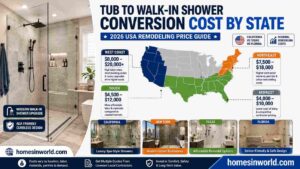
The average walk-in shower conversion cost by region in 2026 generally falls within these ranges:
| Region | Average Cost Range |
| West Coast | $8,000–$20,000+ |
| Northeast | $7,500–$18,000 |
| South | $4,500–$12,000 |
| Midwest | $4,000–$10,000 |
Homes in coastal metropolitan areas often require stricter waterproofing systems, additional inspections, and more expensive licensed labor. Meanwhile, lower-cost states frequently benefit from more competitive contractor pricing and reduced overhead expenses.
Another factor affecting local pricing is bathroom style preference. Luxury spa-style showers, frameless glass enclosures, and curbless entry systems are more common in high-end urban markets, increasing both labor and material costs.
Homeowners should also understand that remodeling demand remains high nationwide in 2026 due to:
- Aging-in-place remodeling
- Housing inventory shortages
- Rising home renovation investments
- Increased accessibility upgrades
These trends continue to affect contractor availability and labor pricing across many states.
High-Cost States
California remodel cost and New York bathroom remodel pricing remain among the highest in the country due to expensive labor markets, permit regulations, and high demand for luxury renovations.
In California, most tub-to-walk-in shower conversions cost between $8,000 and $25,000+ depending on location and project complexity. Homeowners in cities like Los Angeles, San Francisco, and San Diego often pay premium contractor rates for plumbing, tile installation, waterproofing, and glass enclosure work.
Several factors drive higher California remodeling costs:
- Expensive skilled labor
- Strict building codes
- Higher permit fees
- Luxury material demand
- Increased insurance and business costs
Similarly, New York bathroom remodel projects are often expensive because of limited workspace, older plumbing infrastructure, and urban contractor demand.
For example, bathroom renovations in New York City frequently involve:
- Tight construction access
- Older apartment plumbing systems
- Additional building approvals
- Co-op or condo regulations
- Specialized debris removal requirements
Luxury shower features such as:
- Curbless entry systems
- Steam shower upgrades
- Frameless glass walls
- Heated flooring
- Custom tile installations
can push total remodeling costs well beyond $20,000 in high-cost states.
Homeowners in these regions are often advised to prioritize detailed written contracts and contingency budgets because hidden costs are more common in older homes and dense urban environments.
Affordable Remodeling States
Texas shower remodel cost and Florida bathroom remodel pricing are generally more affordable than coastal luxury markets, although pricing still varies by city and contractor demand.
In Texas, most tub-to-shower conversions range from $4,500 to $12,000 for standard projects. Cities such as Dallas, Houston, San Antonio, and Austin continue experiencing strong remodeling demand, but contractor labor rates are often lower than those found in California or New York.
Many Texas homeowners choose:
- Prefab shower systems
- Acrylic wall panels
- Large-format porcelain tile
- Semi-frameless shower doors
to balance affordability with modern bathroom design.
Florida shower remodel cost typically ranges from $5,000 to $14,000 depending on bathroom size, accessibility upgrades, and waterproofing requirements.
Florida homeowners frequently prioritize:
- Mold-resistant materials
- Humidity-resistant ventilation systems
- Slip-resistant flooring
- Senior-friendly shower layouts
because of the state’s humid climate and large retirement population.
Regional labor pricing in affordable remodeling states is often more competitive due to:
- Lower business overhead
- Reduced permit costs
- Greater contractor availability
- Lower transportation expenses
However, prices can still rise in fast-growing metro areas where construction demand remains high.
Homeowners seeking lower renovation costs in any state can often save money by:
- Keeping existing plumbing locations
- Choosing prefab shower systems
- Avoiding major structural changes
- Scheduling projects during slower contractor seasons
- Comparing multiple licensed contractor estimates
Understanding regional remodeling costs helps homeowners create more accurate renovation budgets while avoiding unrealistic pricing expectations based on national averages alone.
Final Thoughts on Tub to Walk-In Shower Conversion Costs
Walk-in shower remodeling continues to be one of the most valuable bathroom renovation projects for homeowners in 2026. Whether the goal is improving accessibility, modernizing an outdated bathroom, increasing home value, or creating a more functional layout, replacing a bathtub with a walk-in shower can dramatically transform both the appearance and usability of a space.
This bathroom conversion guide shows that total remodeling costs vary widely depending on:
- Shower type
- Bathroom size
- Waterproofing complexity
- Plumbing modifications
- Material quality
- Contractor labor rates
- Accessibility upgrades
For some homeowners, a simple prefab shower conversion may provide an affordable solution under $5,000. Others may invest in custom tile showers, frameless glass enclosures, curbless entry systems, and spa-inspired luxury features that significantly increase remodeling costs.
One of the most important parts of bathroom upgrade planning is balancing upfront costs with long-term functionality and durability. A professionally installed walk-in shower should not only look modern but also provide:
- Reliable waterproofing
- Safe drainage performance
- Slip-resistant flooring
- Easy maintenance
- Long-lasting materials
- Accessibility for future needs
Experienced remodeling contractors often recommend prioritizing structural quality over cosmetic upgrades alone. Waterproofing systems, drainage slope installation, ventilation, and plumbing work are far more important to long-term bathroom performance than decorative finishes.
Homeowners should also consider the impact of local housing trends and buyer preferences before removing every bathtub in the home. In many real estate markets, keeping at least one bathtub while upgrading the master bathroom with a walk-in shower offers the best balance between resale flexibility and modern design.
Several remodeling strategies can help homeowners control costs while maximizing value:
- Keep existing plumbing locations unchanged
- Compare multiple licensed contractor estimates
- Use durable low-maintenance materials
- Plan for hidden repair costs
- Prioritize waterproofing and drainage quality
- Avoid unnecessary structural changes
Accessibility remodeling is also becoming increasingly important as more homeowners choose to age in place. Features like curbless entry systems, grab bars, anti-slip flooring, and wider shower openings are no longer viewed only as medical upgrades — they are now considered practical and desirable modern bathroom features.
Who Should Consider a Walk-In Shower Conversion?
Modern bathroom upgrades like walk-in showers are especially beneficial for homeowners seeking improved convenience, safety, and long-term property value.
A walk-in shower conversion may be ideal for:
- Seniors planning aging-in-place remodeling
- Homeowners with mobility concerns
- Families modernizing outdated bathrooms
- Buyers preparing homes for resale
- Owners wanting easier maintenance
- Small bathroom remodel projects
- Luxury master bathroom renovations
Accessibility remodeling has become one of the fastest-growing renovation trends in the United States because barrier-free showers improve comfort while reducing fall risks.
For example, homeowners replacing an unused bathtub with a spacious walk-in shower often gain:
- Better bathroom functionality
- More open floor space
- Easier cleaning
- Improved accessibility
- Increased buyer appeal
When carefully planned and professionally installed, a walk-in shower conversion can provide both immediate lifestyle improvements and long-term remodeling value for years to come.
Also read about: Cheapest Way to Remodel Bathroom in USA