Best Shower Glass Thickness for Frameless Shower Doors (1/4 vs 3/8 vs 1/2 Inch Guide 2026)
Choosing the best shower glass thickness for frameless shower doors is one of the most important decisions in any modern bathroom remodel. The wrong choice can leave your shower looking cheap, feeling unstable, or costing far more than necessary. But the right glass thickness can completely transform your bathroom into a sleek, luxury-style space that feels strong, durable, and built to last.
That’s why so many homeowners across the USA compare 1/4 vs 3/8 vs 1/2 inch shower glass before installing a frameless shower enclosure.
At first glance, the differences may seem small. But in real-world bathroom remodeling, shower glass thickness affects everything from appearance and durability to hardware requirements, installation cost, long-term maintenance, and even home resale value.
For most frameless shower doors, 3/8 inch tempered glass is considered the industry sweet spot because it balances strength, stability, and affordability. However, 1/2 inch glass has become increasingly popular in luxury bathroom remodels and oversized walk-in showers, while 1/4 inch glass still appears in some budget-friendly or semi-frameless systems.
The challenge is knowing which option is actually best for your bathroom layout, budget, and design goals.
In this complete 2026 guide, you’ll learn the real differences between 1/4, 3/8, and 1/2 inch shower glass, including cost comparisons, durability factors, safety standards, expert remodeling recommendations, and common mistakes homeowners should avoid.
Whether you’re planning a high-end spa bathroom, upgrading a walk-in shower, or simply trying to choose the best frameless shower glass thickness for long-term value, this guide will help you make the right decision with confidence.
What Is the Best Shower Glass Thickness for Frameless Shower Doors?
The best shower glass thickness for frameless shower doors depends on your bathroom size, design goals, budget, and the type of shower enclosure you plan to install. In most USA homes, 3/8-inch tempered shower glass is considered the ideal balance of durability, stability, appearance, and cost. It is thick enough to create the premium “heavy glass” frameless look homeowners want without the extra weight and expense associated with 1/2-inch glass systems.
However, not every bathroom remodel requires the same frameless shower glass thickness.
For example:
- Small residential shower systems may work well with lighter glass panels
- Luxury walk-in showers often benefit from thicker heavy glass systems
- Oversized frameless enclosures may require additional rigidity and stronger hardware
- Budget remodels sometimes prioritize lower installation costs over ultra-premium aesthetics
The biggest mistake homeowners make is assuming thicker glass is always better. In reality, the best shower glass thickness should match the shower enclosure size, hardware capabilities, wall support, and long-term performance expectations.
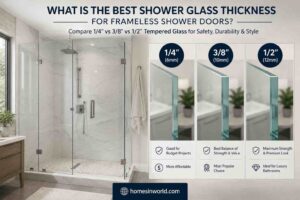
Modern frameless shower systems rely on tempered safety glass because they do not use bulky metal frames for structural support. That means glass rigidity becomes extremely important. Thin glass panels can flex more over time, especially in large frameless installations with wide door openings.
Here’s the general industry standard used in USA bathroom remodeling projects:
- 1/4 inch glass → Mostly used for framed or semi-frameless showers
- 3/8 inch glass → Most common frameless shower door thickness
- 1/2 inch glass → Premium luxury frameless shower systems
When choosing the right thickness, homeowners should consider:
- Shower size and panel width
- Desired luxury appearance
- Door weight and hinge requirements
- Long-term shower stability
- Installation costs
- Bathroom remodeling budget
In most residential bathroom remodeling projects, 3/8-inch tempered shower glass delivers the best overall value because it combines strong durability, modern aesthetics, and practical installation requirements.
Why Glass Thickness Matters in Frameless Shower Design
Frameless shower door thickness affects far more than appearance. It directly impacts shower stability, glass rigidity, hardware performance, safety, and long-term durability.
Unlike framed shower doors, frameless systems depend almost entirely on the strength of the tempered glass itself. Without thick supporting metal frames, the glass panels must resist movement, vibration, and panel flexing every time the door opens or closes.
This is why thick shower glass is so popular in modern bathroom design.
Thicker glass panels provide:
- Better structural stability
- Reduced visible flexing
- More solid door movement
- Improved durability over time
- More luxurious aesthetics
- Better support for large frameless enclosures
For example, a large walk-in shower with wide glass panels may feel unstable if thin glass is used. Homeowners often notice slight movement or vibration in lower-quality installations. Thicker frameless shower glass helps minimize these issues and creates the premium “heavy glass” feel associated with luxury bathrooms.
Glass thickness also affects hardware selection. Heavy frameless systems require stronger hinges, clamps, and wall anchors to support the additional weight safely.
From a design perspective, thicker glass enhances modern bathroom aesthetics by creating:
- Cleaner frameless lines
- More minimalist appearance
- Greater visual clarity
- High-end spa-like style
In many upscale USA bathroom remodeling projects, homeowners choose thicker tempered shower glass specifically for the premium visual impact it creates.
Standard Shower Glass Thickness Used in USA Homes
The standard shower glass thickness used in USA homes today is typically 3/8 inch tempered safety glass for frameless shower enclosures. This thickness has become the industry favorite because it offers excellent durability, rigidity, and affordability for most residential shower systems.
In standard bathroom remodeling projects, 3/8-inch glass works well because it balances:
- Strength
- Safety
- Cost efficiency
- Hardware compatibility
- Modern frameless aesthetics
However, different shower styles use different thickness levels.
Here’s a practical breakdown commonly seen in the USA market:
| Shower Type | Common Shower Glass Thickness |
| Framed shower doors | 1/4 inch |
| Semi-frameless showers | 1/4 to 3/8 inch |
| Frameless shower doors | 3/8 inch |
| Luxury frameless enclosures | 1/2 inch |
Most professional installers recommend tempered safety glass certified to ANSI and SGCC standards because these systems improve impact resistance and reduce injury risks if breakage occurs.
Homeowners should also understand that thicker glass increases overall system weight. A large 1/2-inch frameless shower enclosure may require upgraded hinges, reinforced walls, and premium hardware systems to maintain long-term performance.
For the majority of residential bathroom remodeling projects in the USA, 3/8-inch tempered glass remains the best overall choice because it delivers the ideal mix of stability, safety, durability, and modern frameless shower design.
1/4 vs 3/8 vs 1/2 Inch Shower Glass Comparison
Choosing between 1/4 vs 3/8 vs 1/2 inch shower glass is one of the most important decisions when designing a frameless shower enclosure. While all three options use tempered safety glass, they perform very differently in terms of rigidity, glass weight, durability, appearance, and long-term stability.
In modern USA bathroom remodeling projects, the thickness of the glass directly affects:
- Shower door stability
- Hardware requirements
- Installation cost
- Luxury appearance
- Panel flexing
- Long-term durability
- Overall shower enclosure performance
Thin shower glass may reduce costs, but it often lacks the solid “heavy glass” feel homeowners expect from premium frameless showers. On the other hand, thicker glass creates a more luxurious appearance but adds significant weight and installation complexity.
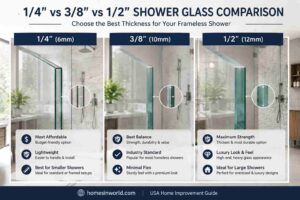
For most homeowners, the goal is finding the right balance between performance, appearance, and budget.
1/4 Inch Shower Glass Pros and Cons
1/4 inch shower glass is the thinnest option commonly used in residential shower systems. It is most often found in framed shower systems or semi-frameless enclosures where metal framing helps provide additional structural support.
Because it is lightweight glass, installation costs are usually lower compared to thicker frameless panels.
Pros of 1/4 Inch Shower Glass
- Lower material cost
- Easier installation
- Reduced hardware stress
- Lightweight door operation
- Suitable for smaller shower enclosures
- Common in budget bathroom remodels
Cons of 1/4 Inch Shower Glass
- More visible panel flexing
- Less rigid than thicker glass
- Not ideal for large frameless showers
- Lower luxury appearance
- Can feel less stable during door movement
In real-world remodeling projects, 1/4 inch glass is rarely considered the best frameless shower glass choice for upscale bathrooms. Most installers avoid using thin shower glass in large frameless designs because wide panels can vibrate or flex more over time.
Example:
A compact guest bathroom with a framed sliding shower door may perform perfectly with 1/4 inch tempered glass. However, a large walk-in frameless shower would likely feel less stable with the same thickness.
For homeowners prioritizing affordability over luxury aesthetics, 1/4 inch glass can still be a practical option.
3/8 Inch Shower Glass Pros and Cons
3/8 inch shower glass is widely considered the best frameless shower glass thickness for most USA homes. It has become the industry standard because it delivers the ideal balance between durability, rigidity, appearance, and cost.
This popular shower thickness creates the “heavy glass” frameless look homeowners want without the extreme weight of 1/2 inch panels.
Pros of 3/8 Inch Shower Glass
- Excellent rigidity comparison vs thinner glass
- Strong durability for daily use
- Modern frameless appearance
- Reduced panel flexing
- Compatible with most shower hardware systems
- Better long-term shower stability
- Lower cost than 1/2 inch glass
Cons of 3/8 Inch Shower Glass
- Heavier than 1/4 inch systems
- Requires stronger hinges and anchors
- Slightly higher installation costs
- May still flex slightly in oversized enclosures
In most bathroom remodeling projects, 3/8 inch tempered glass offers the best overall value. It works extremely well for:
- Frameless shower doors
- Walk-in showers
- Pivot door systems
- Sliding frameless enclosures
- Modern minimalist bathrooms
Professional installers often recommend 3/8 inch balanced shower glass because it combines luxury aesthetics with manageable installation requirements.
Example:
A standard 60-inch frameless shower enclosure with 3/8 inch tempered glass typically feels sturdy, premium, and visually clean without excessive weight strain on the hardware.
For most homeowners, this thickness hits the “sweet spot” between affordability and high-end performance.
1/2 Inch Shower Glass Pros and Cons
1/2 inch shower glass is considered luxury shower glass and is commonly used in premium frameless shower systems with oversized panels or upscale architectural bathroom designs.
This premium frameless shower option provides maximum rigidity and creates the most substantial visual impact.
Pros of 1/2 Inch Shower Glass
- Highest rigidity and stability
- Minimal panel flexing
- Ultra-premium appearance
- Excellent for oversized frameless enclosures
- Strong luxury bathroom appeal
- Better acoustic feel during door operation
Cons of 1/2 Inch Shower Glass
- Significantly higher cost
- Much heavier glass weight
- Requires reinforced hardware systems
- Increased installation labor
- May require wall reinforcement
Architectural glass systems using 1/2 inch tempered panels are especially popular in:
- Luxury spa-style bathrooms
- Large walk-in showers
- High-end custom homes
- Open-concept wet rooms
However, thicker is not always necessary.
Many homeowners choose 1/2 inch glass primarily for visual prestige rather than practical performance differences. In smaller shower enclosures, the added weight and expense may not provide enough real-world benefit compared to 3/8 inch glass.
Quick Comparison Table: 1/4 vs 3/8 vs 1/2 Inch Glass
| Glass Thickness | Best For | Rigidity | Glass Weight | Luxury Appearance | Typical Use |
| 1/4 Inch | Budget framed showers | Lower | Lightweight | Basic | Framed shower systems |
| 3/8 Inch | Most frameless showers | Excellent | Moderate | Modern premium | Standard frameless enclosures |
| 1/2 Inch | Luxury shower systems | Maximum | Heavy | Ultra-luxury | Large custom frameless showers |
When comparing thick vs thin shower glass, most USA homeowners find that 3/8 inch tempered glass delivers the strongest combination of durability, aesthetics, shower panel support, and overall remodeling value.
Which Shower Glass Thickness Is Best for Your Bathroom?
The best shower glass for bathrooms depends on more than personal style. The ideal thickness should match your bathroom size, shower enclosure layout, hardware system, and remodeling goals. A compact guest bathroom may not need the same frameless shower setup as a luxury spa-style master bath.
When making remodeling decisions, homeowners should focus on three key factors:
- Shower size and panel dimensions
- Desired appearance and luxury level
- Long-term durability and maintenance
In most residential projects, the recommended shower glass thickness for frameless systems is 3/8 inch tempered glass because it balances strength, appearance, and cost. However, some bathroom layouts benefit from thinner or thicker glass depending on the design.
For example:
- Small bathrooms often prioritize space-saving shower design
- Luxury bathrooms prioritize premium aesthetics and rigidity
- Walk-in showers often require additional support for oversized glass panels

The wrong glass thickness can negatively affect:
- Shower stability
- Hardware lifespan
- Installation safety
- Visual appearance
- Long-term remodeling value
That’s why professional shower enclosure recommendations should always consider both functionality and aesthetics rather than focusing only on price.
Best Shower Glass Thickness for Small Bathrooms
For small bathroom shower glass installations, 3/8 inch tempered glass is usually the best overall choice. It creates a clean frameless appearance without overwhelming compact spaces with excessive visual weight.
In many minimalist bathrooms, homeowners want the shower enclosure to feel open and airy rather than bulky. A compact frameless shower with thinner sightlines can make smaller bathrooms appear larger and brighter.
3/8 inch glass works especially well because it provides:
- Strong durability without excessive bulk
- Modern frameless aesthetics
- Better rigidity than 1/4 inch glass
- Balanced hardware requirements
- Space-efficient visual design
While 1/4 inch glass may reduce costs slightly, it often lacks the premium feel homeowners expect from frameless systems. Thin glass panels can also create more visible flexing, especially with wider shower doors.
Practical advice for small bathroom remodels:
- Use clear tempered glass to maximize light flow
- Avoid overly thick hardware finishes
- Consider sliding frameless doors to save space
- Choose minimalist hinges and handles
- Keep panel lines clean and simple
Example:
A 48-inch compact frameless shower enclosure with 3/8 inch clear glass can make a small bathroom feel significantly more open compared to a framed enclosure with heavy metal trim.
In most space-saving shower designs, 3/8 inch glass offers the best mix of visual openness, stability, and modern style.
Best Shower Glass Thickness for Luxury Bathrooms
Luxury shower glass is typically 1/2 inch tempered glass because it delivers the ultra-premium appearance associated with high-end spa-style bathrooms and custom architectural remodeling projects.
Thicker premium frameless shower doors create a more solid, elegant feel that instantly elevates bathroom aesthetics. The reduced panel flexing and substantial glass weight give luxury showers a cleaner and more expensive appearance.
Many upscale remodels also combine 1/2 inch glass with:
- Ultra clear glass
- Minimal hardware systems
- Floating shower layouts
- Oversized frameless panels
- Matte black or brushed gold fixtures
Benefits of 1/2 inch luxury shower glass include:
- Maximum rigidity and stability
- Minimal vibration during door movement
- High-end hotel-style appearance
- Better visual thickness and edge detail
- Stronger architectural presence
However, homeowners should understand that thicker luxury glass also increases:
- Installation complexity
- Hardware requirements
- Wall support demands
- Overall remodeling costs
Example:
A large master bathroom with a frameless walk-in shower and floor-to-ceiling ultra clear glass panels often benefits from 1/2 inch tempered glass because the thicker edges enhance the premium design aesthetic.
For high-end spa-inspired remodeling projects, 1/2 inch glass creates the most luxurious frameless shower experience.
Best Thickness for Walk-In Showers
Walk-in shower glass thickness is especially important because frameless walk-in shower systems often use oversized shower panels with fewer structural supports.
Unlike smaller enclosed showers, open-concept shower layouts rely heavily on glass rigidity to maintain long-term stability. Large unsupported panels can flex or vibrate if the glass is too thin.
For most walk-in shower installations, professionals recommend:
- 3/8 inch glass for standard walk-in layouts
- 1/2 inch glass for oversized or luxury open-concept showers
The best thickness depends on panel width, height, and overall shower design.
Benefits of thicker glass in walk-in showers include:
- Reduced panel movement
- Better support for large fixed panels
- More stable frameless construction
- Cleaner minimalist appearance
- Improved durability for heavy daily use
In modern open-concept shower designs, homeowners often prefer large uninterrupted glass surfaces. Thicker tempered glass helps support these oversized shower panels safely while maintaining the sleek frameless aesthetic.
Example:
A luxury curbless walk-in shower with a 72-inch fixed glass panel will typically perform better with 1/2 inch glass due to the increased panel width and reduced structural framing.
For standard residential frameless walk-in showers, 3/8 inch tempered glass remains the most practical and cost-effective solution, while 1/2 inch glass is better suited for premium oversized installations.
Is 3/8 Inch Shower Glass the Best Overall Choice?
For most homeowners in the USA, 3/8 inch shower glass is widely considered the best overall choice for frameless shower doors. It offers the ideal combination of shower rigidity, durability, appearance, and installation practicality without the excessive weight and cost associated with thicker luxury glass systems.
In modern bathroom remodeling, homeowners typically want a frameless shower enclosure that feels:
- Strong and stable
- Visually premium
- Long-lasting
- Easy to maintain
- Cost-effective
This is exactly where 3/8 inch tempered glass performs best.
Compared to thinner 1/4 inch glass, 3/8 inch panels provide significantly better rigidity and reduced panel flexing. At the same time, they avoid many of the heavy hardware requirements and structural concerns that often come with 1/2 inch frameless systems.
This balanced performance makes 3/8 inch glass the industry standard for most frameless shower installations.
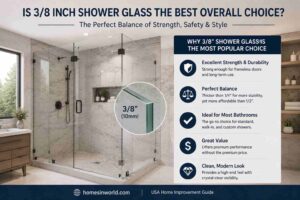
Benefits of choosing 3/8 inch shower glass include:
- Excellent shower door stability
- Modern “heavy glass” appearance
- Strong compatibility with frameless hardware
- Lower installation cost than 1/2 inch systems
- Reduced visible movement during door operation
- Long-term durability for daily household use
In practical remodeling projects, 3/8 inch tempered glass works well for:
- Frameless pivot doors
- Sliding shower enclosures
- Walk-in showers
- Corner shower systems
- Master bathroom remodels
- Guest bathroom upgrades
For many homeowners, it delivers the best value shower glass experience because it balances luxury aesthetics with realistic remodeling budgets.
Example:
A standard frameless shower enclosure measuring 60 to 72 inches wide typically performs extremely well with 3/8 inch glass. The enclosure feels stable and premium without placing excessive stress on hinges or wall anchors.
This is why professional installers and bathroom remodeling contractors frequently recommend 3/8 inch glass as the safest and most versatile option for residential frameless shower systems.
Why Most USA Frameless Showers Use 3/8 Inch Glass
Most standard frameless shower glass systems in the USA use 3/8 inch tempered panels because this thickness delivers the best overall balance between structural performance and practical installation requirements.
Frameless shower systems rely heavily on the strength of the glass itself since there is little or no metal framing to provide additional support. That means shower door stability becomes critical, especially in daily use.
3/8 inch frameless shower systems have become the preferred industry standard because they provide:
- Strong rigidity without excessive weight
- Better resistance to panel flexing
- Smooth door movement
- Improved durability for long-term use
- Compatibility with most heavy glass systems
- Easier installation compared to 1/2 inch glass
Professional installers often recommend 3/8 inch glass because it minimizes many common problems associated with thinner panels, including:
- Door wobbling
- Excessive vibration
- Hardware loosening
- Reduced enclosure stability
At the same time, it avoids many installation complications associated with ultra-heavy luxury systems.
For example, a typical frameless shower door built with 3/8 inch tempered glass feels noticeably more stable than a thinner 1/4 inch panel when opening and closing the door. Homeowners immediately notice the difference in weight, rigidity, and premium appearance.
Another important advantage is hardware flexibility.
Most modern frameless shower hinges, clamps, and support brackets are specifically engineered to work efficiently with 3/8 inch heavy glass systems. This creates a reliable balance between structural integrity and manageable installation costs.
Because of this combination of performance, affordability, and aesthetics, 3/8 inch glass has become the most common choice in USA bathroom remodeling projects.
When 3/8 Inch Glass May NOT Be Enough
Although 3/8 inch shower glass works exceptionally well in most residential projects, there are situations where thicker shower glass requirements make 1/2 inch panels the better option.
This usually happens in large luxury shower designs with oversized shower panels or open-concept frameless layouts that place greater stress on the glass and hardware systems.
Situations where 3/8 inch glass may not be ideal include:
- Very large walk-in shower enclosures
- Floor-to-ceiling glass panels
- Wide unsupported fixed panels
- High-end architectural bathroom designs
- Heavy frameless shower systems with oversized doors
In these cases, thicker glass can improve:
- Structural rigidity
- Long-term stability
- Resistance to panel flexing
- Visual luxury appeal
- Reduced hinge stress
For example, a frameless shower with a massive 84-inch fixed glass panel may experience noticeable movement with thinner glass. Upgrading to 1/2 inch tempered glass helps reduce vibration and creates a more stable enclosure.
Large pivot doors are another example. Heavy oversized doors place substantial stress on hinges and mounting hardware. Thicker glass combined with reinforced support systems may be necessary to maintain safe operation over time.
Homeowners should also understand that larger frameless systems often require:
- Stronger hinges
- Reinforced wall blocking
- Upgraded anchors
- Premium support brackets
- Professional structural installation
In luxury remodeling projects where maximum rigidity and architectural appearance are priorities, 1/2 inch glass may provide better long-term performance than standard 3/8 inch systems.
Is 1/2 Inch Shower Glass Worth the Extra Cost?
For homeowners planning luxury bathroom remodeling projects, 1/2 inch shower glass is often considered the premium option for frameless shower enclosures. It delivers exceptional rigidity, a heavier architectural appearance, and a more upscale “spa-quality” feel compared to thinner glass systems.
But the big question remains:
Is 1/2 inch shower glass worth it for the average homeowner?
The answer depends on your shower size, design goals, and remodeling budget.
In standard residential bathrooms, 3/8 inch tempered glass usually provides enough durability and stability for daily use. However, premium shower glass becomes more valuable in larger architectural shower systems where oversized panels, open-concept layouts, and luxury aesthetics are priorities.
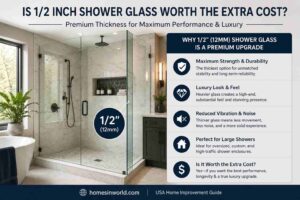
Many high-end custom homes now use 1/2 inch glass specifically because it creates:
- A thicker, more luxurious edge profile
- Better structural rigidity
- Reduced vibration during door movement
- Cleaner frameless aesthetics
- Higher-end visual appeal
The difference is especially noticeable in oversized walk-in showers with minimal hardware. Thick glass panels create a more seamless “floating glass” appearance that designers often prefer in luxury bathrooms.
Homeowners should also understand that 1/2 inch systems are significantly heavier. This impacts:
- Installation complexity
- Hardware requirements
- Wall reinforcement needs
- Labor costs
- Overall remodeling budgets
For example, a large luxury frameless enclosure with 1/2 inch glass may weigh hundreds of pounds depending on panel dimensions. That requires professional-grade hinges, reinforced support points, and experienced installation teams.
In practical terms, 1/2 inch glass is usually worth the extra cost when:
- Building a luxury spa-style bathroom
- Installing oversized frameless panels
- Prioritizing architectural aesthetics
- Designing a high-end custom home
- Creating an open-concept wet room
For smaller or mid-range remodels, however, the performance difference between 3/8 and 1/2 inch glass may not justify the higher price.
Advantages of 1/2 Inch Frameless Shower Glass
The biggest thick shower glass benefits come from improved rigidity, visual luxury, and enhanced stability in premium shower enclosures.
Unlike thinner panels, 1/2 inch glass creates a substantial architectural appearance that immediately stands out in upscale bathrooms. The thicker edges and heavier feel give the shower enclosure a more expensive and professionally engineered look.
Key advantages of 1/2 inch frameless shower glass include:
- Maximum glass rigidity
- Reduced glass flexing
- Stronger luxury appearance
- Better support for oversized panels
- Improved long-term stability
- Premium spa-style aesthetics
- Smoother door operation feel
In many luxury shower enclosures, designers intentionally use thicker glass because it improves the visual proportions of the bathroom. Larger frameless panels feel more solid and elegant when paired with premium materials like marble, porcelain slabs, and minimalist hardware systems.
Another major benefit is reduced movement.
Large frameless doors built with thinner glass may show slight vibration or flexing during operation. 1/2 inch tempered glass helps minimize this effect and creates a more stable user experience.
Example:
A floor-to-ceiling walk-in shower with oversized fixed panels often looks dramatically more luxurious when built with 1/2 inch ultra-clear glass instead of thinner standard panels.
This thickness is also popular in modern architectural shower systems because it allows designers to reduce visible framing and support hardware while maintaining structural stability.
For homeowners prioritizing luxury aesthetics and premium construction quality, 1/2 inch glass delivers one of the most upscale frameless shower experiences available in residential remodeling.
Drawbacks of 1/2 Inch Shower Glass
Despite its luxury appeal, 1/2 inch tempered glass also comes with several heavy shower glass problems homeowners should understand before starting a remodel.
The biggest issue is weight.
Thicker glass panels place far more stress on hinges, anchors, support brackets, and wall framing. This increases both installation difficulty and long-term hardware demands.
Common drawbacks of thick glass installation include:
- Higher material costs
- Increased labor expenses
- Heavier hardware requirements
- More difficult transportation and installation
- Potential wall reinforcement needs
- Increased hinge stress over time
For example, oversized pivot doors using 1/2 inch glass often require specialized heavy-duty hinges capable of supporting extreme panel weight. If low-quality hardware is used, homeowners may experience sagging doors or premature hardware wear.
Another important consideration is remodeling cost.
In many standard-size residential showers, the performance improvement between 3/8 and 1/2 inch glass is relatively small compared to the increase in total project cost.
Homeowners should also know that thicker glass does not automatically make a shower safer. Proper installation, tempered safety certification, and quality hardware matter far more than thickness alone.
In some compact bathrooms, extremely thick glass can even feel visually overpowering. Large heavy panels may reduce the open airy appearance that many modern frameless designs aim to achieve.
For this reason, professional installers often recommend 3/8 inch glass for most standard frameless shower projects while reserving 1/2 inch systems for luxury architectural applications where maximum rigidity and visual impact are truly necessary.
How Shower Glass Thickness Affects Cost
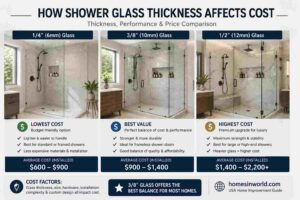
Shower glass thickness has a major impact on overall frameless shower door cost because thicker panels require stronger materials, heavier hardware systems, and more complex installation work. In most USA bathroom remodeling projects, homeowners quickly discover that upgrading from 3/8 inch to 1/2 inch glass can increase total project costs far beyond the price of the glass alone.
The thickness of tempered shower glass affects:
- Material pricing
- Hardware requirements
- Installation labor
- Structural support needs
- Transportation and handling
- Long-term maintenance costs
In general, thicker glass creates a more luxurious frameless appearance, but it also increases remodeling expenses significantly.
For example:
- 1/4 inch glass is lighter and cheaper but less premium
- 3/8 inch glass offers the best balance of price and durability
- 1/2 inch glass is the most expensive due to weight and installation complexity
Homeowners planning custom frameless shower systems should understand that glass thickness affects almost every part of the installation process. Large heavy panels require more manpower, stronger hinges, upgraded anchors, and sometimes additional wall reinforcement behind tile surfaces.
Another important factor is customization.
Custom shower enclosures with oversized panels, ultra-clear glass, specialty coatings, or minimal hardware systems often cost substantially more regardless of thickness. However, thicker glass amplifies those costs because fabrication, polishing, and transportation become more demanding.
In real-world bathroom remodeling projects, labor costs can increase dramatically for heavy glass systems. Installers may require multiple technicians just to safely position large frameless panels during installation.
Practical cost-planning tips for homeowners:
- Get multiple quotes from frameless shower specialists
- Ask whether hardware upgrades are included
- Confirm if wall reinforcement is necessary
- Compare standard vs ultra-clear low-iron glass pricing
- Budget extra for premium finishes and coatings
For most residential bathrooms, 3/8 inch tempered glass delivers the best overall balance between luxury appearance and manageable installation pricing.
Average USA Cost by Glass Thickness (2026)
The average shower glass price in the USA depends heavily on glass thickness, enclosure size, hardware quality, and customization level. Standard frameless shower pricing typically includes tempered glass panels, hinges, handles, installation labor, and waterproof sealing components.
Here’s a general 2026 remodeling budget breakdown for custom shower enclosure installations:
| Glass Thickness | Average Installed Cost |
| 1/4 Inch Glass | $600–$1,200 |
| 3/8 Inch Glass | $1,000–$2,200 |
| 1/2 Inch Glass | $1,800–$4,000+ |
Several factors influence these numbers:
- Shower size and panel dimensions
- Frameless vs semi-frameless design
- Door configuration
- Hardware finish selection
- Glass coatings and low-iron upgrades
- Local labor rates
For example, a small semi-frameless shower with 1/4 inch glass may stay under $1,000 in many regions. Meanwhile, a luxury walk-in frameless enclosure with 1/2 inch ultra-clear glass can easily exceed $4,000 or more.
In most USA remodeling projects, 3/8 inch tempered glass remains the most cost-effective option because it delivers a premium frameless look without the extreme pricing associated with oversized luxury systems.
Homeowners should also expect higher labor costs in high-demand metro markets where professional glass installers charge premium rates for custom frameless projects.
Why Thicker Shower Glass Costs More
Heavy shower glass cost increases rapidly because thicker panels require more advanced manufacturing, stronger support hardware, and additional installation labor.
The biggest cost difference comes from glass weight.
As thickness increases, the overall load placed on hinges, clamps, anchors, and wall supports rises significantly. This often requires premium hardware upgrades specifically engineered for heavy frameless systems.
Thick shower glass pricing also rises due to:
- More expensive tempered glass fabrication
- Additional polishing and edge finishing
- Heavier-duty hinges and brackets
- Increased transportation challenges
- More labor-intensive installation
- Higher breakage risk during handling
For example, a large 1/2 inch frameless shower door may require specialized heavy-duty pivot hinges capable of supporting hundreds of pounds safely over time.
Installation labor also increases because heavy glass panels are harder to move and align. Installers frequently need larger crews and specialized equipment to safely position oversized frameless glass during construction.
Another overlooked factor is hardware compatibility.
Not all frameless shower hardware systems can safely support extremely thick glass. Premium hinges, support bars, and mounting systems designed for luxury installations often cost substantially more than standard components.
In many remodeling projects, homeowners are surprised to learn that the extra expense comes less from the glass itself and more from the supporting installation infrastructure required to handle the additional weight safely.
Hidden Costs Homeowners Forget
Many homeowners focus only on the visible shower glass price and overlook several important shower installation hidden costs that can significantly increase the final remodeling budget.
One of the most common overlooked expenses is wall reinforcement.
Heavy frameless shower upgrades often require stronger structural backing behind tile walls to support thick tempered glass safely. Without proper reinforcement, hinges and anchors may loosen over time.
Other commonly forgotten costs include:
- Premium hardware upgrades
- Reinforced hinges and brackets
- Waterproofing improvements
- Custom glass fabrication fees
- Tile modifications
- Glass protection coatings
- Delivery and handling charges
For example, upgrading from standard chrome hardware to premium matte black or brushed brass systems can add hundreds of dollars to the project cost. Similarly, ultra-clear low-iron glass often costs significantly more than standard tempered glass.
Another hidden expense is installation complexity.
Large frameless enclosures may require:
- Additional labor crews
- Precise laser measurements
- Custom-cut panels
- Specialized installation equipment
Homeowners should also plan for long-term maintenance considerations. Premium hardware and thicker glass systems may require periodic hinge adjustments or professional servicing to maintain smooth door operation over time.
To avoid budget surprises during bathroom remodeling, it’s important to request detailed written estimates that clearly separate:
- Glass pricing
- Hardware pricing
- Labor charges
- Structural upgrades
- Custom fabrication fees
Understanding these hidden costs upfront helps homeowners choose the right shower glass thickness without exceeding their remodeling budget.
Shower Door Hardware Requirements by Glass Thickness
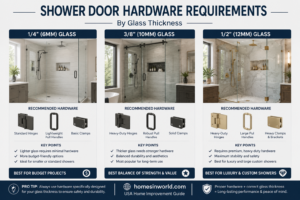
Choosing the right shower hardware compatibility is just as important as selecting the correct glass thickness. In frameless shower systems, the hardware carries enormous structural responsibility because there is little or no metal framing supporting the tempered glass panels.
As glass thickness increases, the total weight of the shower enclosure rises significantly. That means frameless shower hinges, anchors, clamps, and support systems must be engineered to safely handle the additional load over many years of daily use.
This is where many homeowners make expensive remodeling mistakes.
A beautiful frameless shower can quickly develop problems if the hardware is undersized for the glass weight. Common issues include:
- Door sagging
- Loose hinges
- Glass misalignment
- Increased panel movement
- Water leaks from poor door alignment
- Premature hardware wear
In most USA remodeling projects, manufacturers provide specific hinge load ratings that determine how much glass weight a hardware system can safely support. These ratings are especially important for large frameless doors and oversized walk-in shower panels.
General hardware recommendations by glass thickness include:
| Glass Thickness | Typical Hardware Requirement |
| 1/4 Inch Glass | Standard framed hardware |
| 3/8 Inch Glass | Heavy-duty frameless hinges |
| 1/2 Inch Glass | Premium structural support systems |
For example, a standard 3/8 inch frameless shower door may function perfectly with conventional heavy-glass hinges. However, a large 1/2 inch luxury enclosure often requires upgraded pivot systems, reinforced mounting brackets, and additional support bars.
Professional installers also evaluate:
- Door width and height
- Fixed panel size
- Wall material strength
- Tile backing integrity
- Shower configuration
- Frequency of use
Another important consideration is long-term durability.
High-quality support systems help reduce stress on glass edges and improve overall shower stability. Cheap hardware may initially look attractive from a cost perspective, but lower-quality hinges and brackets often fail faster under heavy glass loads.
For homeowners investing in frameless shower remodeling, selecting commercial-grade hardware designed specifically for the chosen glass thickness is critical for both safety and long-term performance.
Best Hinges and Supports for Heavy Glass
Heavy shower door hardware must be carefully matched to the weight and dimensions of the glass panels. Large frameless systems using 1/2 inch tempered glass place tremendous stress on hinges and mounting points, especially in oversized luxury shower designs.
The most common hardware used for heavy frameless enclosures includes:
- Heavy-duty pivot systems
- Wall-mounted hinges
- Ceiling support bars
- Stabilizer bars
- Reinforced support brackets
- Glass-to-glass clamps
For 1/2 inch glass hinges, manufacturers often use solid brass or stainless steel hardware designed specifically for heavy glass applications. These premium hinges typically support much greater loads than standard frameless shower hardware.
Benefits of high-quality heavy-glass hardware include:
- Improved door stability
- Reduced hinge flexing
- Smoother operation
- Better long-term durability
- Lower risk of sagging doors
- Enhanced luxury appearance
For example, large pivot doors with oversized glass panels often perform better with floor-mounted pivot systems rather than traditional side hinges because they distribute weight more evenly across the structure.
Support brackets and stabilizer bars also become increasingly important in frameless walk-in showers with large fixed panels. These systems help minimize movement while maintaining the clean minimalist appearance homeowners want.
Practical remodeling advice:
- Always verify hinge load ratings before installation
- Use hardware approved for your exact glass thickness
- Avoid low-cost imported hardware for heavy systems
- Choose corrosion-resistant finishes for long-term durability
- Work with experienced frameless shower installers
In high-end architectural shower systems, premium hardware is not optional. It is a structural necessity that directly affects both safety and long-term performance.
Can Walls Support Heavy Frameless Shower Glass?
Many homeowners underestimate how much wall support for shower glass matters in heavy frameless installations. Thick tempered glass panels can place substantial pressure on tile walls, anchors, and mounting points over time.
In heavy shower installation projects, structural reinforcement behind the finished wall surface is often required to safely support the enclosure.
This is especially important for:
- 1/2 inch glass systems
- Oversized frameless panels
- Pivot shower doors
- Floor-to-ceiling glass installations
- Open-concept walk-in showers
Most professional installers use reinforced wood blocking or steel supports inside the wall cavity before tile installation. This hidden structural backing gives hinges and anchors a stable foundation capable of supporting heavy glass safely.
Without proper tile backing and reinforcement, problems can develop such as:
- Loose anchors
- Cracked tile
- Door misalignment
- Hinge failure
- Water intrusion around mounting points
Example:
A luxury frameless shower door weighing more than 100 pounds should never rely solely on drywall anchors or weak backing materials. Proper reinforcement inside the wall is essential for safe long-term operation.
Professional installers typically inspect:
- Stud placement
- Wall framing condition
- Tile substrate strength
- Waterproofing systems
- Anchor spacing
- Overall wall integrity
Homeowners remodeling older bathrooms should be especially cautious because many older wall systems were not designed for modern heavy-glass frameless enclosures.
In some cases, contractors may recommend:
- Additional wall framing
- Cement board upgrades
- Reinforced waterproof membranes
- Structural modifications before installation
Proper structural reinforcement is one of the most overlooked but critical components of successful frameless shower remodeling. Even the highest-quality glass and hardware can fail prematurely if the wall structure cannot safely support the system over time.
Shower Glass Safety Standards Explained
When planning a frameless shower remodel, safety should be just as important as appearance and cost. Modern frameless shower systems use large glass panels with minimal structural framing, which means tempered shower glass safety standards play a critical role in protecting homeowners from injury and long-term installation problems.
In the USA, shower enclosures must meet strict building and glazing regulations designed to improve impact resistance and reduce dangerous breakage risks. This is why professional installers use SGCC-certified glass and safety-tested tempered panels instead of ordinary residential window glass.
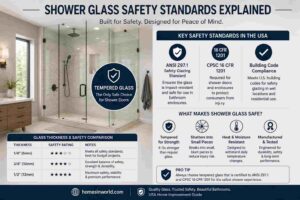
Unlike standard glass, tempered shower glass is specially heat-treated to increase strength and improve breakage behavior. If the glass does break, it shatters into smaller rounded pieces rather than dangerous sharp shards.
This safety feature is especially important in frameless shower systems because:
- Doors are opened and closed daily
- Large panels experience repeated stress
- Wet surfaces increase slip risks
- Heavy glass systems create higher impact potential
Modern ANSI shower glass standards are designed to ensure that frameless enclosures can safely withstand normal residential use.
Professional installers typically recommend:
- Tempered safety glass only
- Certified frameless shower hardware
- Proper wall reinforcement
- Approved installation methods
- Safety-tested hinges and anchors
Homeowners should never install non-certified glass in a shower enclosure, even if it appears visually similar to tempered glass. Standard untreated glass can break into dangerous sharp fragments that pose serious injury risks.
Key safety factors professionals evaluate include:
- Glass thickness
- Panel dimensions
- Impact resistance
- Edge finishing quality
- Hardware compatibility
- Structural support systems
For example, oversized frameless walk-in showers with heavy fixed panels may require thicker tempered glass and upgraded support hardware to maintain long-term safety and stability.
Another important consideration is glass edge quality.
Poorly polished or improperly fabricated edges can weaken structural integrity over time, especially in high-moisture environments where doors experience repeated movement and stress.
Understanding USA shower safety standards helps homeowners avoid unsafe low-quality products and ensures the finished shower enclosure performs safely for many years.
Why Frameless Shower Doors Require Tempered Glass
Frameless shower safety depends heavily on the use of tempered safety glass because frameless systems lack the protective structural framing found in traditional shower enclosures.
In framed systems, metal supports help absorb stress and stabilize thinner glass panels. Frameless showers, however, rely almost entirely on the strength and durability of the tempered glass itself.
This is why building codes and safety regulations require tempered glass in nearly all residential shower installations.
Tempered glass offers several major advantages:
- Increased impact resistance
- Better structural durability
- Improved thermal stress performance
- Safer breakage behavior
- Greater resistance to panel flexing
The tempering process involves heating the glass to extremely high temperatures and rapidly cooling it. This creates internal compression that makes the glass significantly stronger than untreated glass.
One of the most important safety benefits is shatter resistance.
If tempered glass experiences extreme impact, it breaks into small rounded fragments instead of long razor-sharp shards. This dramatically reduces injury risk inside bathrooms where slips and falls are more common.
Example:
A homeowner slipping inside a shower and striking tempered glass is far less likely to suffer severe cuts compared to ordinary untreated glass.
Frameless shower doors also place greater stress on glass edges because of:
- Heavy hinges
- Frequent door movement
- Direct hardware mounting
- Large unsupported panels
Tempered safety glass helps handle these stresses more effectively while maintaining long-term durability.
Professional installers should always verify that frameless shower panels meet USA safety regulations before installation. Cheap uncertified imports or improperly tempered glass can create major safety risks, especially in oversized heavy-glass systems.
ANSI and SGCC Certifications Homeowners Should Know
When shopping for frameless shower systems, homeowners should pay close attention to ANSI Z97.1 and SGCC certified shower glass labels because these certifications verify that the glass meets important USA safety standards for residential use.
These certifications are not just technical details. They confirm that the glass has passed testing for:
- Impact resistance
- Breakage performance
- Structural integrity
- Safety glazing compliance
- Long-term durability
ANSI Z97.1 is one of the primary American safety standards for architectural glazing materials used in hazardous locations like shower enclosures and bathroom doors.
SGCC certification refers to the Safety Glazing Certification Council, which independently verifies that certified bathroom glass products meet required safety performance standards.
Professional installers and reputable manufacturers typically use certified glass products because they help ensure:
- Safer installations
- Better product quality
- Code compliance
- Improved homeowner protection
Homeowners should look for permanent markings etched into the glass panel showing:
- ANSI certification
- SGCC labeling
- Tempered glass identification
- Manufacturer information
Example:
A properly certified frameless shower panel will usually contain a small etched safety mark in one corner confirming compliance with ANSI and SGCC standards.
These certifications become especially important in large luxury shower systems where heavy glass panels experience greater stress and impact loads.
Low-quality non-certified products may appear similar visually but often lack proper tempering consistency, edge finishing quality, or long-term structural reliability.
Practical safety tips for homeowners:
- Always verify certification labels before installation
- Avoid unmarked imported shower glass
- Work with licensed frameless shower installers
- Confirm local building code compliance
- Request written product specifications
Certified tempered glass combined with proper installation practices helps create safer, more durable frameless shower systems that meet modern USA remodeling standards.
Common Mistakes to Avoid When Choosing Shower Glass Thickness
Choosing the wrong shower glass thickness is one of the most common shower remodeling mistakes homeowners make during bathroom renovation projects. Many people focus only on appearance or price without understanding how glass thickness affects stability, durability, hardware compatibility, and long-term performance.
In frameless shower systems, even small thickness differences can dramatically impact how the enclosure feels and functions over time.
Poor decisions often lead to:
- Shower door instability
- Excessive panel movement
- Hardware wear
- Water leaks
- Premature repairs
- Higher long-term remodeling costs
One of the biggest bathroom renovation errors is assuming all tempered glass performs the same. In reality, the ideal thickness depends on the shower size, panel width, hardware system, and overall bathroom layout.
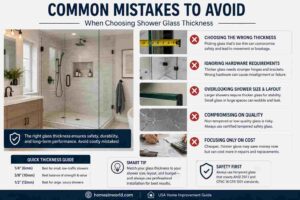
Professional frameless shower installers evaluate multiple factors before recommending glass thickness, including:
- Door dimensions
- Fixed panel size
- Hinge load ratings
- Wall reinforcement
- Shower usage frequency
- Bathroom design goals
Homeowners who skip these considerations often experience frameless shower problems within a few years of installation.
Another major issue is over-customization without structural planning. Large luxury shower designs may look beautiful in photos, but oversized glass panels require stronger support systems and thicker tempered glass to remain stable long term.
Practical ways to avoid common mistakes include:
- Matching glass thickness to enclosure size
- Using hardware rated for the panel weight
- Working with experienced frameless installers
- Avoiding low-quality imported hardware
- Prioritizing durability over short-term savings
The best frameless shower systems balance aesthetics, safety, structural integrity, and realistic remodeling budgets.
Choosing Thin Glass for Large Showers
Using thin frameless shower glass in oversized enclosures is one of the most frequent installation mistakes in modern bathroom remodeling.
Large walk-in showers and open-concept frameless systems place substantial stress on glass panels because there is minimal framing to absorb movement. If the glass is too thin, homeowners may notice visible shower glass flexing every time the door opens or closes.
This can create:
- Instability issues
- Door vibration
- Reduced shower rigidity
- Increased hardware wear
- Less premium appearance
For example, a wide frameless shower door built with 1/4 inch tempered glass may visibly flex during operation, especially if the panel height is large or the enclosure lacks support bars.
Thin glass becomes even more problematic in:
- Oversized shower panels
- Floor-to-ceiling installations
- Heavy pivot door systems
- Open walk-in shower layouts
Professional installers generally recommend:
- 3/8 inch glass for standard frameless systems
- 1/2 inch glass for luxury oversized enclosures
Another overlooked issue is long-term structural stress. Repeated movement in thin panels can place additional strain on hinges and anchors over time.
Practical advice for homeowners:
- Avoid 1/4 inch glass in large frameless showers
- Use thicker glass for unsupported wide panels
- Consider support bars for oversized layouts
- Match panel dimensions to hardware capacity
Choosing the proper thickness improves both safety and long-term shower stability.
Ignoring Hardware Weight Limits
Many homeowners invest in premium glass but overlook shower hinge load limits and hardware capacity. This creates serious long-term performance problems in heavy frameless shower systems.
Every hinge, clamp, anchor, and support bracket has a maximum weight rating. If the hardware is undersized for the glass thickness and panel dimensions, support failures can develop over time.
Common signs of overloaded hardware include:
- Door sagging
- Misaligned panels
- Loose hinges
- Difficulty closing the door
- Increased glass vibration
- Water leakage around seals
Heavy glass hardware becomes especially important with:
- 1/2 inch tempered glass
- Large pivot doors
- Oversized fixed panels
- Floor-to-ceiling shower systems
Example:
A frameless shower door weighing more than 100 pounds may require specialized heavy-duty hinges with reinforced mounting plates. Using standard hardware in this situation can quickly lead to door sagging and hinge fatigue.
Professional installers carefully calculate:
- Glass weight
- Door dimensions
- Hinge placement
- Wall support strength
- Opening direction
- Long-term usage patterns
Cheap hardware is another major problem.
Lower-quality hinges often corrode faster, loosen under stress, or fail prematurely in humid bathroom environments. High-end frameless showers should always use commercial-grade stainless steel or solid brass hardware designed specifically for heavy glass systems.
Ignoring hardware requirements is one of the fastest ways to shorten the lifespan of a frameless shower enclosure.
Focusing Only on Price Instead of Long-Term Value
Choosing the cheapest glass option without considering durability and long-term performance often leads to expensive budget shower mistakes later.
Many homeowners initially prioritize low installation pricing, only to discover that cheap shower glass problems create higher repair and replacement costs over time.
Lower-cost frameless systems may use:
- Thin tempered glass
- Low-quality hinges
- Weak support brackets
- Inferior waterproofing materials
- Poor edge finishing
These shortcuts can lead to:
- Increased panel movement
- Hardware failure
- Reduced shower stability
- Faster wear and tear
- Lower visual quality
For example, saving a few hundred dollars by using thinner glass in a large frameless enclosure may result in years of annoying vibration, door instability, or premature hardware replacement.
Long-term remodeling ROI should always be part of the decision-making process.
Higher-quality frameless shower systems often provide:
- Better durability
- Improved daily usability
- Stronger luxury appeal
- Lower maintenance costs
- Better resale value
Professional remodeling experts usually recommend balancing affordability with structural performance rather than simply choosing the cheapest available glass.
Practical value-focused advice:
- Invest in certified tempered glass
- Use hardware rated for your enclosure size
- Prioritize installation quality
- Choose thickness based on function, not just price
- Think about long-term maintenance costs
In many USA bathroom remodeling projects, 3/8 inch tempered glass delivers the strongest balance between affordability, durability concerns, premium appearance, and overall long-term value.
Does Thicker Shower Glass Increase Home Value?
In many modern bathroom remodeling projects, thicker frameless shower glass can improve both visual appeal and perceived home value. While upgrading from 3/8 inch to 1/2 inch glass will not automatically increase resale price dollar-for-dollar, luxury shower upgrades often help homes feel more premium, modern, and move-in ready to potential buyers.
Today’s buyers pay close attention to bathrooms.
A dated shower enclosure with bulky metal framing can make an entire bathroom feel older, even after expensive renovations elsewhere. In contrast, frameless heavy-glass showers create a cleaner, more upscale appearance associated with luxury homes and custom remodeling.
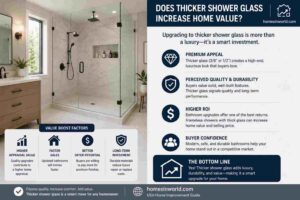
From a bathroom remodel ROI perspective, premium frameless showers often contribute to:
- Stronger buyer impressions
- Better listing photos
- Higher perceived construction quality
- Improved luxury appeal
- More modern bathroom aesthetics
- Increased market competitiveness
Thicker glass especially enhances premium bathroom design because it creates a more substantial architectural look. Buyers often associate heavy glass systems with higher-end craftsmanship and upscale remodeling finishes.
However, homeowners should understand an important detail:
The value increase usually comes from the overall shower design quality rather than glass thickness alone.
For example:
- A poorly designed 1/2 inch enclosure may not outperform a well-designed 3/8 inch frameless shower
- High-end hardware and clean installation matter just as much as glass thickness
- Overspending on ultra-thick glass in a modest home may not produce strong ROI
In most USA homes, 3/8 inch glass already delivers excellent resale appeal because it creates the modern frameless appearance buyers expect. Upgrading to 1/2 inch glass becomes more valuable in luxury properties where buyers expect premium materials throughout the home.
Other factors that improve resale value include:
- Minimalist frameless layouts
- Large walk-in showers
- Curbless shower designs
- Ultra-clear low-iron glass
- Matte black or brushed brass hardware
- Spa-style finishes
Example:
A master bathroom featuring a frameless walk-in shower with thick ultra-clear glass and modern tile design often photographs significantly better in online listings than a traditional framed enclosure.
Because bathrooms heavily influence buyer perception, premium frameless shower systems can help homes stand out in competitive real estate markets.
Why Luxury Frameless Showers Appeal to Buyers
Luxury shower design has become one of the strongest selling features in modern bathroom remodeling because today’s buyers increasingly want spa-style interiors that feel open, clean, and high-end.
Frameless showers play a major role in creating that experience.
Unlike traditional framed enclosures, premium bathroom remodeling projects use large uninterrupted glass panels to create visual openness and architectural simplicity. Thick tempered glass enhances this effect by making the enclosure appear more substantial and luxurious.
Modern buyers are especially attracted to:
- Minimalist bathrooms
- Open-concept showers
- Hotel-inspired master suites
- Natural light flow
- Seamless glass designs
- Premium hardware finishes
Heavy frameless glass creates a strong first impression because it signals custom craftsmanship and upscale remodeling quality.
In higher-end real estate markets, buyers often associate luxury frameless showers with:
- Better home maintenance
- More modern construction
- Updated interior design
- Higher overall property quality
For example, a spa-style primary bathroom with oversized frameless glass panels, large-format tile, and premium fixtures often becomes one of the most memorable areas during home tours.
Another reason buyers prefer frameless systems is visual space.
Traditional framed shower doors can make bathrooms feel smaller and more cluttered. Frameless enclosures allow sightlines to remain open, helping bathrooms appear brighter and larger.
From a practical standpoint, buyers also appreciate:
- Easier cleaning
- Fewer metal tracks
- Better long-term durability
- Timeless modern aesthetics
Premium frameless showers are particularly attractive in luxury homes, newly remodeled properties, and modern open-concept bathroom layouts where architectural simplicity is part of the overall design language.
In many USA remodeling trends, frameless heavy-glass showers are now viewed less as a luxury upgrade and more as a standard expectation in upscale bathroom renovations.
Expert Recommendations: Which Shower Glass Thickness Should YOU Choose?
Choosing the right frameless shower glass thickness ultimately comes down to balancing budget, bathroom size, durability expectations, and design goals. After comparing thousands of residential bathroom remodeling projects across the USA, most professional installers and contractors agree that there is no single “perfect” thickness for every situation.
Instead, the best shower glass recommendation depends on how you plan to use the space and what kind of shower experience you want long term.
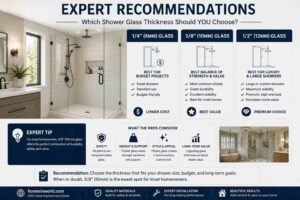
A smart shower glass buying guide should consider:
- Bathroom size and layout
- Shower enclosure dimensions
- Desired luxury level
- Installation budget
- Hardware compatibility
- Long-term durability
- Visual design preferences
In general:
- 1/4 inch glass works best for entry-level or semi-frameless systems
- 3/8 inch glass is the best all-around choice for most homeowners
- 1/2 inch glass is ideal for luxury architectural shower systems
Professional contractor advice usually focuses on achieving the best balance between stability, aesthetics, and long-term value rather than simply choosing the thickest possible glass.
For example, many homeowners assume thicker glass automatically means better quality. In reality, oversized luxury glass may not be necessary for standard residential bathrooms. A properly installed 3/8 inch frameless enclosure often delivers nearly the same visual appeal with lower installation costs and reduced hardware stress.
Homeowners should also think about practical daily use.
A frameless shower should feel:
- Stable during operation
- Easy to clean
- Visually open
- Durable over time
- Appropriate for the bathroom size
The goal is creating a shower system that performs well for many years while still matching the style and value level of the home.
Best Choice for Budget Bathrooms
For affordable frameless shower glass installations, 1/4 inch or lighter 3/8 inch systems are typically the most practical choice. Budget shower systems focus on balancing visual appeal with cost control while still maintaining safe and durable construction.
In many value remodeling projects, homeowners want a cleaner modern look without paying luxury-level installation prices.
Entry-level showers often work best with:
- Smaller frameless enclosures
- Semi-frameless systems
- Sliding shower doors
- Standard tempered glass
- Minimal custom fabrication
Benefits of thinner or budget-friendly glass systems include:
- Lower installation costs
- Reduced hardware expenses
- Easier installation
- Less structural reinforcement needed
- More affordable remodeling budgets
Example:
A guest bathroom remodel with a compact semi-frameless shower may perform perfectly with 1/4 inch tempered glass paired with quality hardware.
However, homeowners should avoid choosing extremely thin glass for oversized frameless layouts simply to reduce costs. Long-term stability and hardware performance still matter even in entry-level remodeling projects.
For budget-conscious homeowners, a smaller well-built frameless shower often provides better long-term value than an oversized low-quality installation.
Best Choice for Most Homeowners
For the majority of USA homes, the best overall shower glass thickness is 3/8 inch tempered glass. This has become the standard frameless shower glass option because it offers the strongest balance between durability vs price, structural stability, and premium appearance.
Most professional installers recommend 3/8 inch glass because it provides:
- Excellent balanced performance
- Strong shower rigidity
- Reduced panel flexing
- Modern heavy-glass appearance
- Reliable long-term durability
- Manageable installation costs
This thickness works extremely well for:
- Frameless pivot doors
- Walk-in showers
- Sliding frameless systems
- Standard master bathrooms
- Modern minimalist remodels
Example:
A 60-inch frameless shower enclosure with 3/8 inch tempered glass usually feels sturdy, premium, and visually upscale without requiring excessive structural reinforcement or luxury-grade hardware systems.
Another major advantage is versatility.
3/8 inch glass works well in both mid-range and higher-end remodeling projects, making it one of the safest long-term investments for homeowners who want premium aesthetics without overspending.
For most residential bathroom remodels, 3/8 inch tempered glass delivers the ideal combination of affordability, durability, appearance, and practical installation performance.
Best Choice for Luxury Remodels
Luxury frameless shower glass systems typically use 1/2 inch tempered panels because they create the strongest architectural presence and most upscale visual appearance.
In premium shower systems, thicker glass enhances:
- Luxury aesthetics
- Structural rigidity
- Spa-style design
- Oversized panel stability
- Minimalist architectural layouts
High-end spa bathrooms often use large uninterrupted glass surfaces with minimal hardware to create a cleaner and more dramatic visual effect. Thicker tempered glass helps support these architectural shower design concepts while maintaining long-term stability.
Luxury remodels frequently include:
- Floor-to-ceiling glass panels
- Curbless walk-in showers
- Ultra-clear low-iron glass
- Premium matte hardware
- Open wet-room layouts
Example:
A custom spa-inspired primary bathroom with oversized frameless panels and floating shower design will often look and feel more luxurious with 1/2 inch glass due to the increased edge thickness and reduced movement.
However, homeowners should understand that premium glass systems also require:
- Stronger hardware
- Higher installation budgets
- Reinforced wall support
- Experienced frameless installers
For luxury homes where architectural design and visual impact are top priorities, 1/2 inch glass provides the highest-end frameless shower experience available in residential remodeling today.
Frequently Asked Questions About Shower Glass Thickness
Homeowners researching frameless shower systems often have very specific concerns about durability, safety, installation costs, and long-term performance. These shower glass FAQs cover the most common frameless shower questions asked during bathroom remodeling projects in the USA.
Understanding how glass thickness affects real-world performance can help homeowners avoid expensive mistakes and choose the right frameless shower setup for their bathroom layout and budget.
Common homeowner concerns usually involve:
- Safety and stability
- Glass flexing
- Hardware compatibility
- Luxury appearance
- Maintenance requirements
- Remodeling value
Because frameless shower systems rely heavily on tempered glass strength and structural support, even small thickness differences can affect how the enclosure performs over time.
The answers below provide practical shower remodeling advice based on modern USA installation standards and professional remodeling experience.
Is 3/8 or 1/2 Inch Shower Glass Better?
When comparing 3/8 vs 1/2 shower glass, 3/8 inch is usually the better overall choice for most homeowners because it balances durability, stability, cost, and installation practicality.
However, 1/2 inch glass performs better in luxury bathrooms with oversized frameless enclosures or architectural walk-in shower designs.
In most residential remodels:
- 3/8 inch glass = best overall value
- 1/2 inch glass = premium luxury upgrade
Homeowners choosing between the two should consider:
- Shower size
- Remodeling budget
- Desired luxury appearance
- Hardware requirements
- Wall support strength
For standard frameless showers, 3/8 inch tempered glass is typically more than sufficient.
Is 1/4 Inch Glass Safe for Frameless Showers?
1/4 inch shower glass safety depends heavily on the shower design and panel size. While tempered 1/4 inch glass can be safe in some smaller frameless systems, it is generally less rigid than thicker glass and may flex more during daily use.
Most professional installers recommend:
- 1/4 inch glass for framed or semi-frameless showers
- 3/8 inch glass for fully frameless enclosures
Thin glass becomes more problematic in:
- Large shower doors
- Oversized fixed panels
- Walk-in shower layouts
For homeowners wanting better stability and a more premium feel, thicker tempered glass is usually the safer long-term investment.
Does Thicker Shower Glass Leak Less?
Thicker shower glass does not automatically prevent shower glass leaks. Water resistance depends far more on:
- Proper installation
- Door alignment
- Waterproof seals
- Drain placement
- Shower slope design
However, thick shower glass benefits can indirectly improve enclosure stability and reduce excessive movement that may affect seals over time.
For example, a heavy frameless shower door with stronger rigidity may maintain more consistent alignment compared to thinner flexible panels.
Still, even the thickest glass can leak if:
- Hinges are misaligned
- Seals are damaged
- Installation is poor
- Waterproofing is inadequate
Professional installation quality matters much more than thickness alone when preventing shower leaks.
What Thickness Glass Do Luxury Hotels Use?
Luxury hotel shower glass is commonly 1/2 inch tempered glass because it creates the upscale “heavy glass” appearance associated with premium spa-style bathrooms.
High-end hotels often prioritize:
- Architectural aesthetics
- Minimalist frameless layouts
- Large uninterrupted glass panels
- Luxury visual impact
The thicker edge profile of 1/2 inch glass creates a more expensive and substantial appearance that works especially well in oversized walk-in showers.
However, some luxury hotels still use premium 3/8 inch low-iron glass depending on:
- Shower size
- Hardware design
- Bathroom layout
- Structural limitations
Both thicknesses can look luxurious when paired with high-quality frameless hardware and professional installation.
How Heavy Is Frameless Shower Glass?
Frameless tempered glass is extremely heavy, especially in large luxury shower systems. A standard shower glass weight chart varies depending on thickness and panel dimensions.
Approximate weights include:
- 1/4 inch glass → about 3.25 pounds per square foot
- 3/8 inch glass → about 5 pounds per square foot
- 1/2 inch glass → about 6.5 pounds per square foot
Large frameless shower doors can easily exceed:
- 80 pounds
- 100 pounds
- 150+ pounds in oversized installations
This is why heavy-glass systems require:
- Reinforced hinges
- Strong wall support
- Professional installation
- Premium support hardware
Glass weight is one of the biggest factors affecting hardware selection and installation complexity.
Does Thick Shower Glass Last Longer?
Durable shower glass systems often benefit from increased thickness because thicker panels generally resist flexing and vibration more effectively over time.
Long-lasting frameless showers depend on several factors, including:
- Tempered glass quality
- Proper installation
- Hardware strength
- Wall reinforcement
- Daily usage patterns
Thicker glass may improve long-term stability by reducing:
- Door movement
- Hinge stress
- Panel vibration
- Structural fatigue
However, thickness alone does not guarantee durability.
A properly installed 3/8 inch frameless shower with high-quality hardware can easily last decades in residential use. On the other hand, a poorly installed 1/2 inch system may develop problems much sooner despite the heavier glass.
For most homeowners, long-term performance comes from balancing:
- Correct glass thickness
- Certified tempered glass
- Professional installation
- Proper hardware compatibility
- Ongoing maintenance and care
Final Verdict: What Is the Best Shower Glass Thickness for Frameless Shower Doors?
After comparing durability, cost, safety, rigidity, hardware requirements, and long-term remodeling value, the best shower glass thickness for most frameless shower doors is 3/8 inch tempered glass.
For the majority of USA homeowners, 3/8 inch glass delivers the strongest balance between:
- Premium frameless appearance
- Structural stability
- Reduced panel flexing
- Hardware compatibility
- Affordable installation costs
- Long-term durability
It has become the industry standard because it performs exceptionally well in most residential bathroom layouts without creating the excessive weight and installation complexity associated with ultra-heavy luxury systems.
In practical remodeling projects, 3/8 inch tempered glass works extremely well for:
- Frameless pivot doors
- Walk-in showers
- Sliding frameless enclosures
- Master bathroom remodels
- Modern minimalist bathrooms
- Mid-range and upscale homes
For homeowners wanting the best overall value, it is usually the safest and most practical long-term investment.
However, the right frameless shower glass thickness still depends on your specific remodeling goals.
Here’s a simplified shower glass comparison summary:
| Glass Thickness | Best For | Main Advantage |
| 1/4 Inch | Budget or framed systems | Lower cost |
| 3/8 Inch | Most frameless showers | Best balance overall |
| 1/2 Inch | Luxury oversized enclosures | Maximum rigidity and premium aesthetics |
If you are designing a high-end spa-style bathroom with oversized panels, open-concept layouts, or architectural shower systems, 1/2 inch tempered glass may be worth the additional cost. It creates a thicker edge profile, improved rigidity, and a more luxurious heavy-glass appearance.
On the other hand, many homeowners overspend on 1/2 inch glass when a professionally installed 3/8 inch enclosure would provide nearly identical real-world performance.
Professional remodeling recommendations typically focus on matching the glass thickness to:
- Shower size
- Panel dimensions
- Hardware strength
- Bathroom design style
- Budget expectations
- Long-term maintenance goals
Homeowners should also remember that installation quality matters just as much as glass thickness. Even the best tempered glass can develop problems if the enclosure uses weak hardware, poor wall reinforcement, or incorrect measurements.
For the best long-term results, professional frameless shower installers usually recommend:
- Certified tempered safety glass
- Hardware rated for the panel weight
- Reinforced wall backing when needed
- Proper hinge alignment
- High-quality waterproof sealing systems
In most modern bathroom remodels, 3/8 inch tempered glass remains the “sweet spot” because it combines luxury aesthetics, strong durability, manageable installation costs, and reliable daily performance.
For homeowners seeking a practical frameless shower door guide, the decision often comes down to this:
- Choose 1/4 inch glass for simple budget-friendly systems
- Choose 3/8 inch glass for the best overall performance and value
- Select 1/2 inch glass for luxury architectural shower designs where premium appearance and maximum rigidity are priorities
The best frameless shower enclosure is not simply the thickest one. It is the system that fits your bathroom layout, structural requirements, remodeling budget, and long-term design goals most effectively.